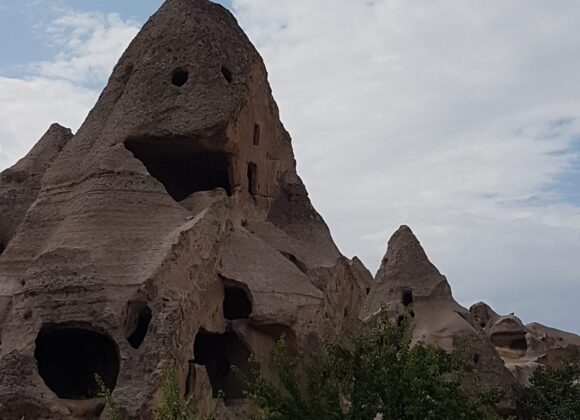
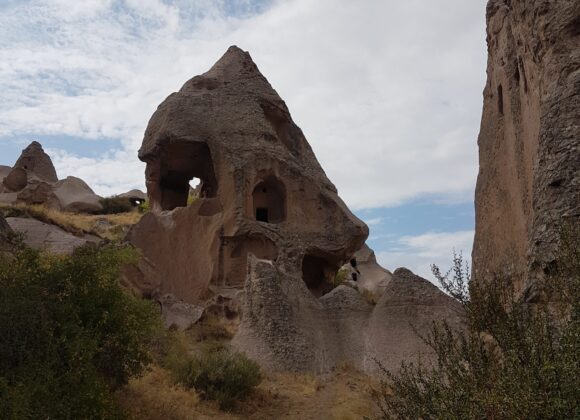
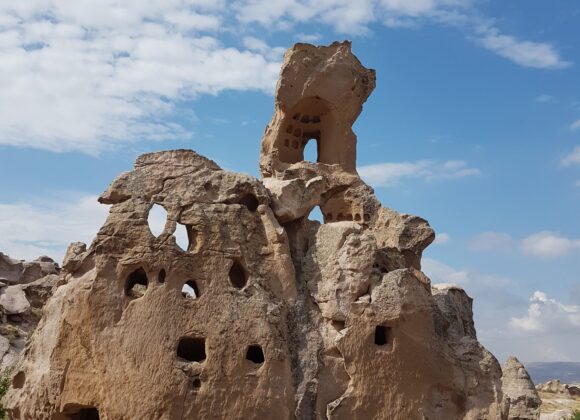
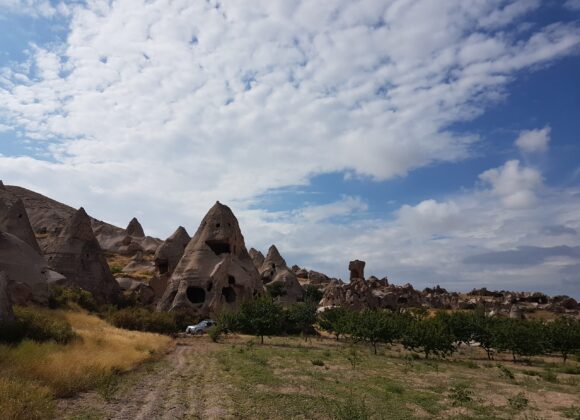
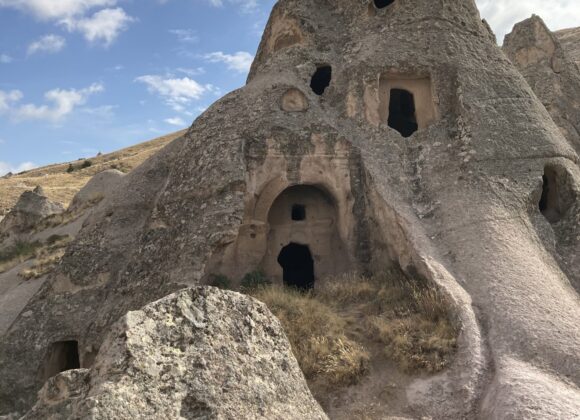
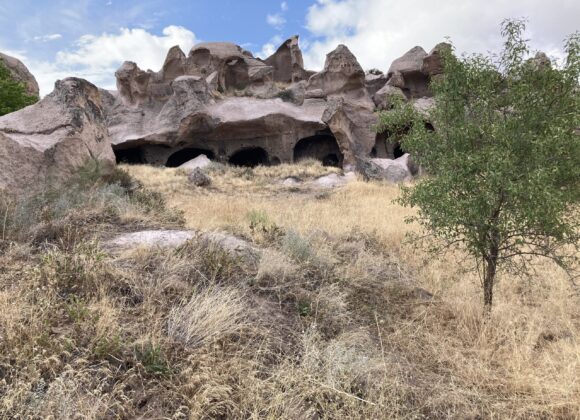
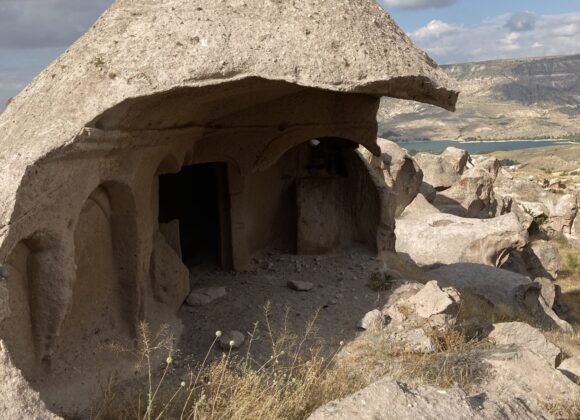
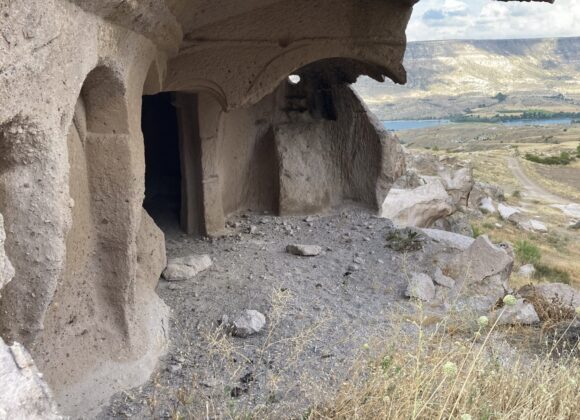
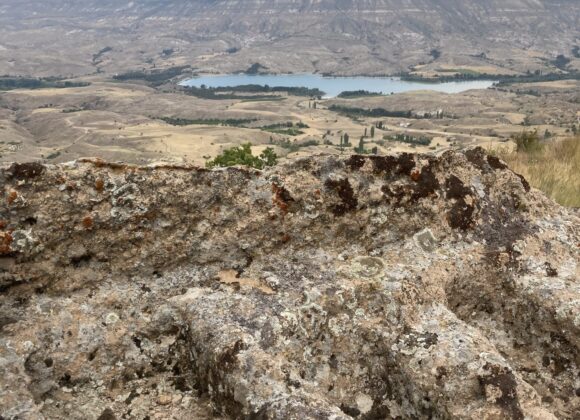
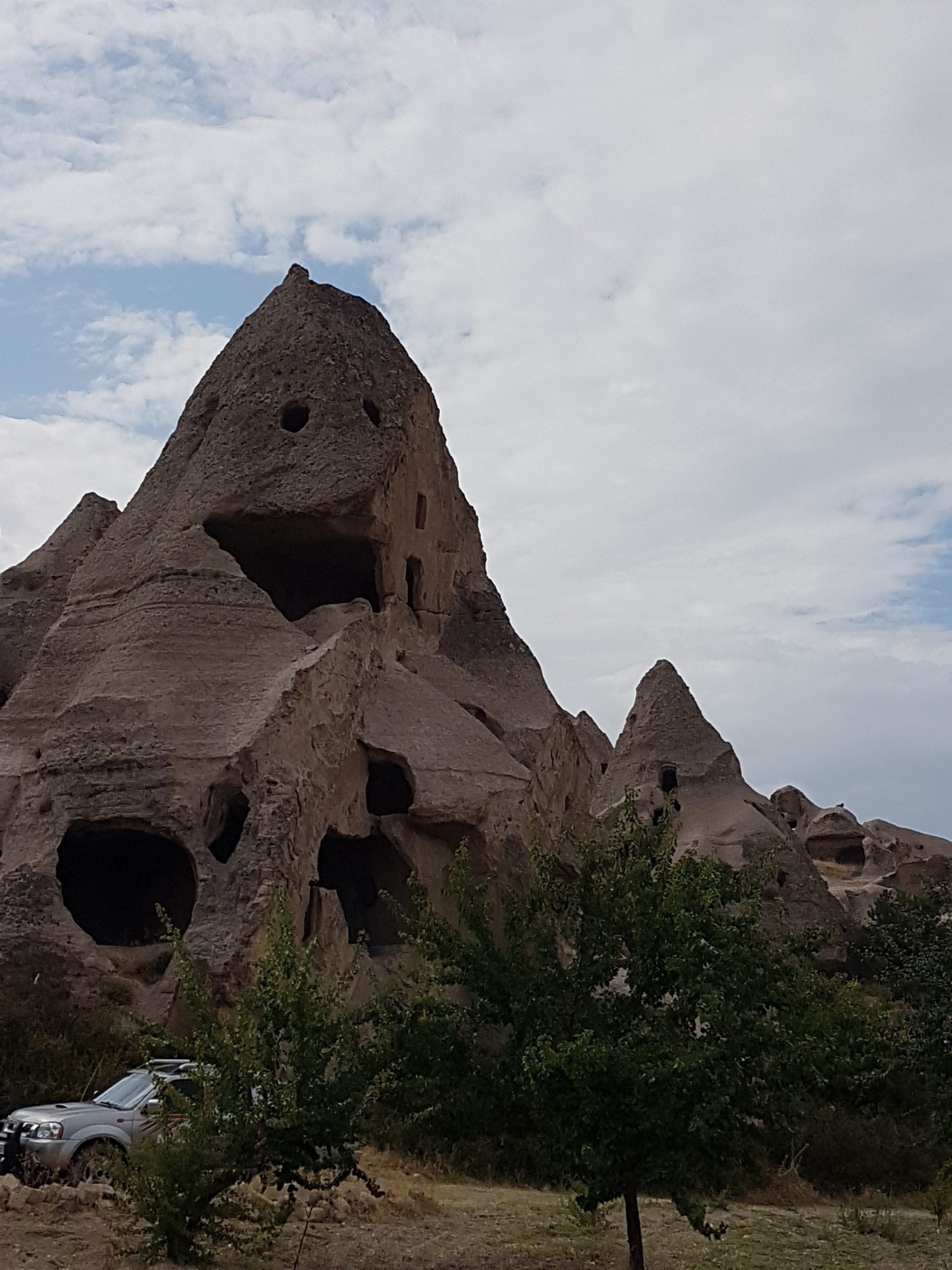
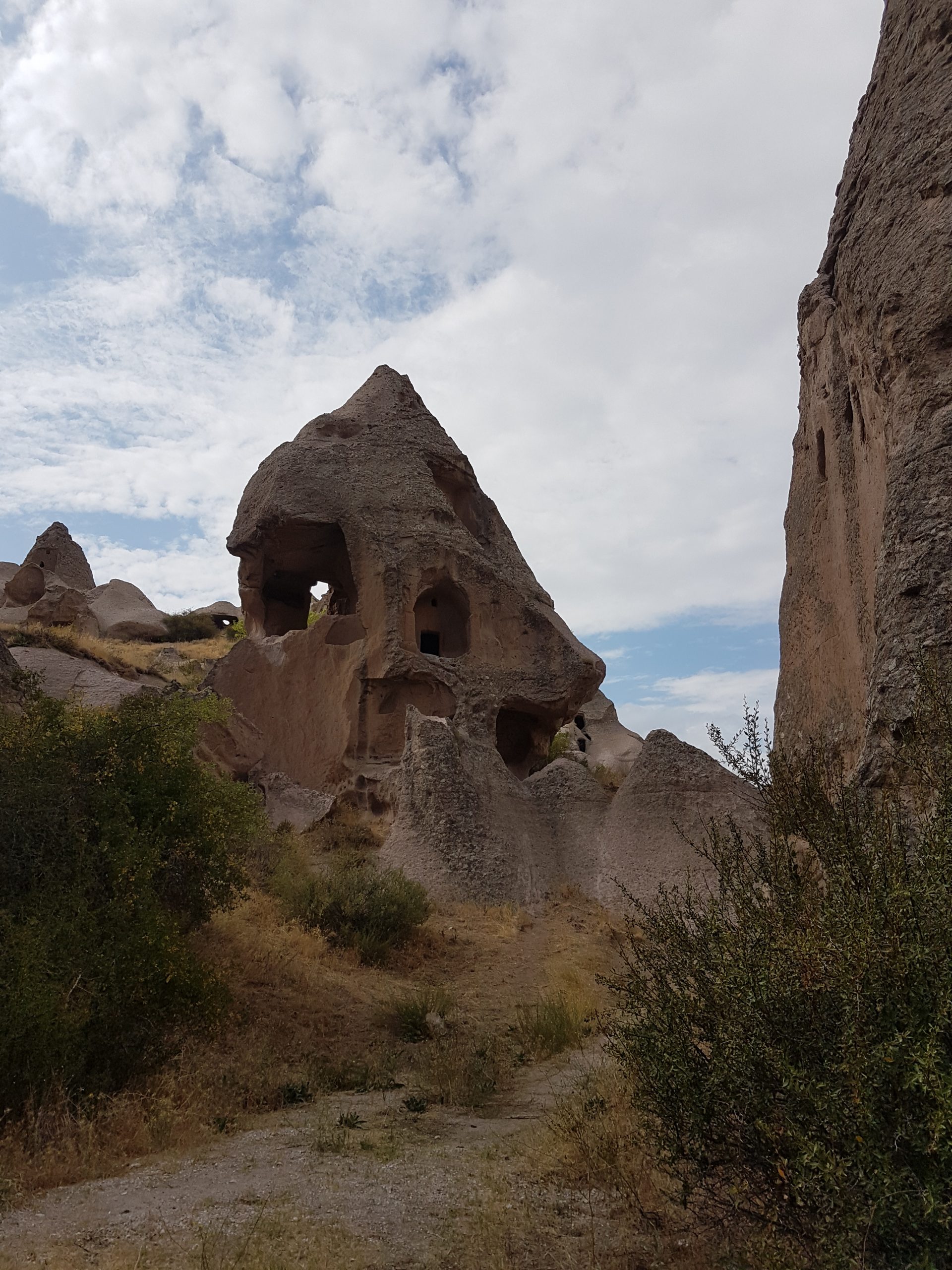
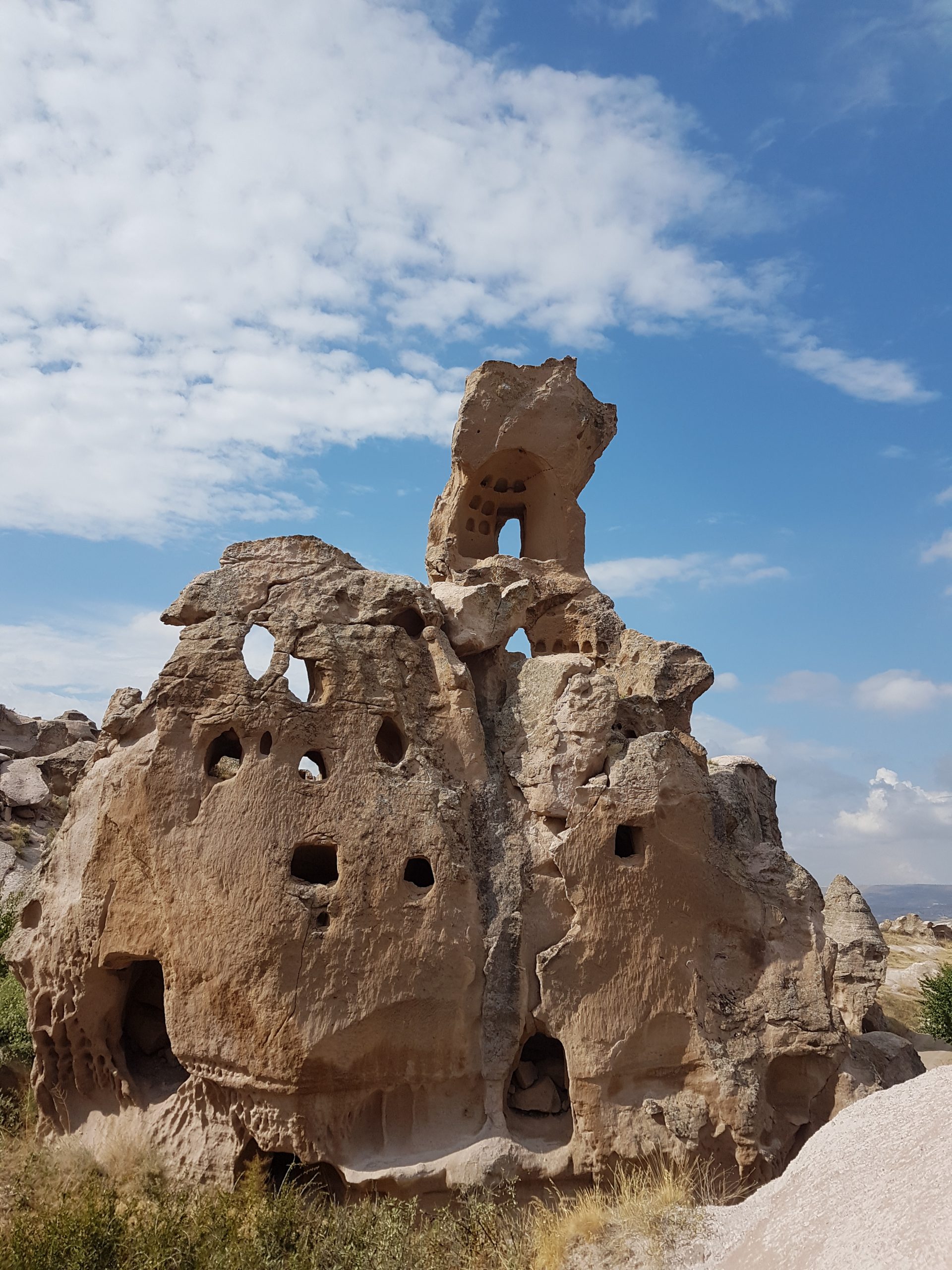
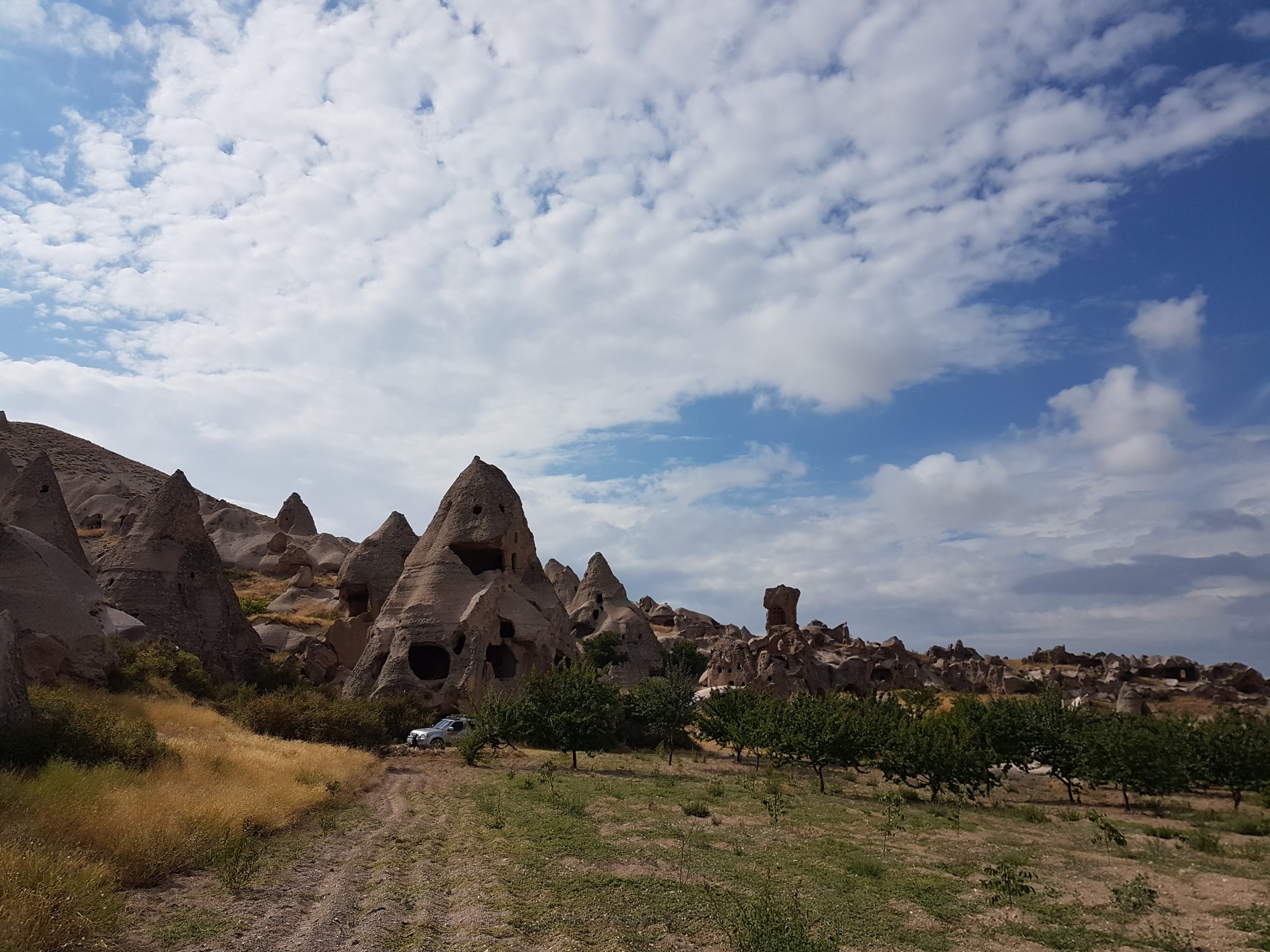
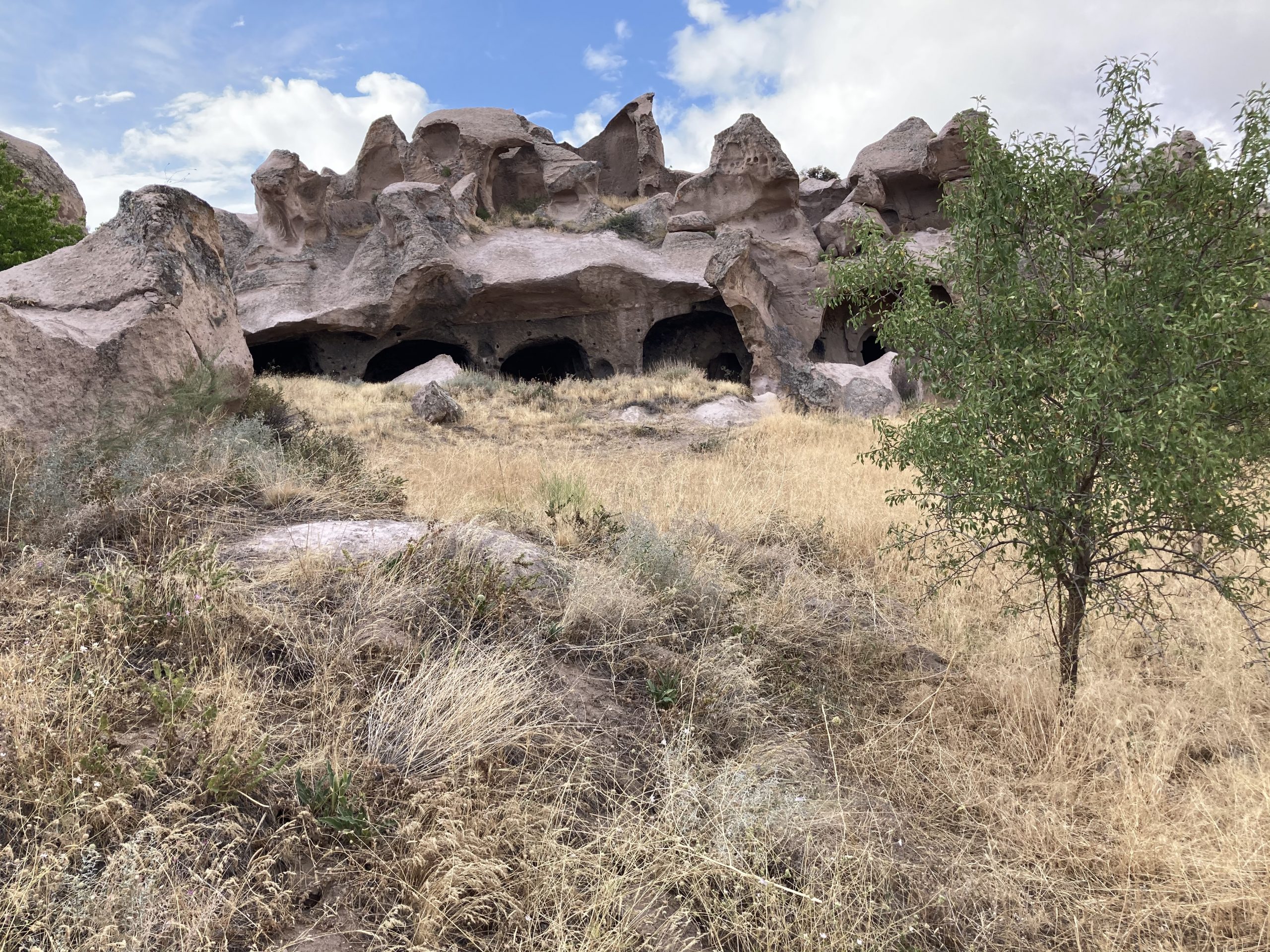
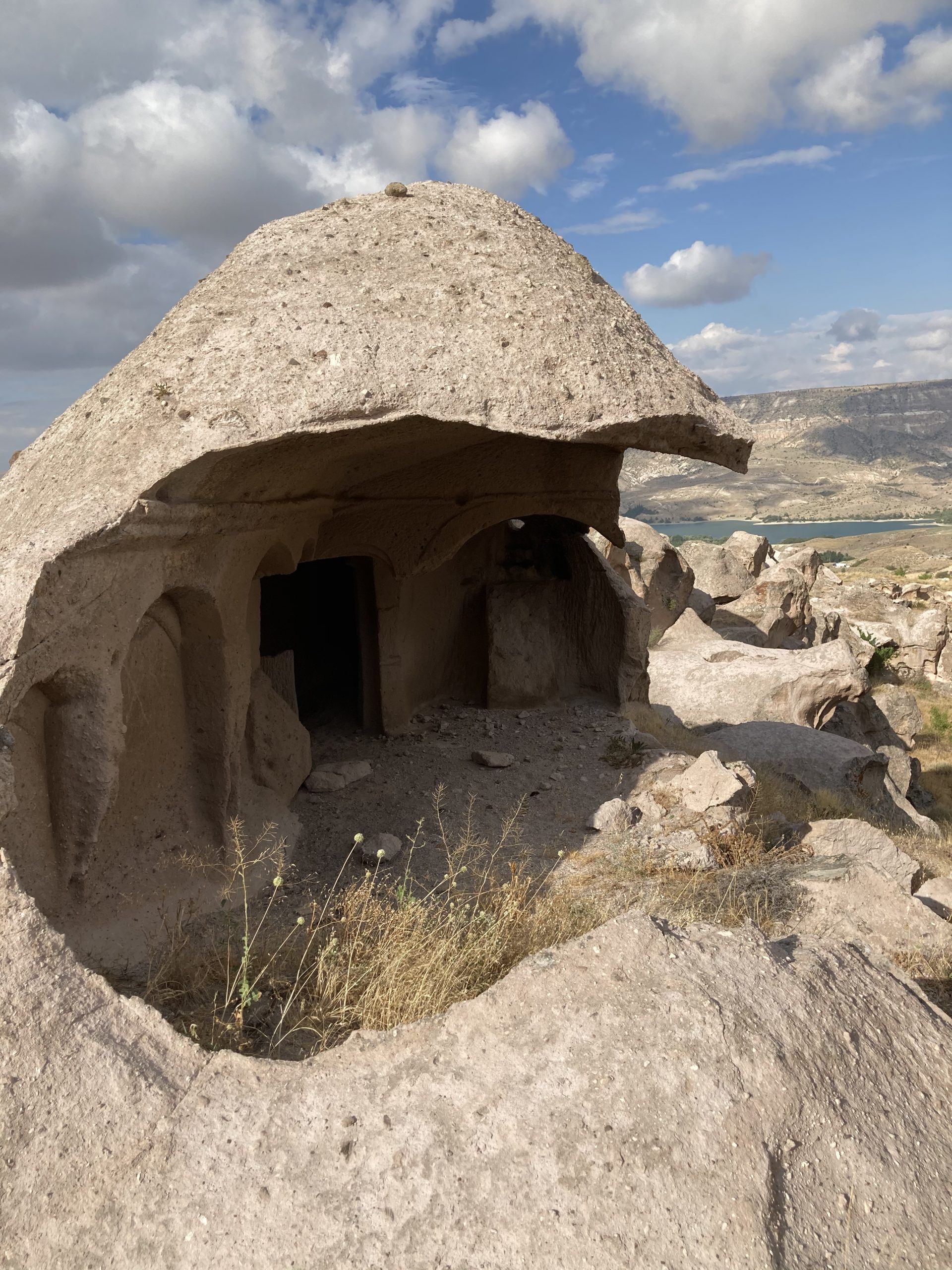
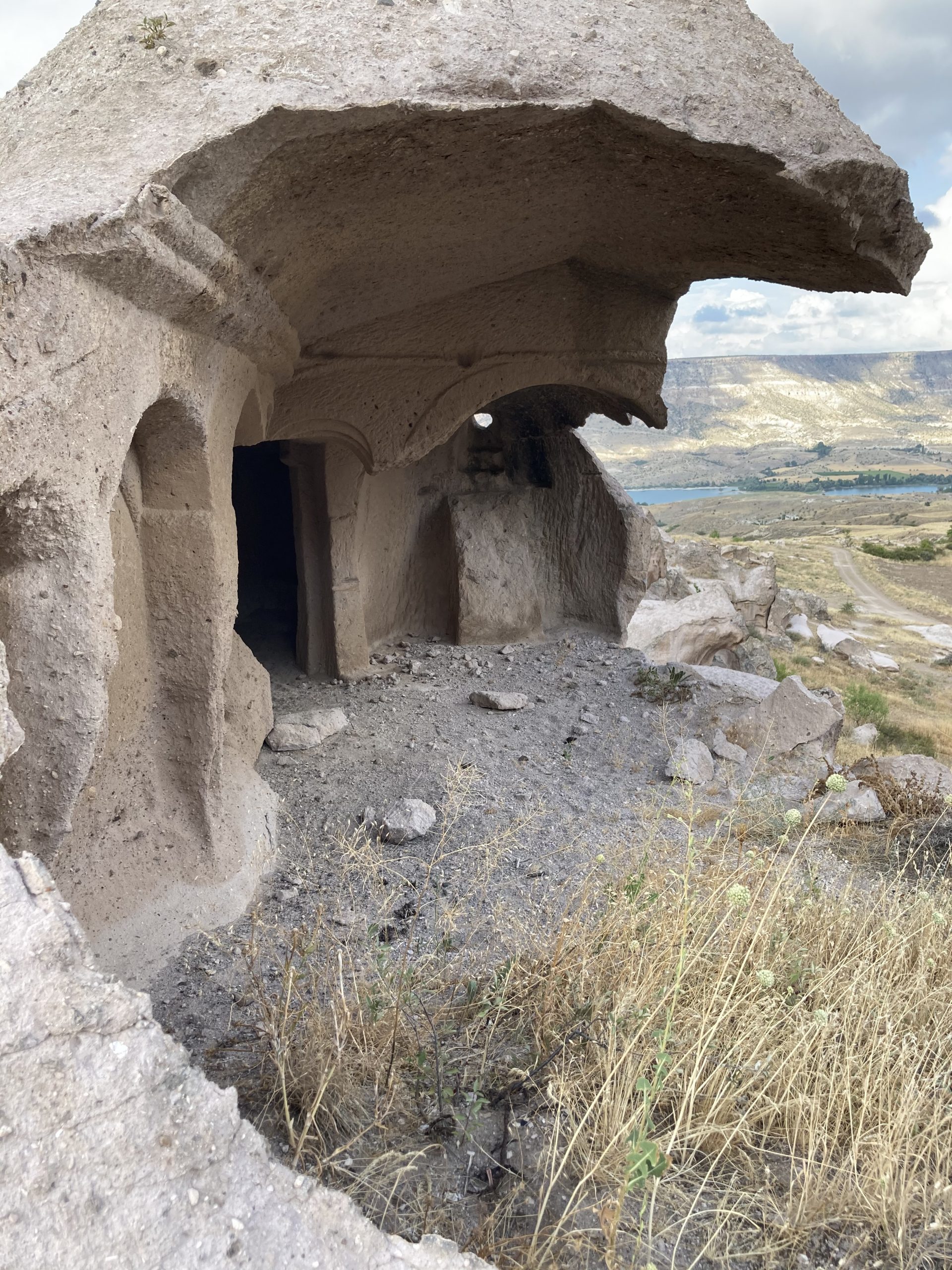
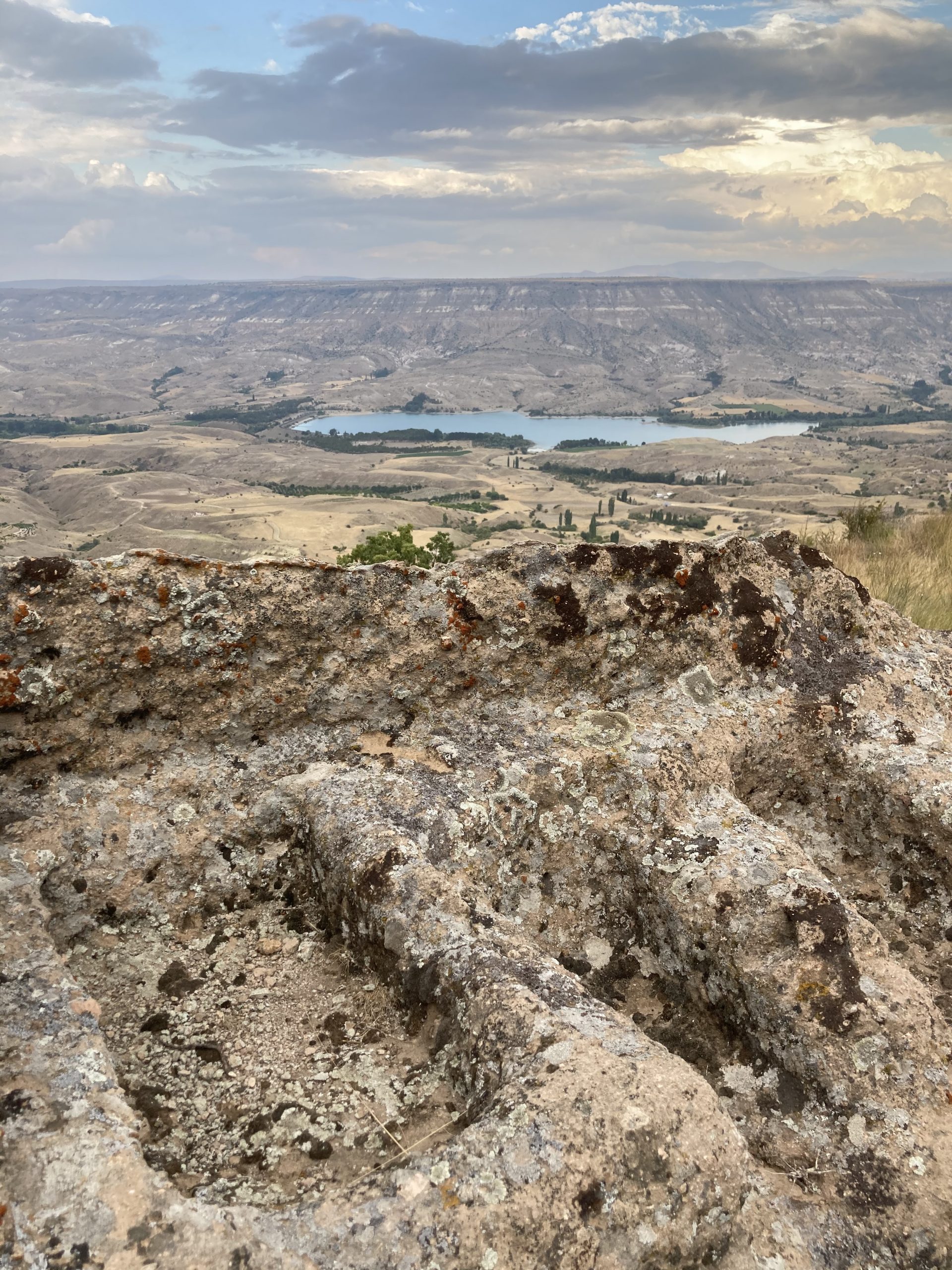
Gorgoli is an ancient settlement located approximately 5 km south of Mustafapaşa and is today popularly called “Golgoli”. The name of the settlement is derived from the Greek word “gorga”, meaning “fast-flowing water”. The “Gorgoli Ruins” are situated at the foot of Gorgoli Hill. At the summit of this hill, also known as Virgin Mary (Mount Panagia), stood the Virgin Mary Church (19th century), of which only ruins have survived to the present day. The hill, an ancient settlement site, also contains various rock-carved spaces of different sizes. It is known that the local Rum community, especially young people and newlyweds, used to stay on the hill for two weeks during the summer months. Those staying there would bring musicians with them; it is rumored that music and dance events were held during this fifteen-day retreat (Stamatopoulos, 1985).
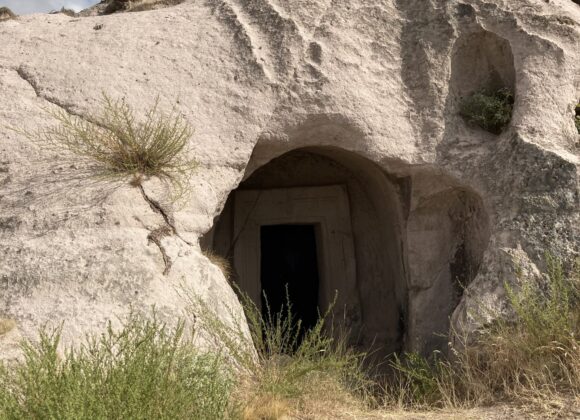
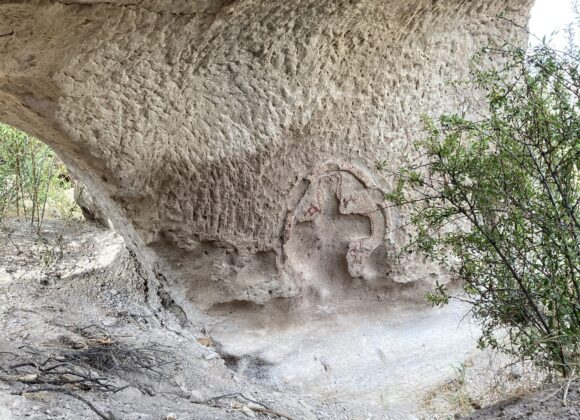
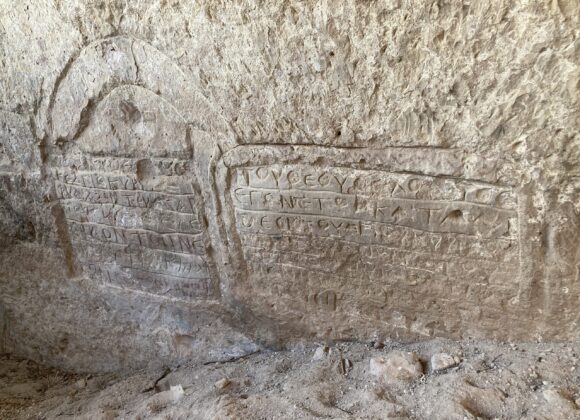
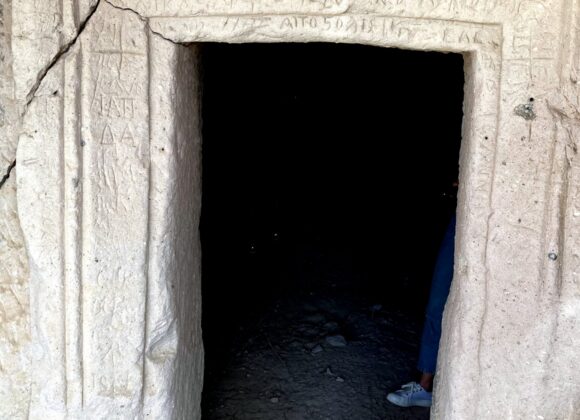
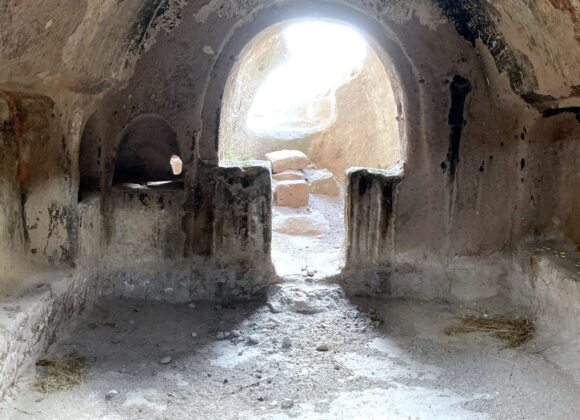
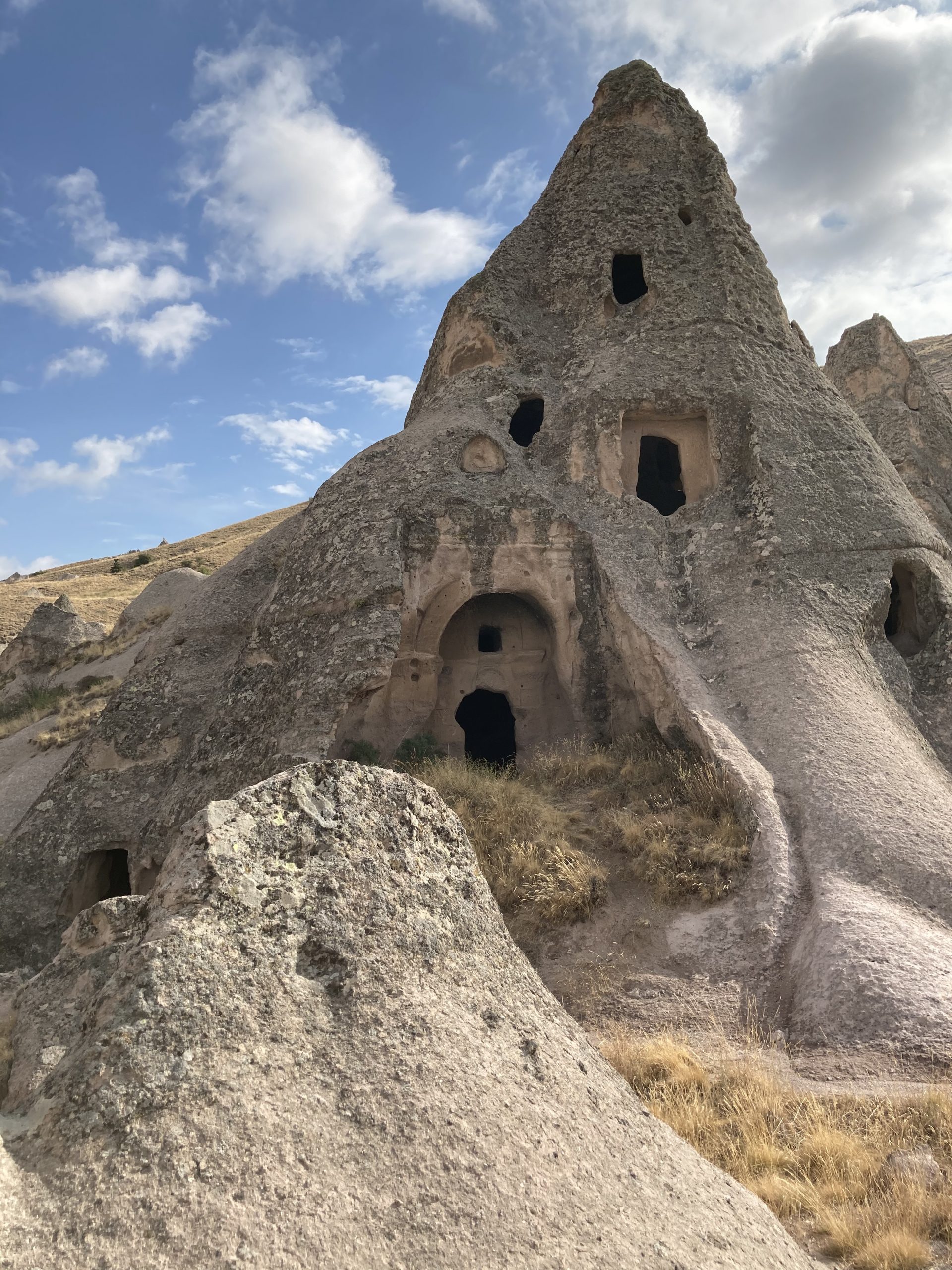
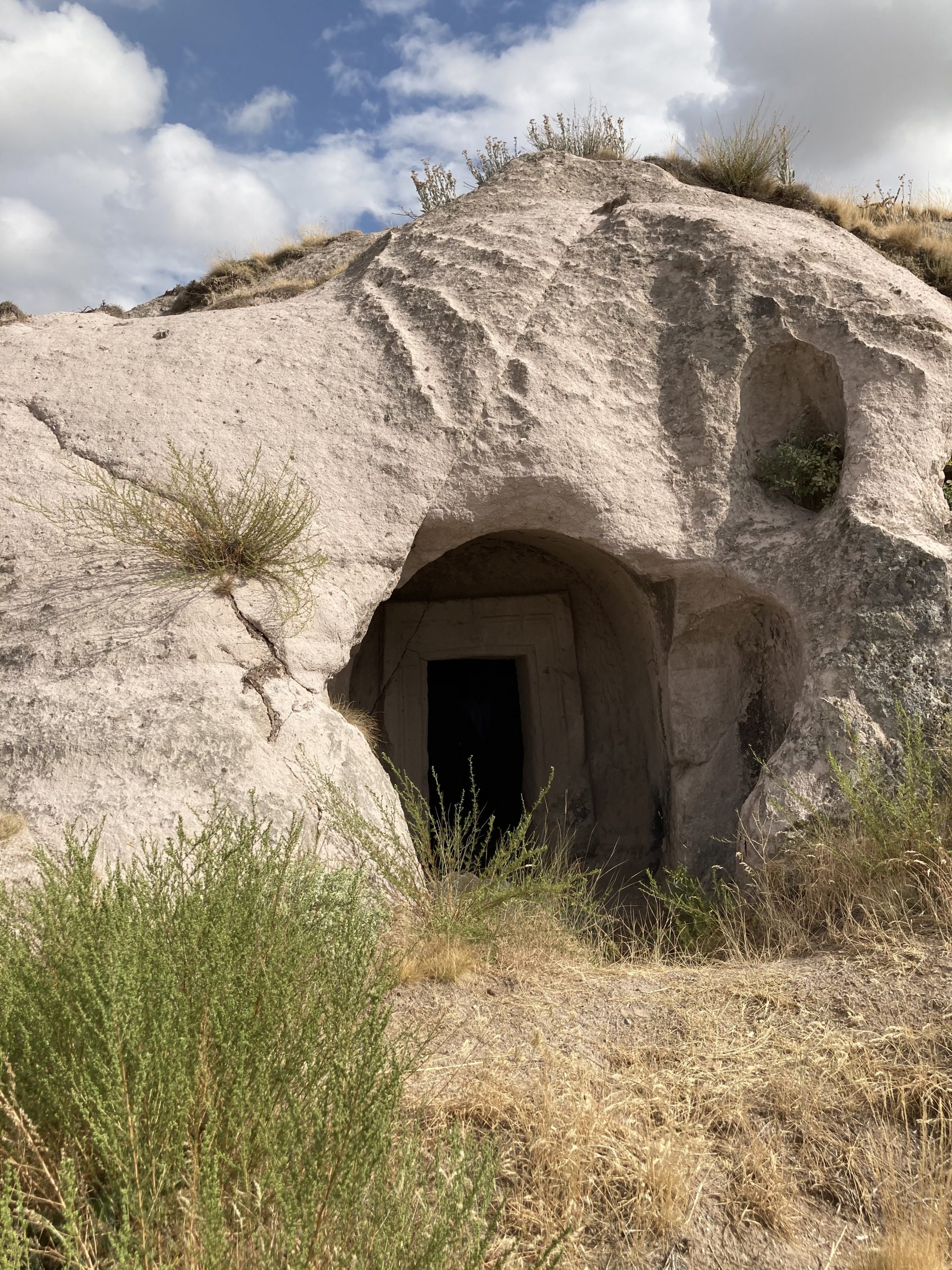
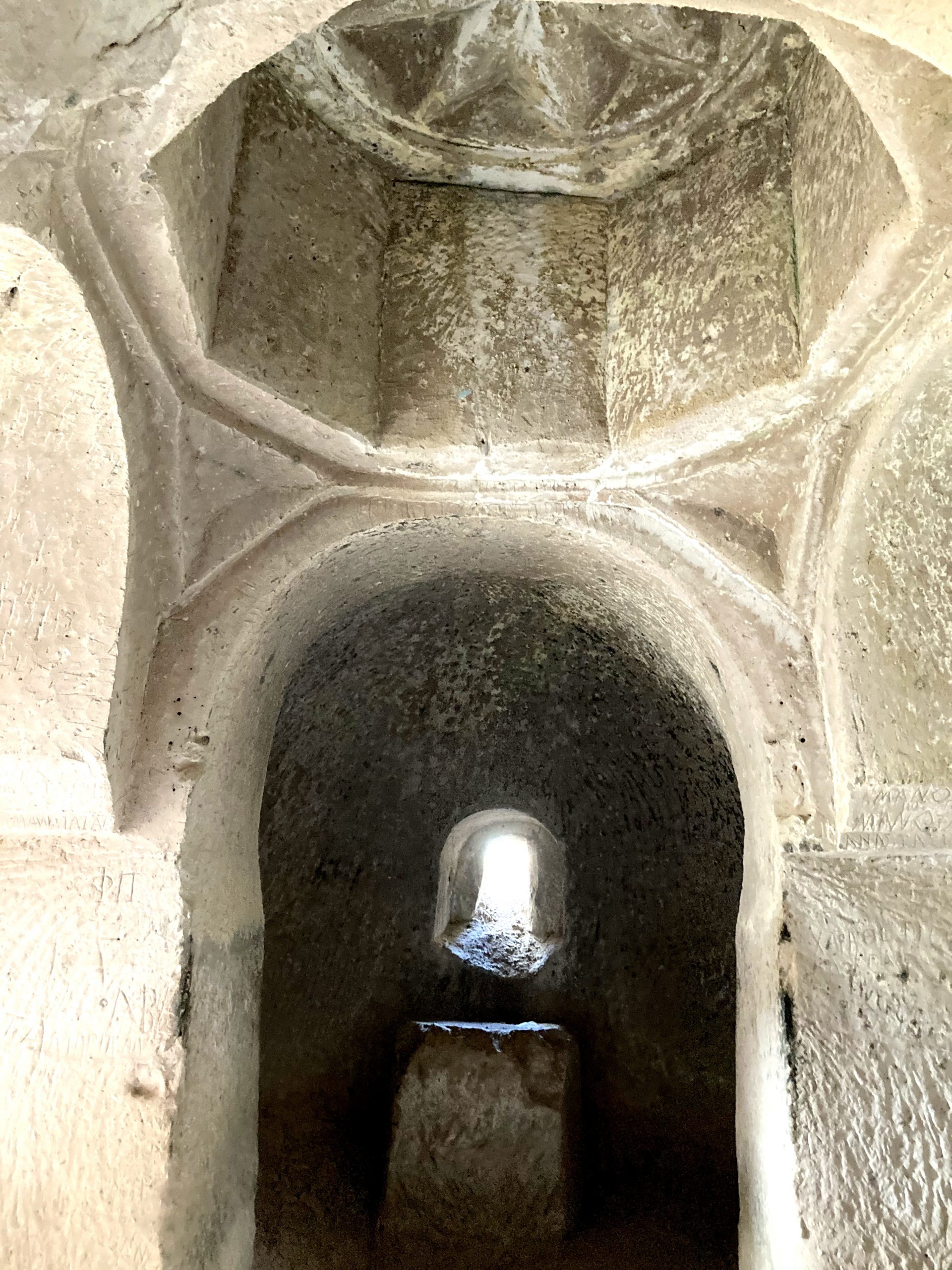
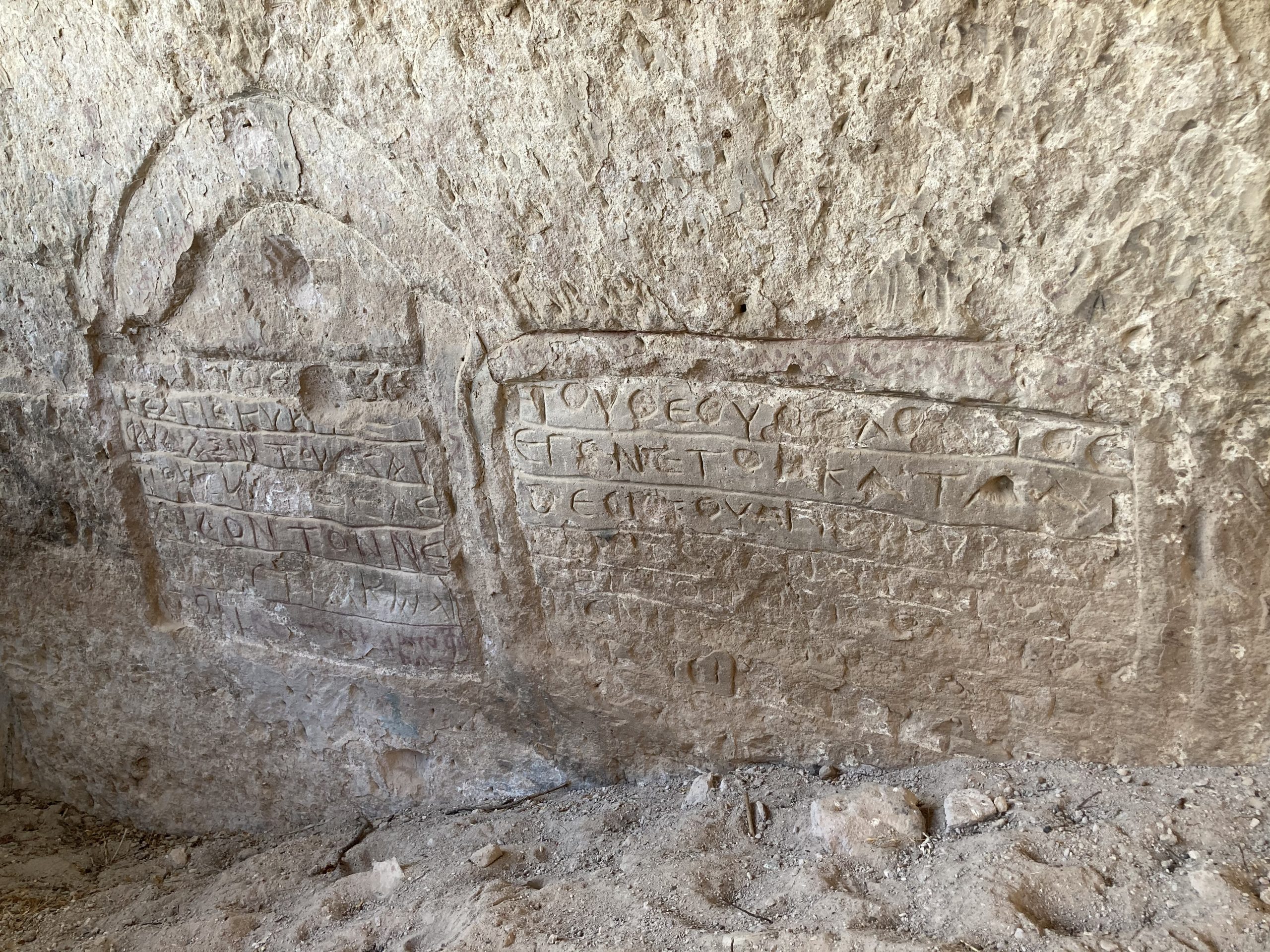
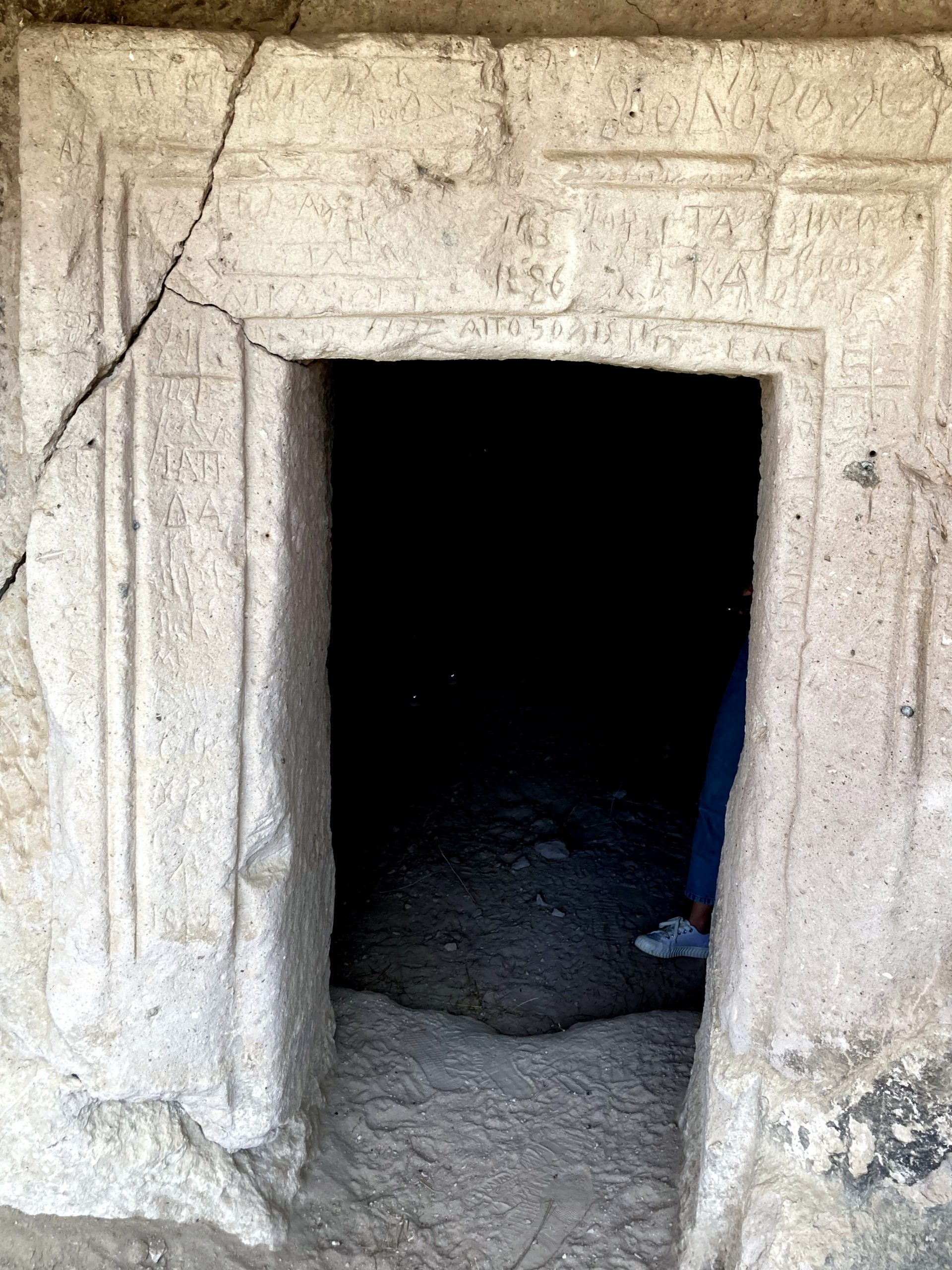
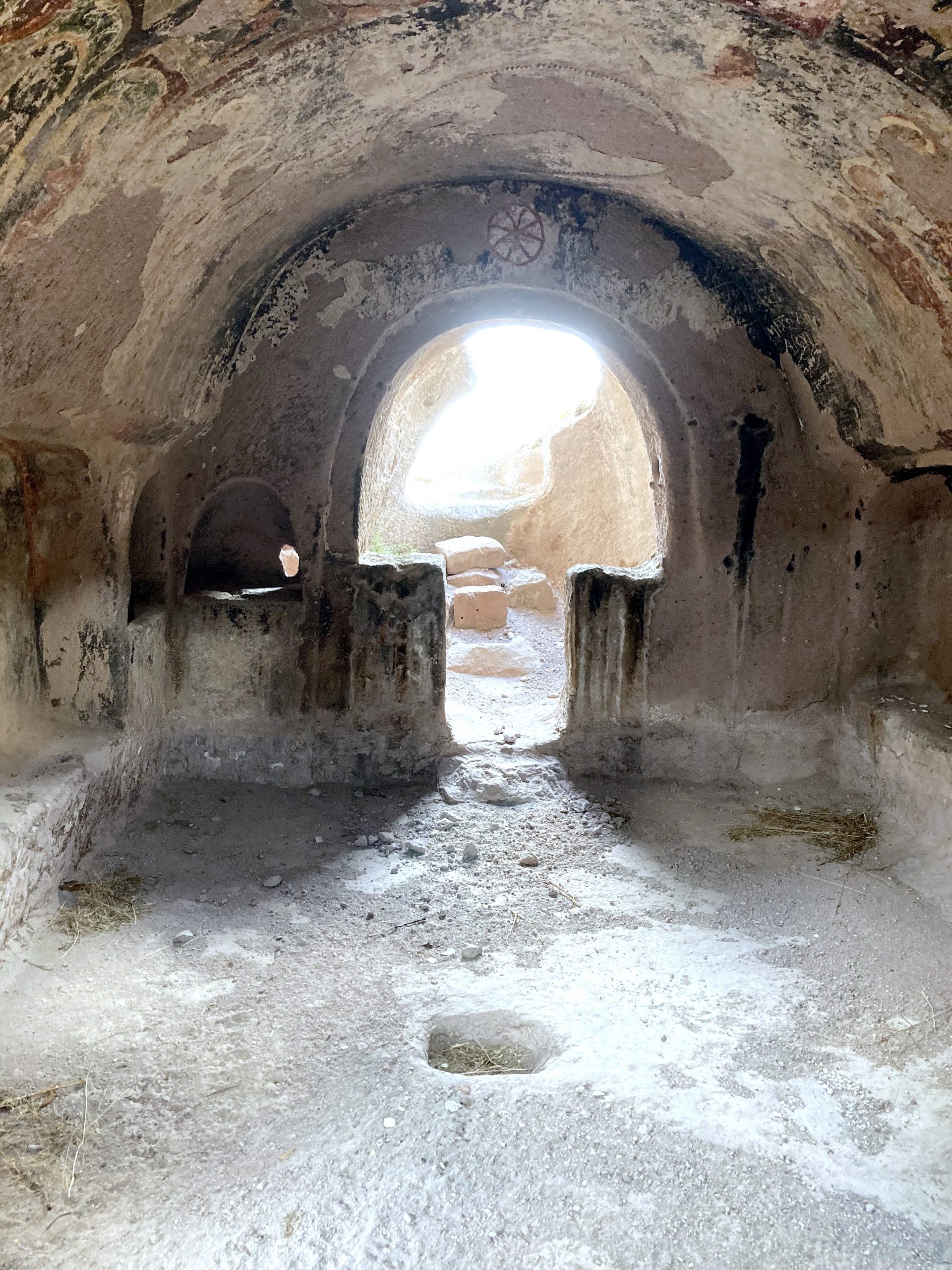
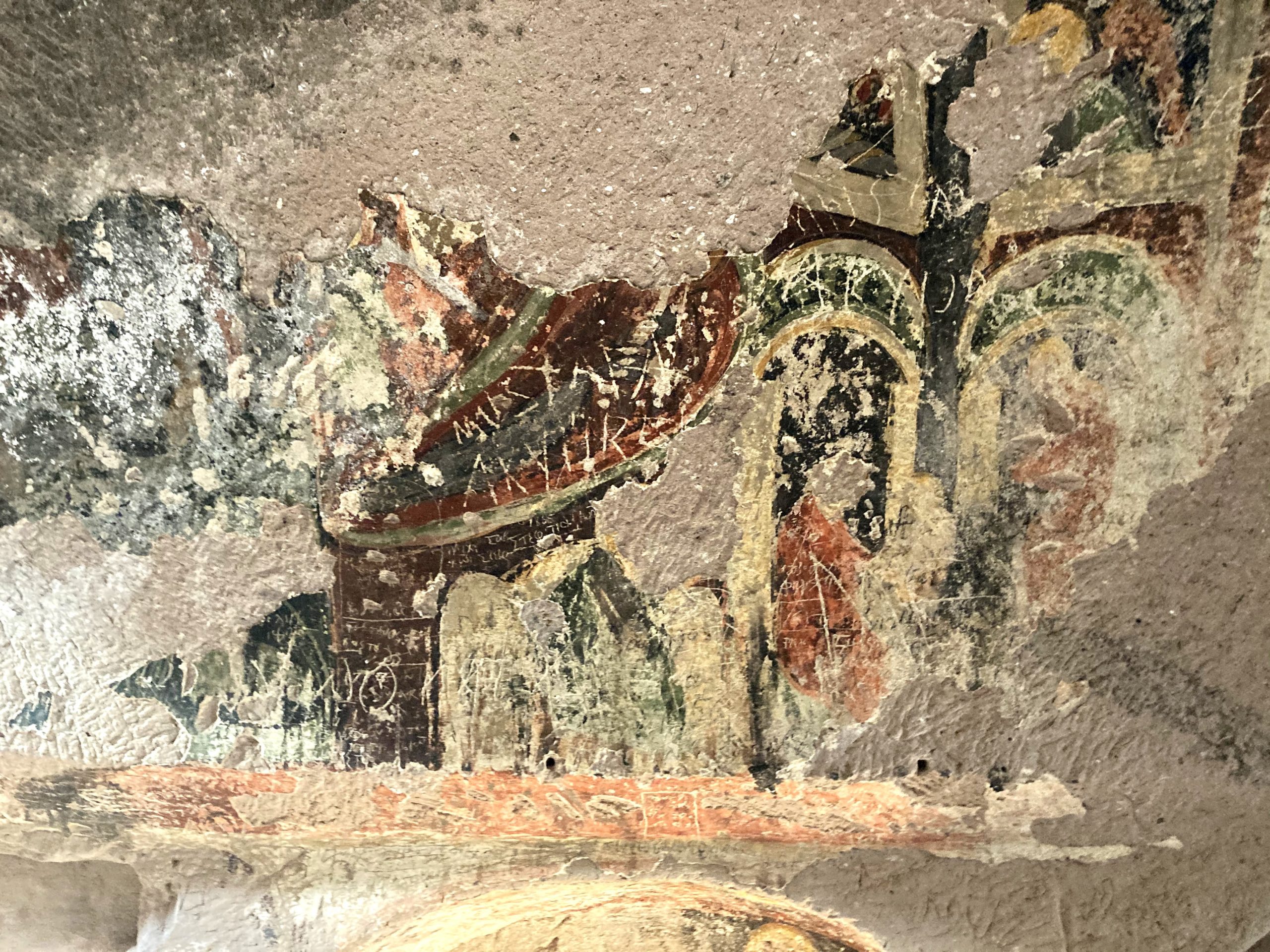
In the Gorgoli settlement, there is a holy spring, a group of cemeteries—some of which are Roman tombs reused in the Middle Ages—rooms, dovecotes, and churches built during the Byzantine and Ottoman periods. Almost all the conical rocks here were carved and used as houses or churches. There is perhaps no other place in the region with such a high density of Greek graffiti-style inscriptions as in Gorgoli. The Rum people left traces of their past by engraving their names, notes, and dates on many of the rocks here.
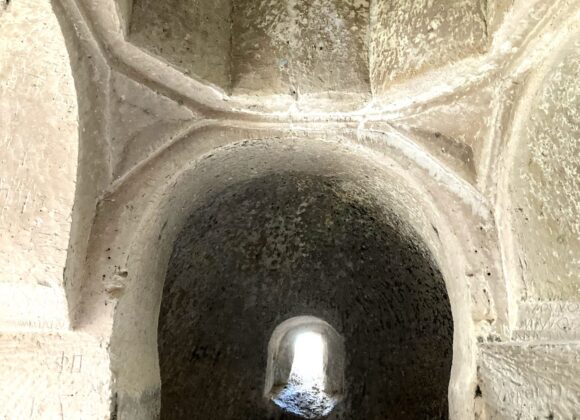
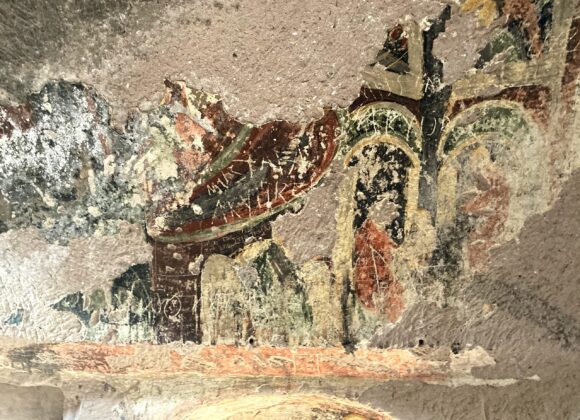
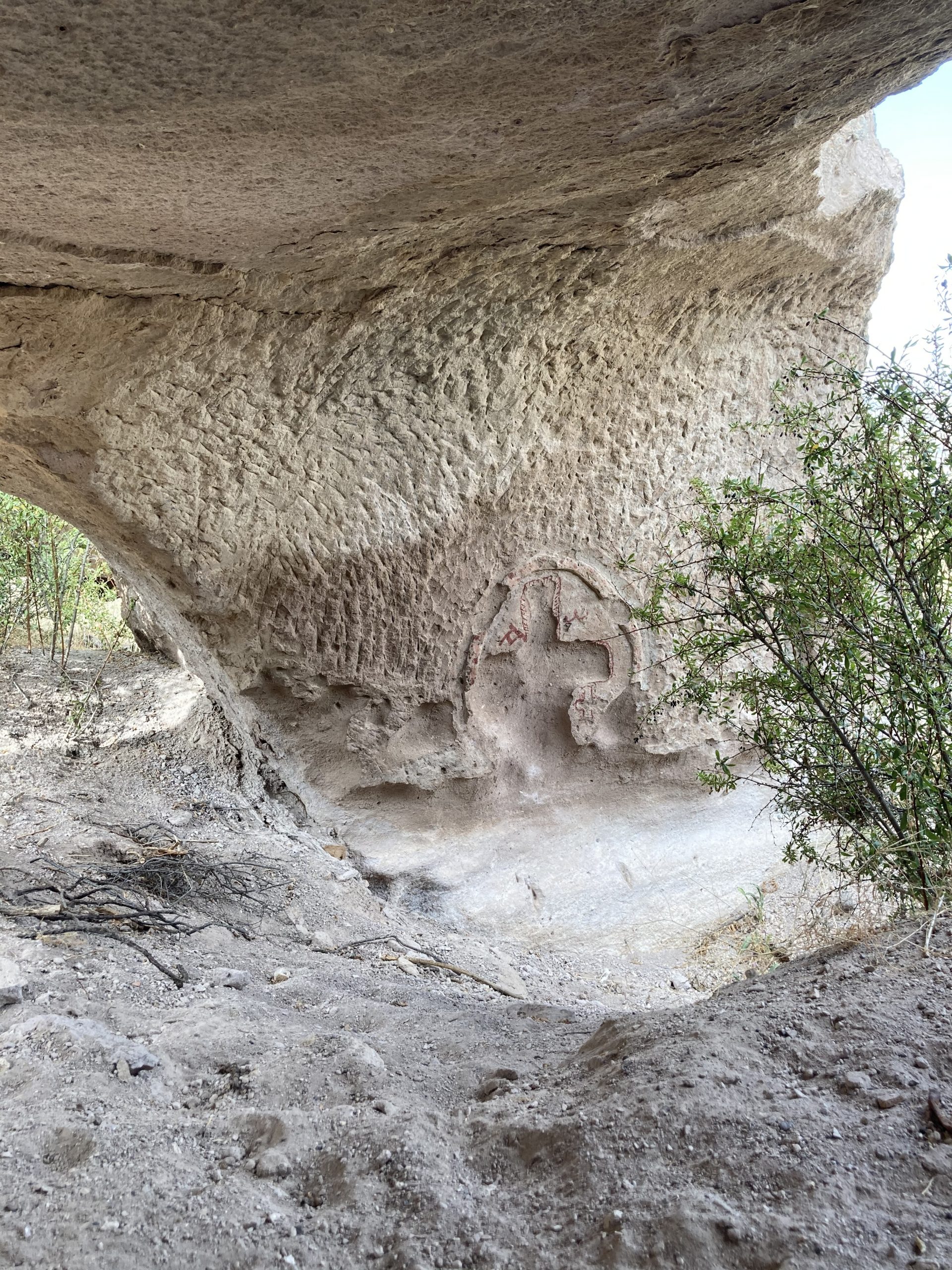
One of the most important churches in the settlement is the Church of St. John Theologos (John the Evangelist). It is described as a large, three-naved rock-carved church containing wall paintings, located in one of the final rock cones of Gorgoli. At the back of the church, there is a large room with a rectangular entrance carved into the rock. On the wall opposite the entrance is the inscription: “House of God / Saint Orator / Whether fruitful or barren / Protect the virtuous / June 1447”. There are other ruined rural churches near this site, including the Three Bishops Church (Balta, 2005).