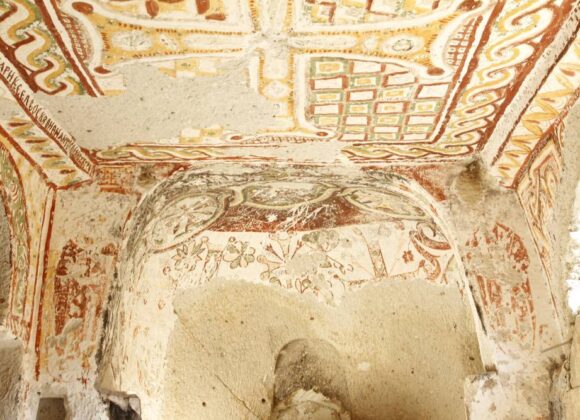
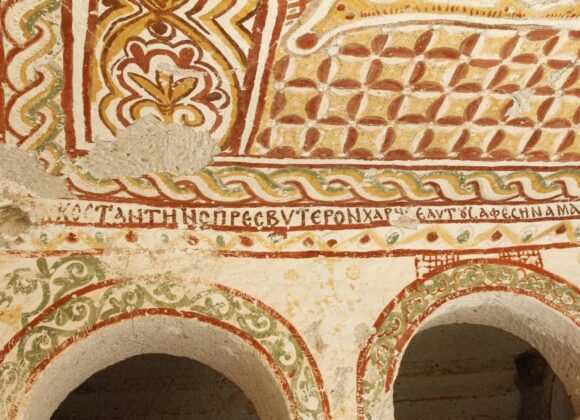
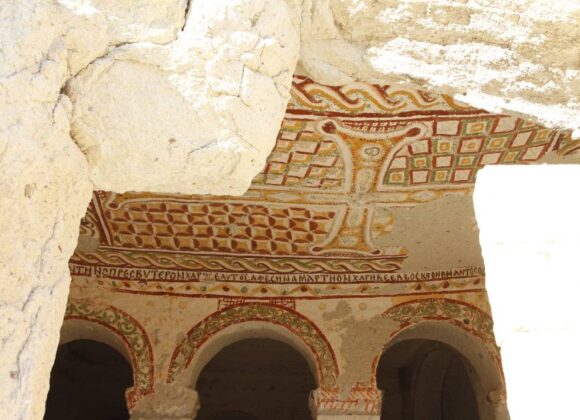
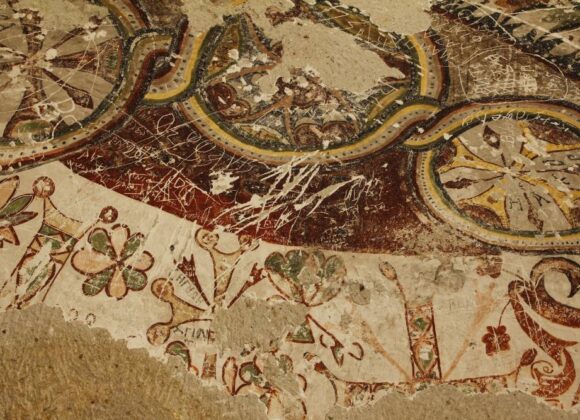
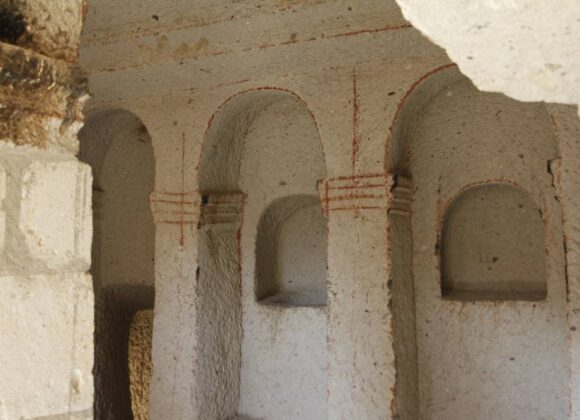
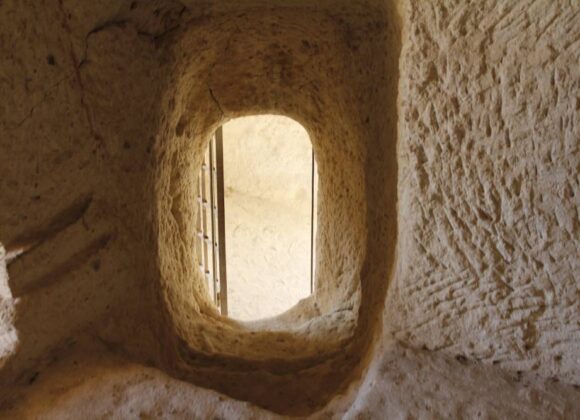
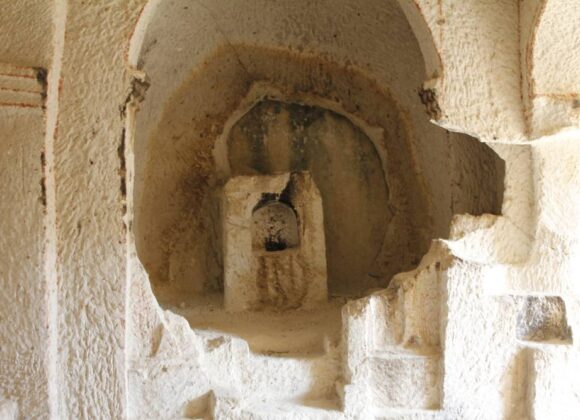
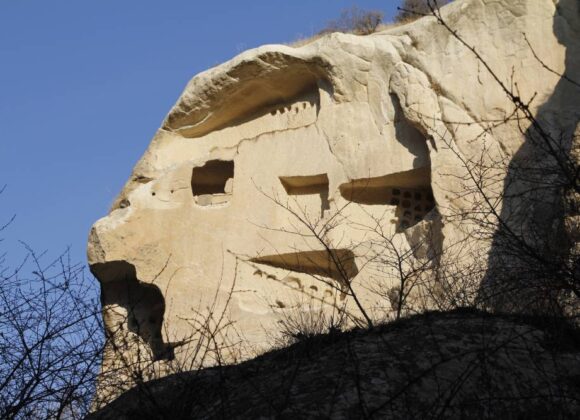
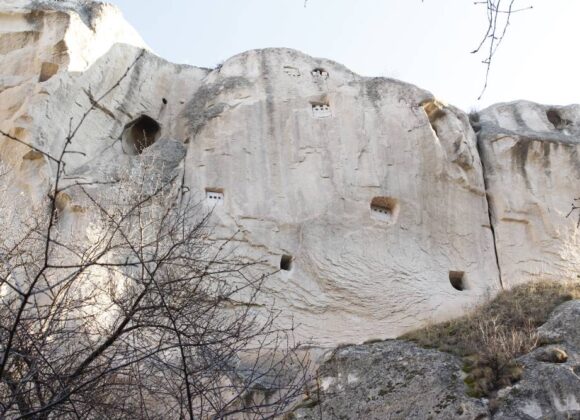
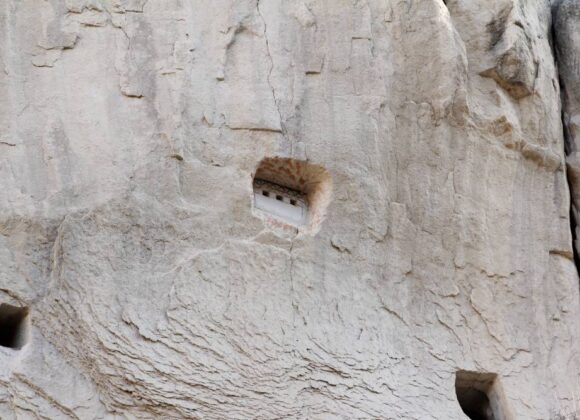
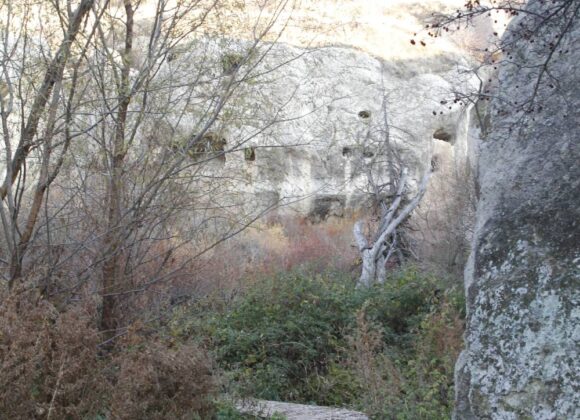
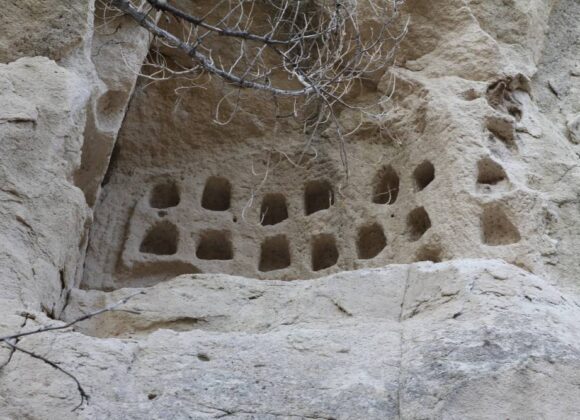
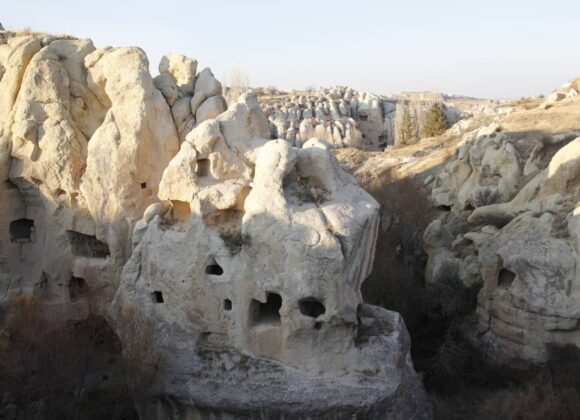
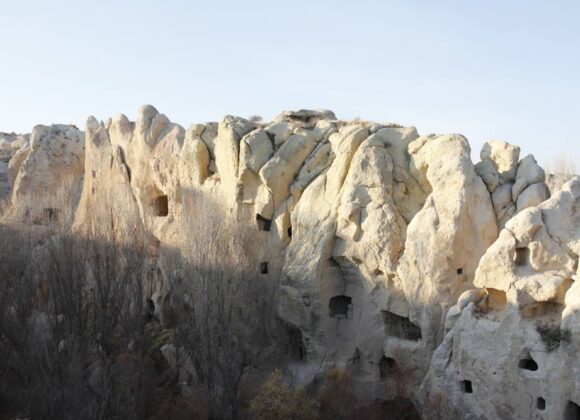
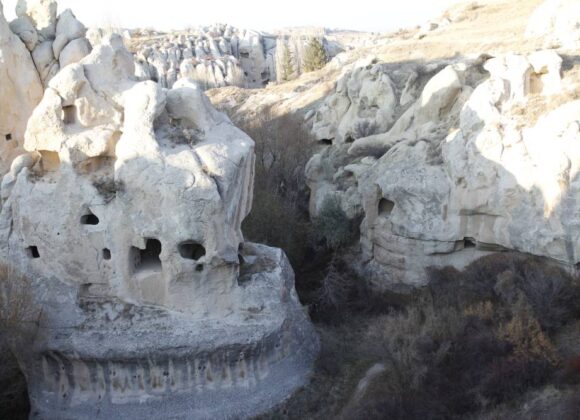
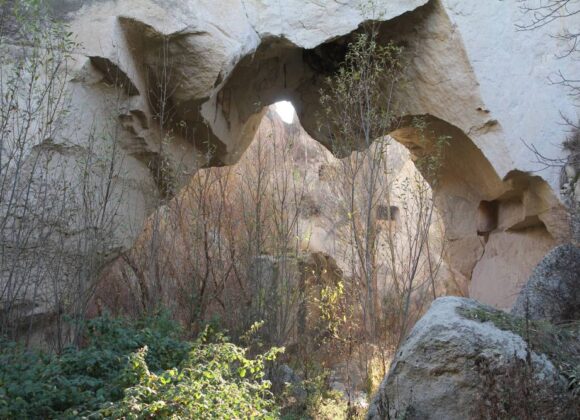
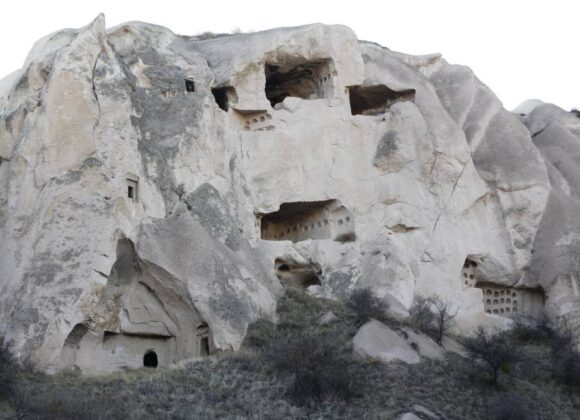
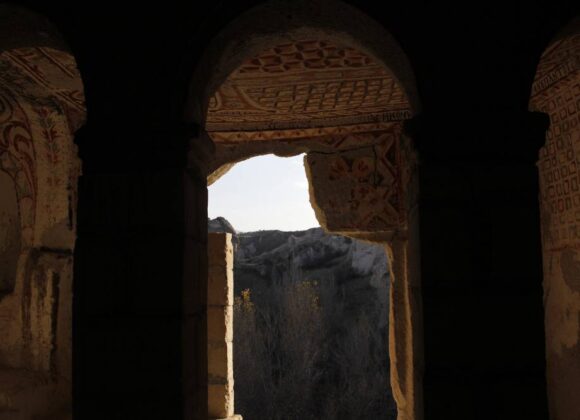
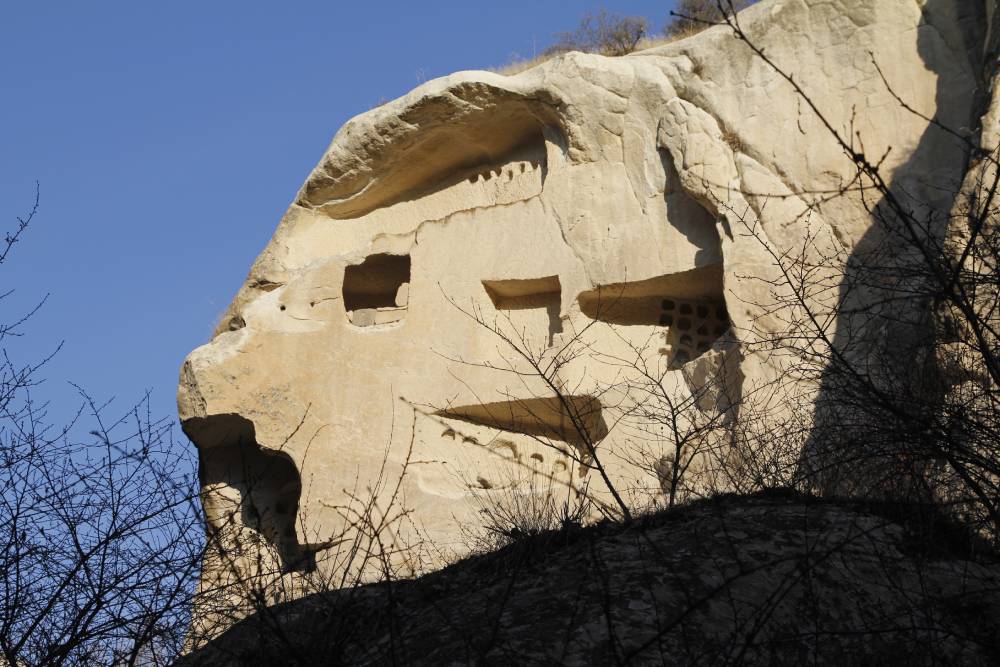
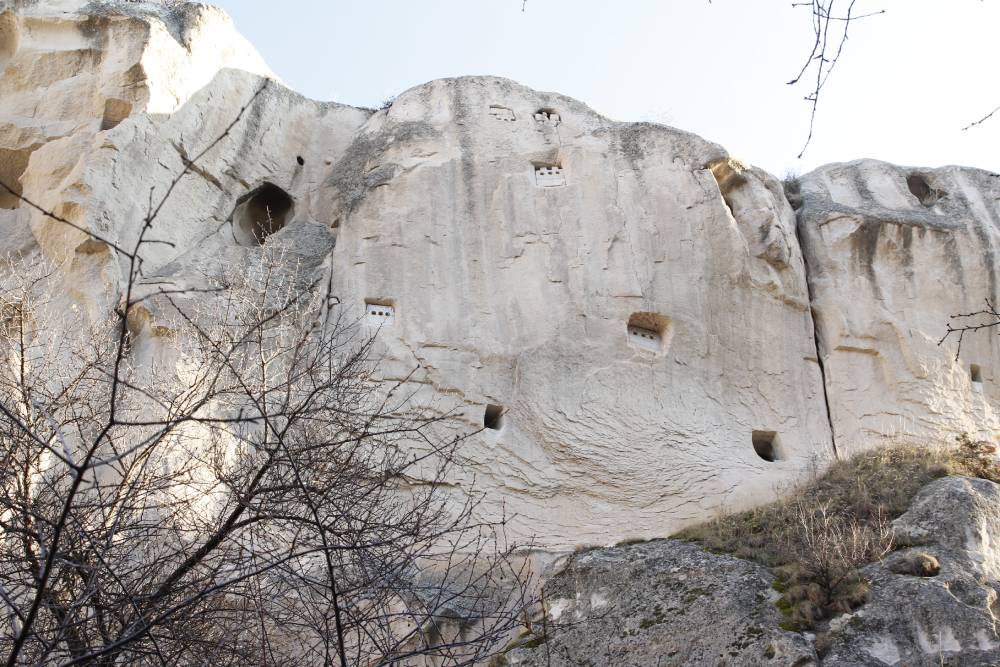
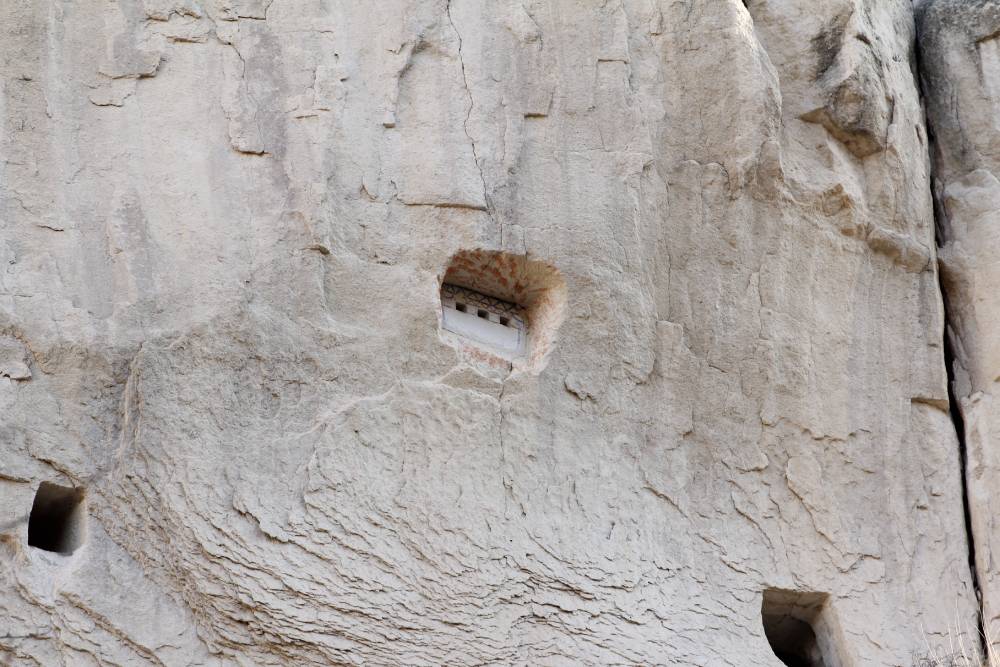
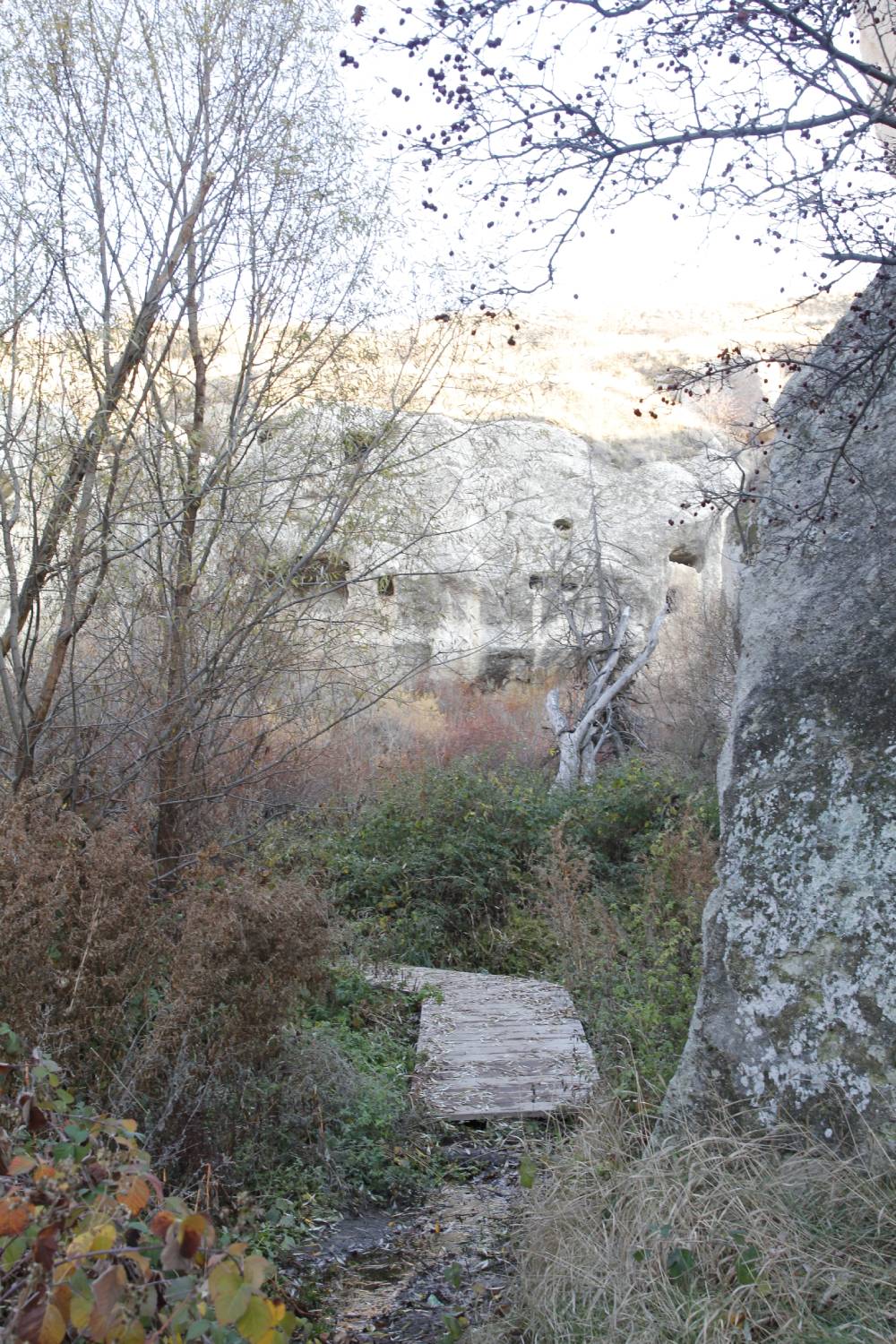
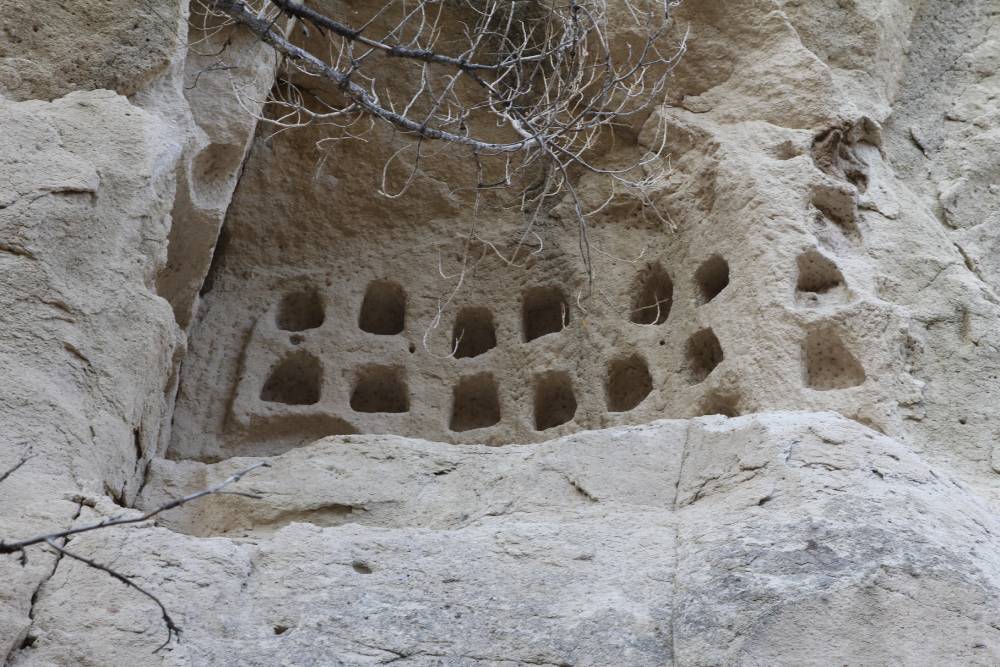
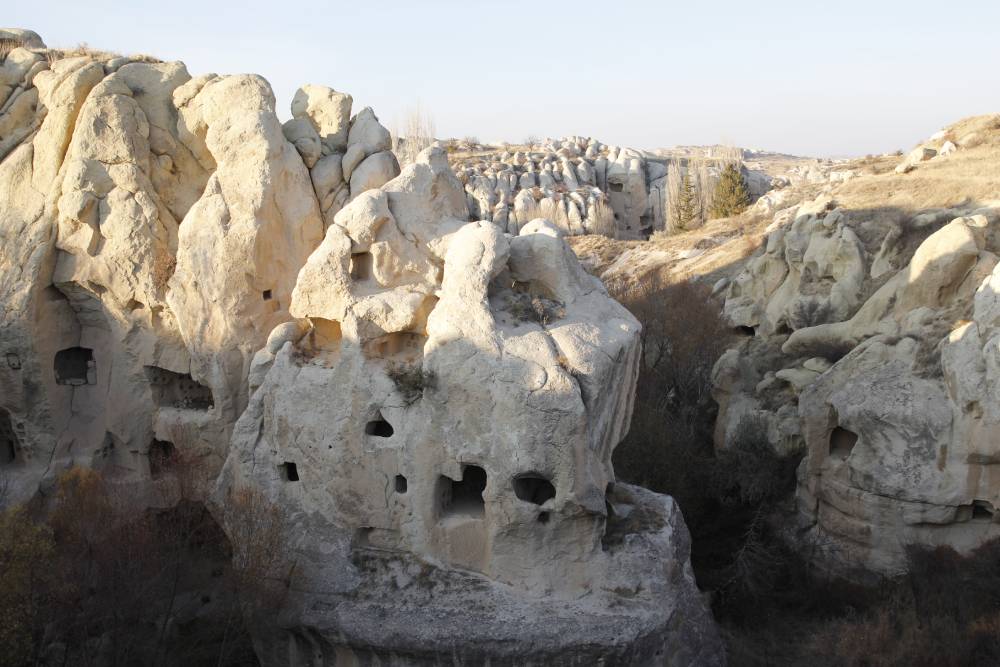
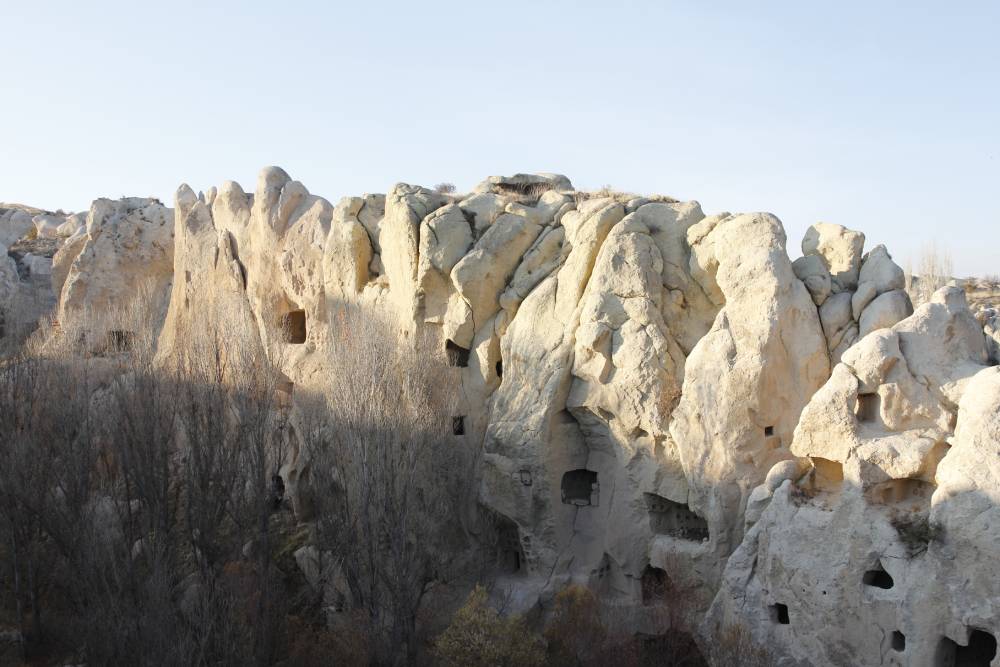
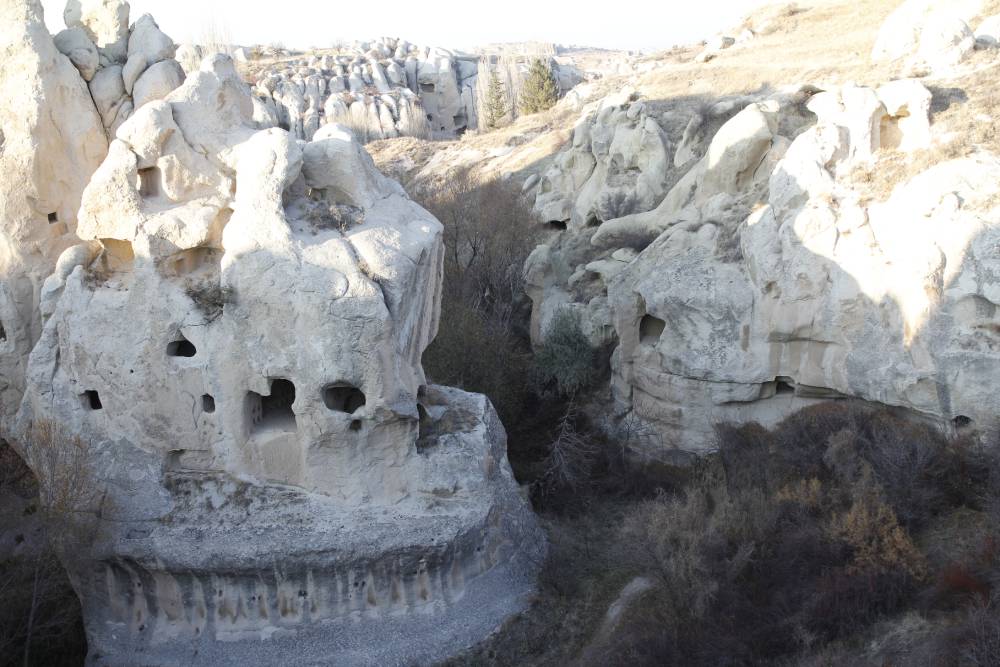
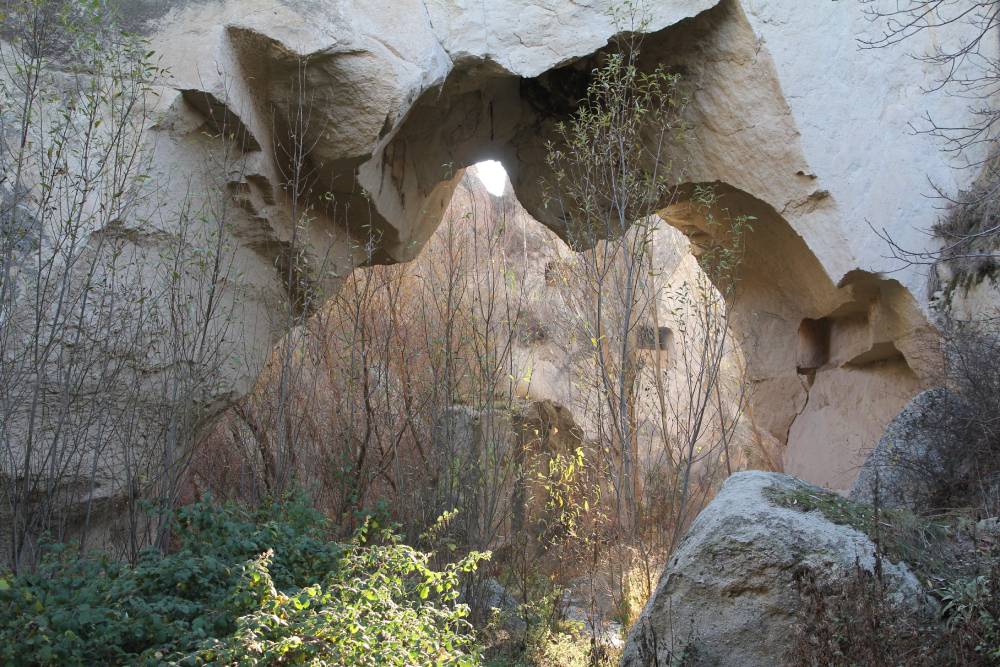
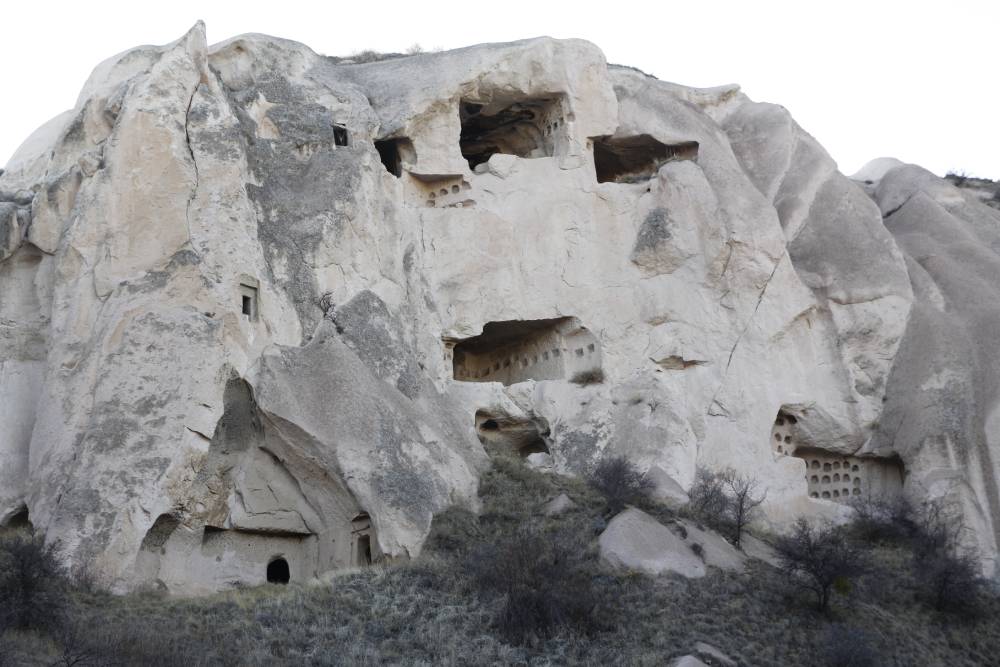
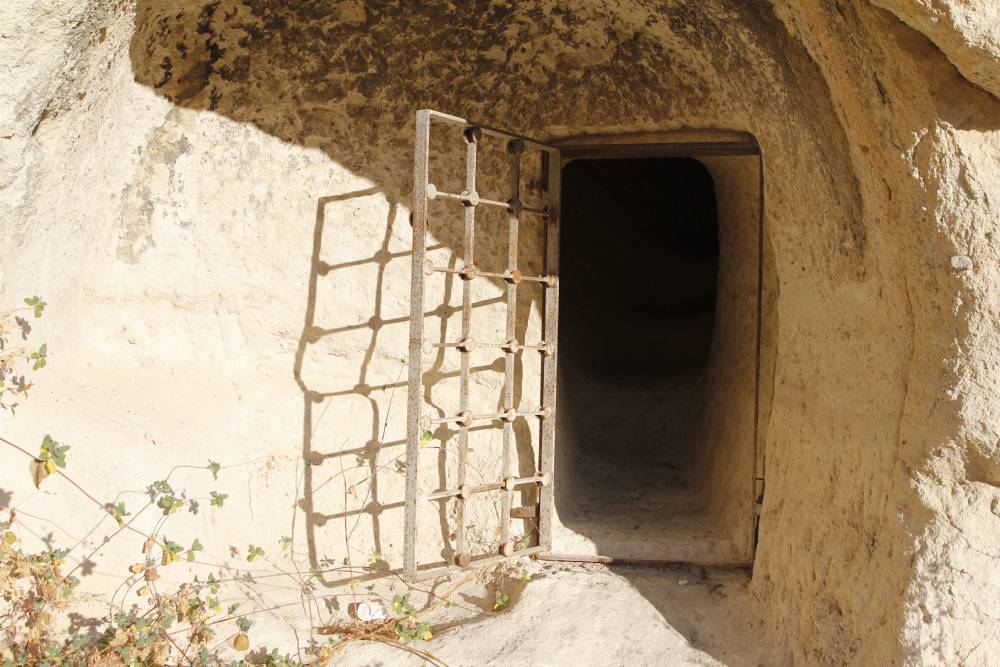
The valley, located approximately 2 km southwest of Mustafapaşa, is known as Gomeda Valley today. The valley, which was called the “Kanavuria” region during the period of the Rum community, forms one of the clefts of Elevres. The valley contains churches, shelters, dovecotes, vineyards, and an underground city carved into the rocks. Üzengi Stream, flowing through the valley, creates a harmonious landscape where rocks and lush vegetation intertwine.
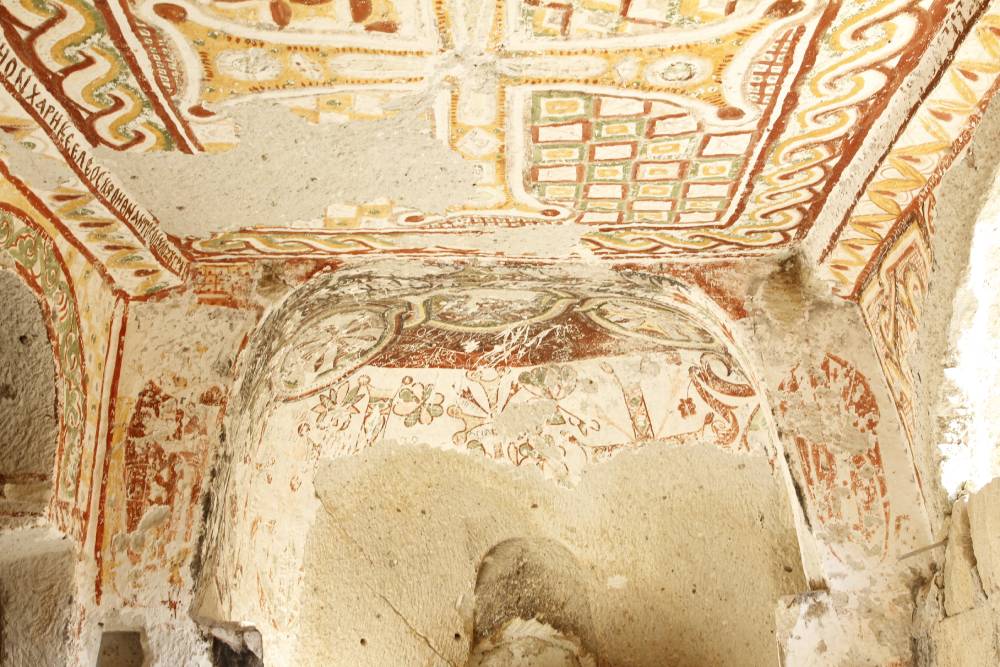
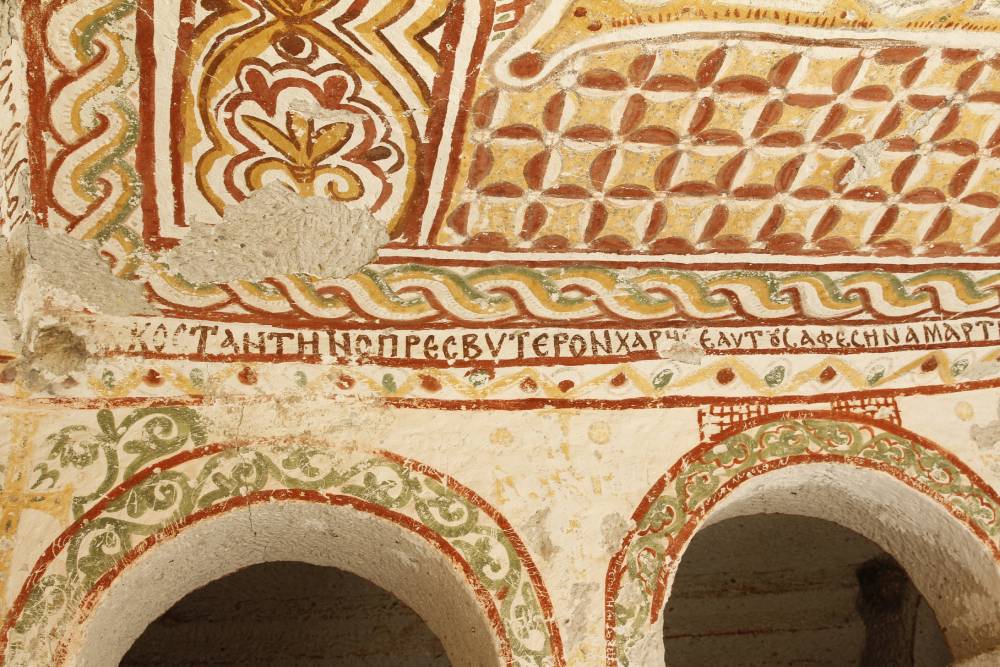
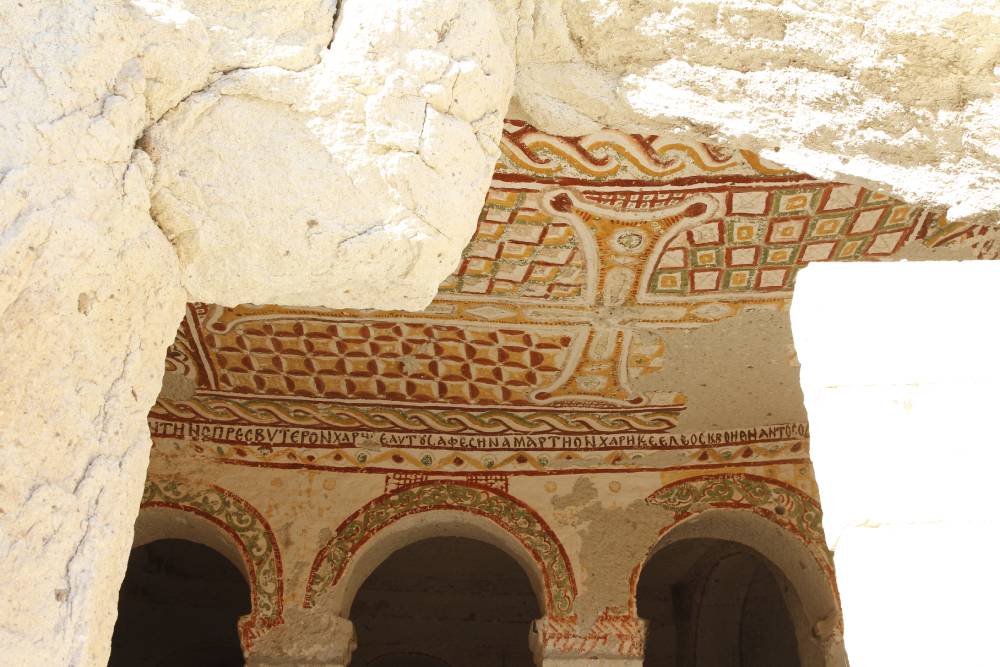
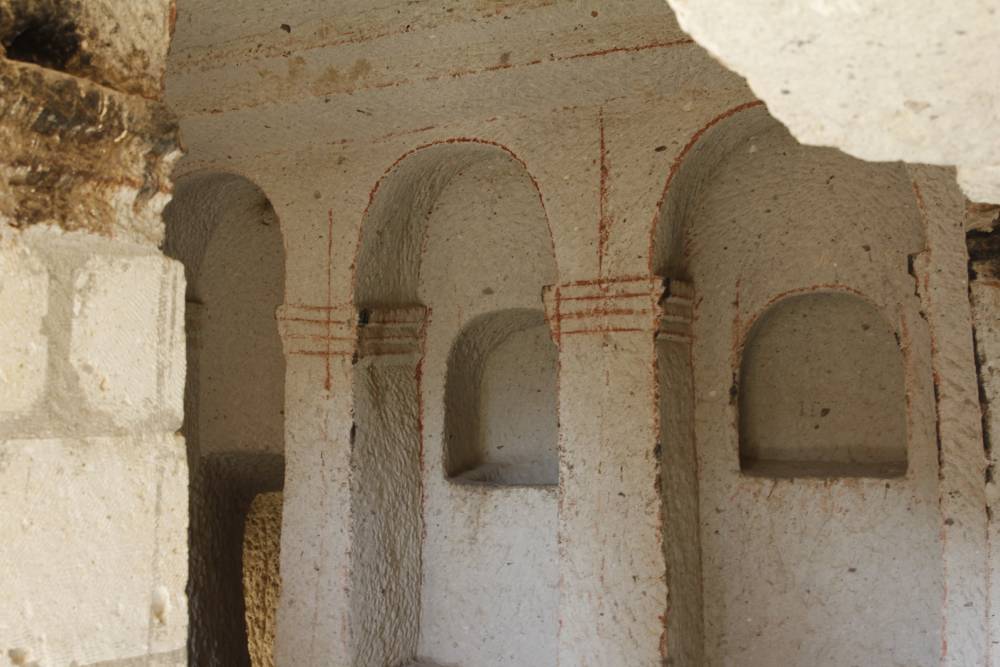
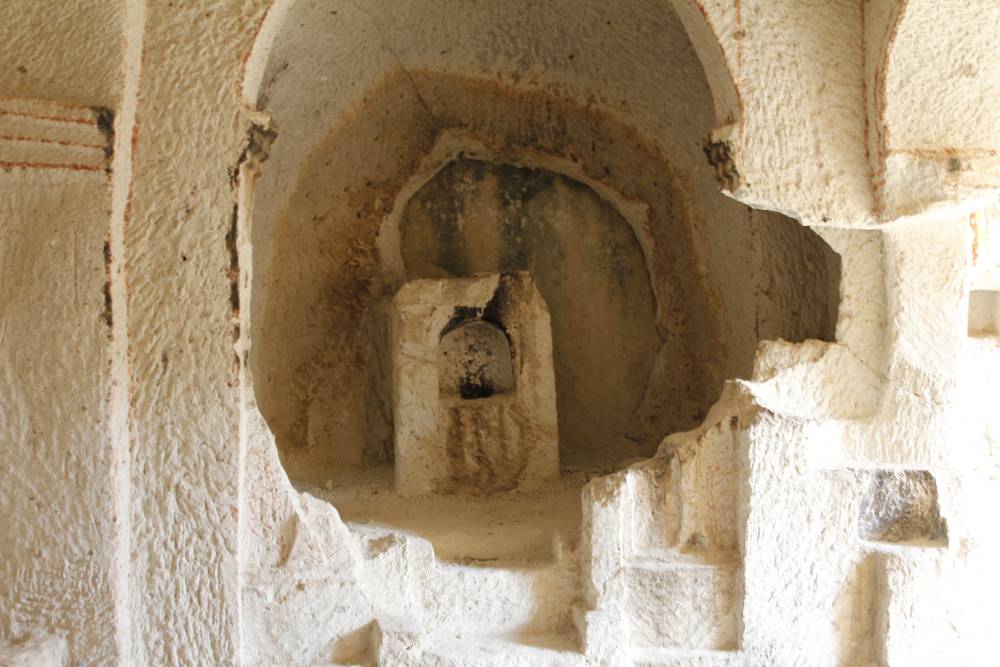
It is rumored that this area was once a village consisting of six hundred houses. According to one narrative, while a Byzantine emperor was passing through on a campaign, the village residents requested him to build the Timios Stavros Church, which means “Holy Cross” (Balta, 2005). The church, which remains open to visitors today, is also known as Alakara. The Timios Stavros Church (10th–19th century) is located near the entrance of the valley. This structure is so central to the area’s identity that the settlement has long been identified with the name of the church, which has existed since the Byzantine era.
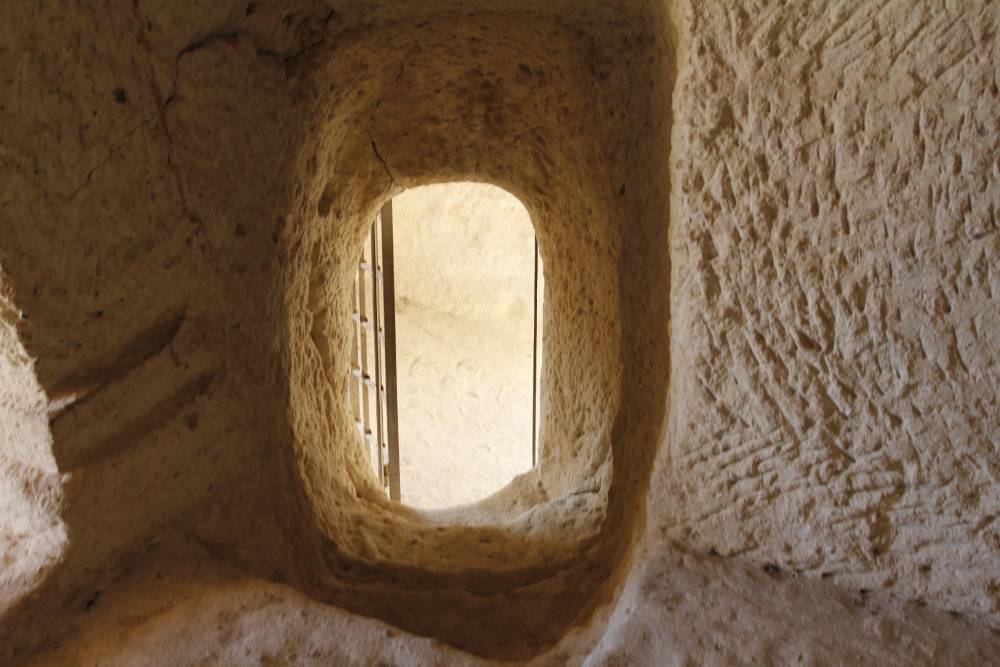
In addition to churches, there were rock structures in the settlement used as shelters and residences. A prominent example of this is the Stavropoulos family, who originally lived in the rock formations around this church and were named after the sanctuary when they later settled in Sinasos.
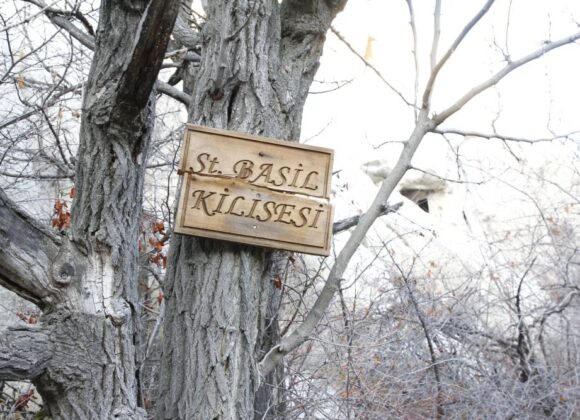
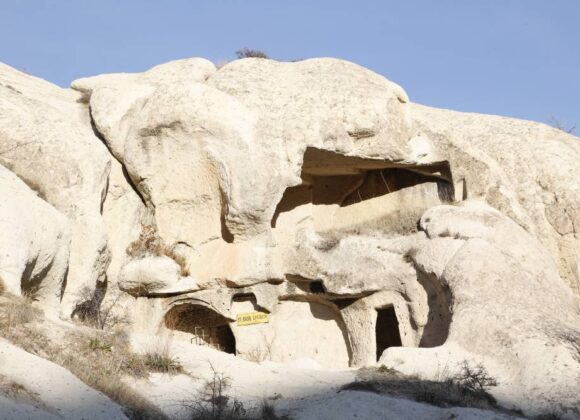
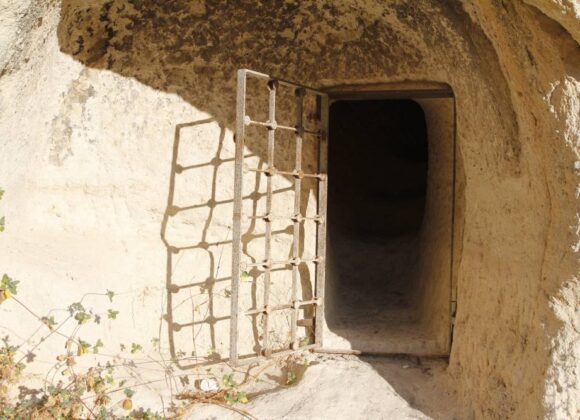
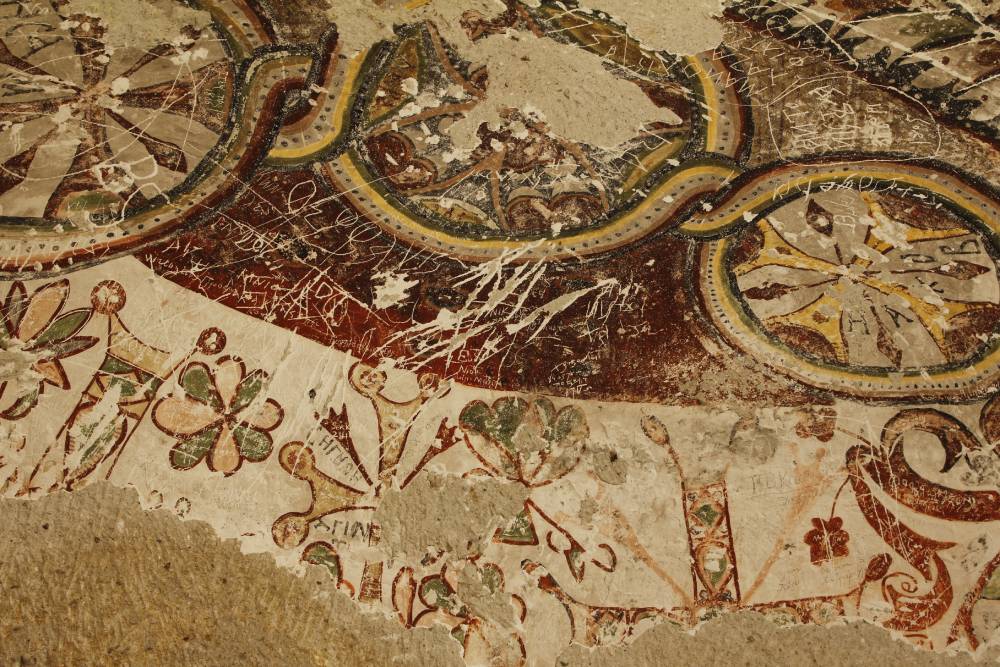
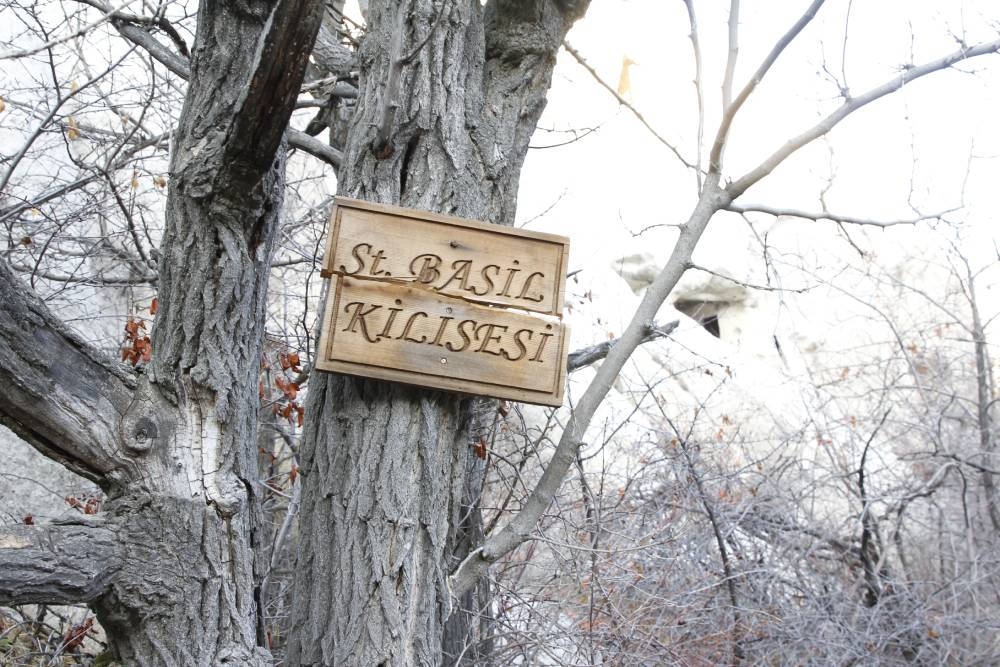
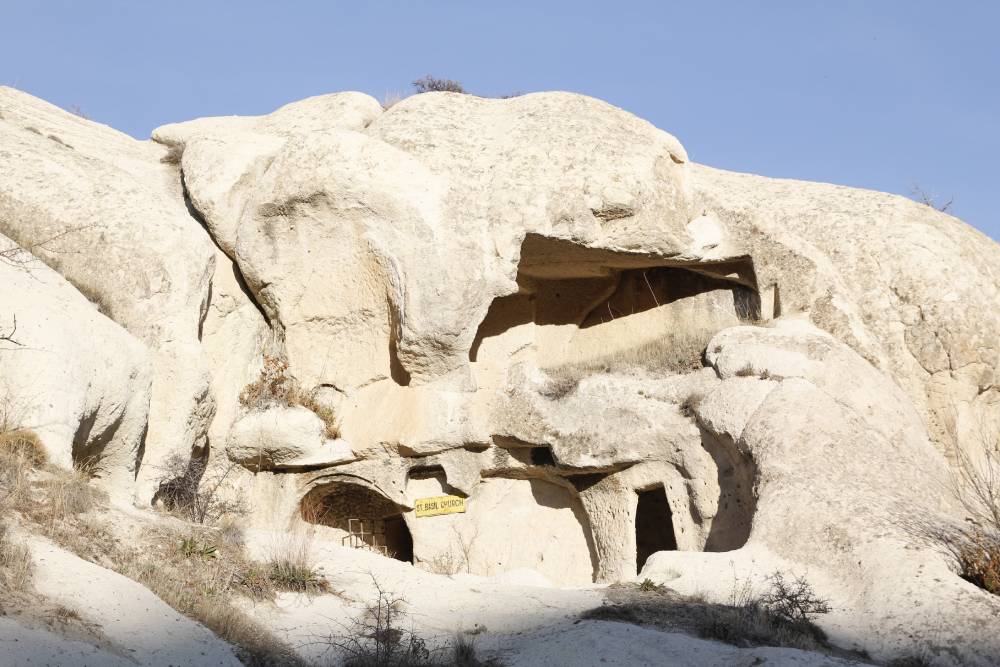
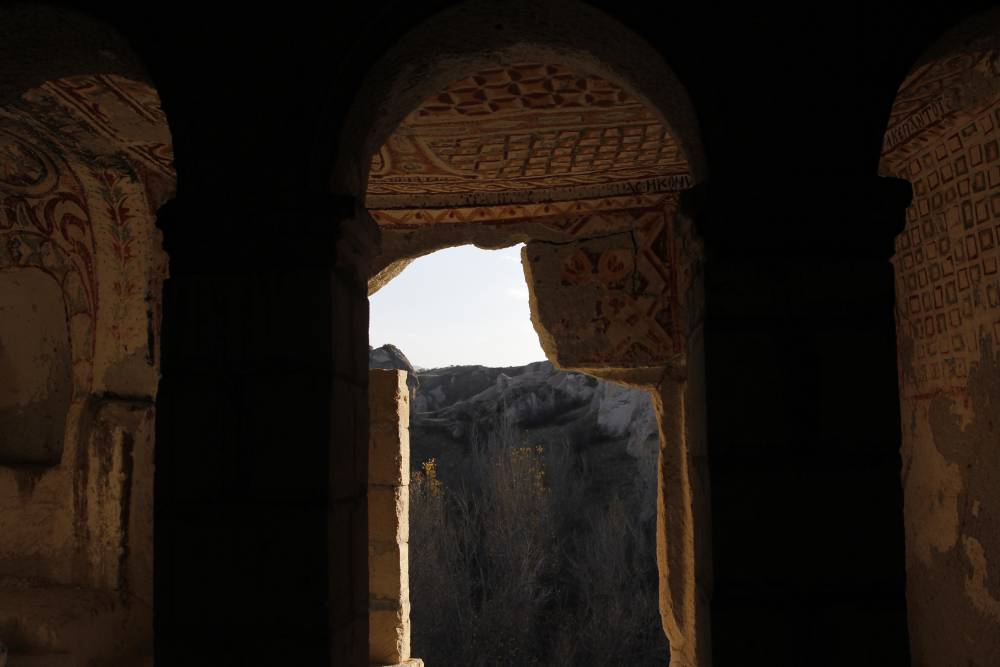
Another significant church in the valley that attracts attention and can still be visited today is the Church of St. Basil, featuring murals dating back to the 9th century. This is one of the two churches in the village (the other being in Beydere) dedicated to St. Basil, one of the renowned “Cappadocian Fathers.”
Additionally, there are other Byzantine-period churches in the surrounding area, such as the Merdiven Church (9th century) in the Derindere Valley to the south, and the Hacı İsmail Dere Churches (10th century) in the valley known as the “Valley of the Virgin Mary” or Kara/Karae. All of the aforementioned churches are adorned with historical murals.