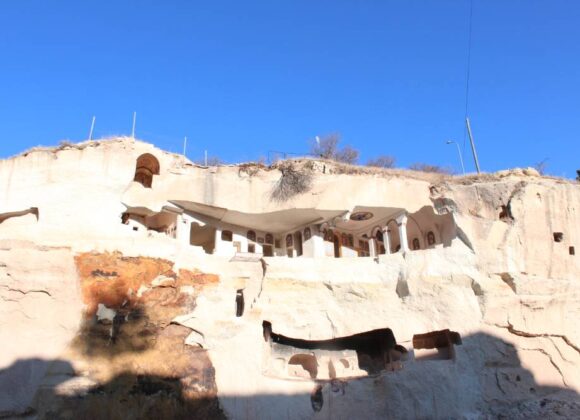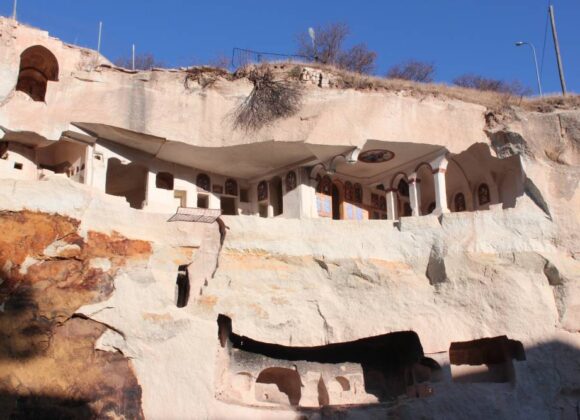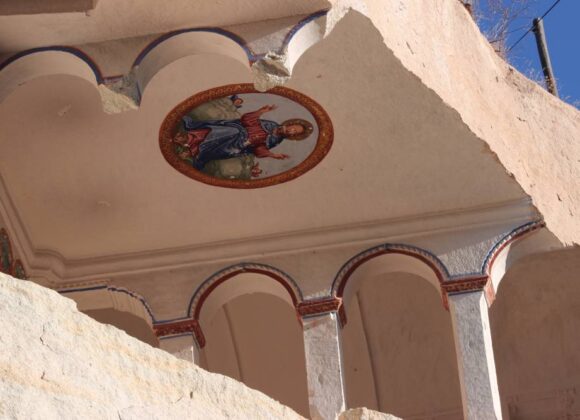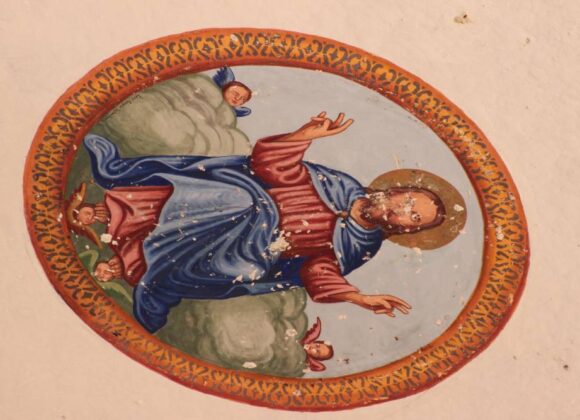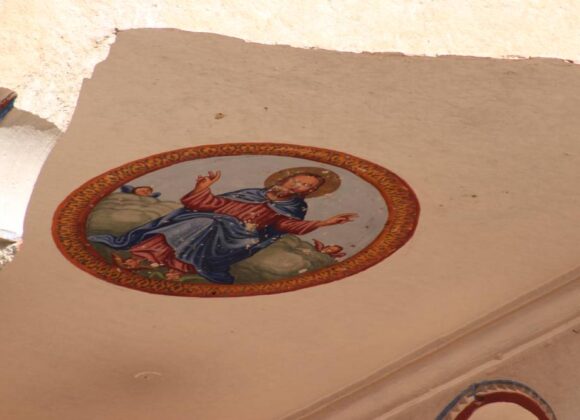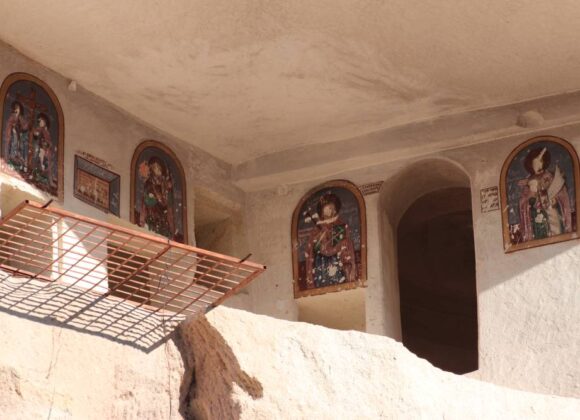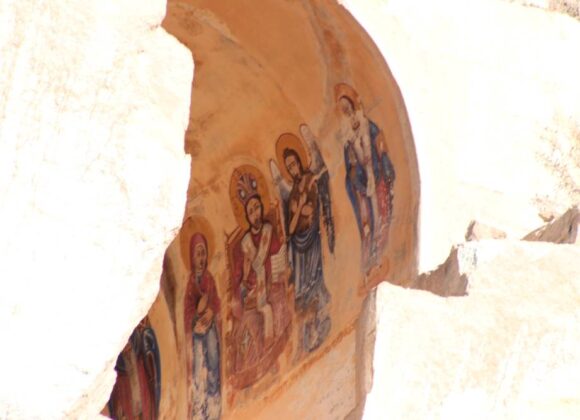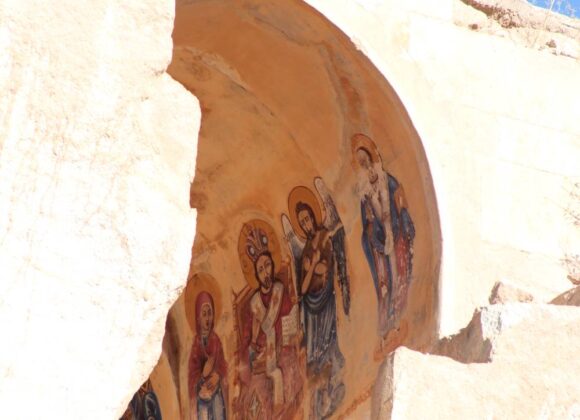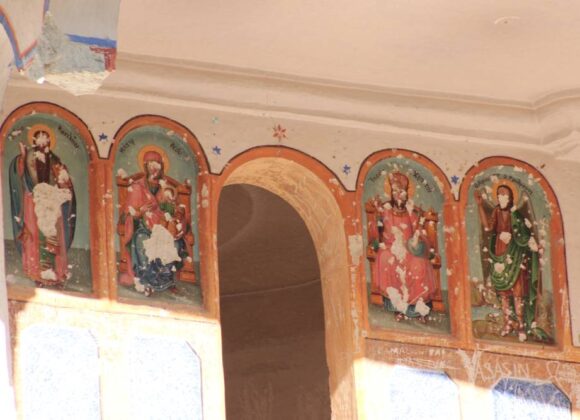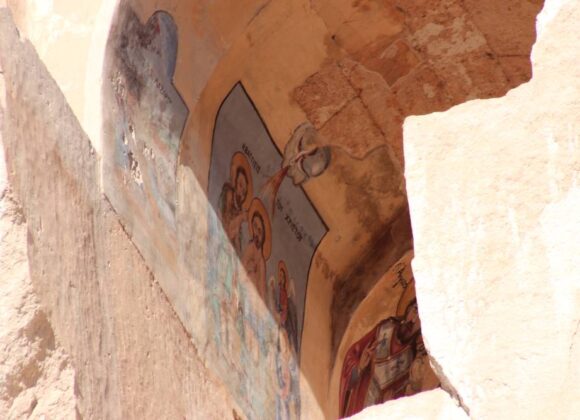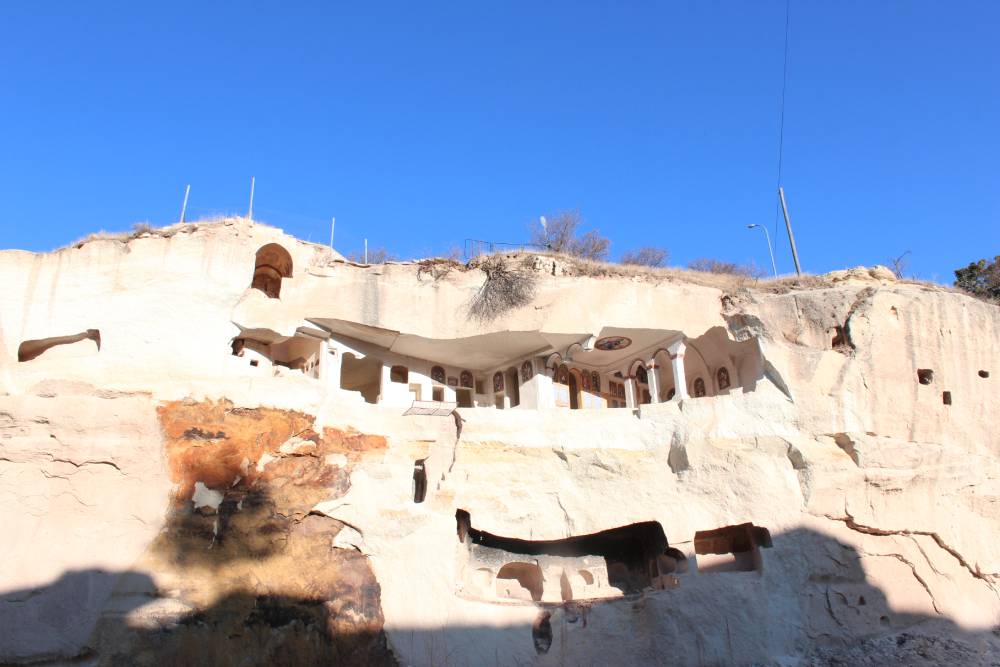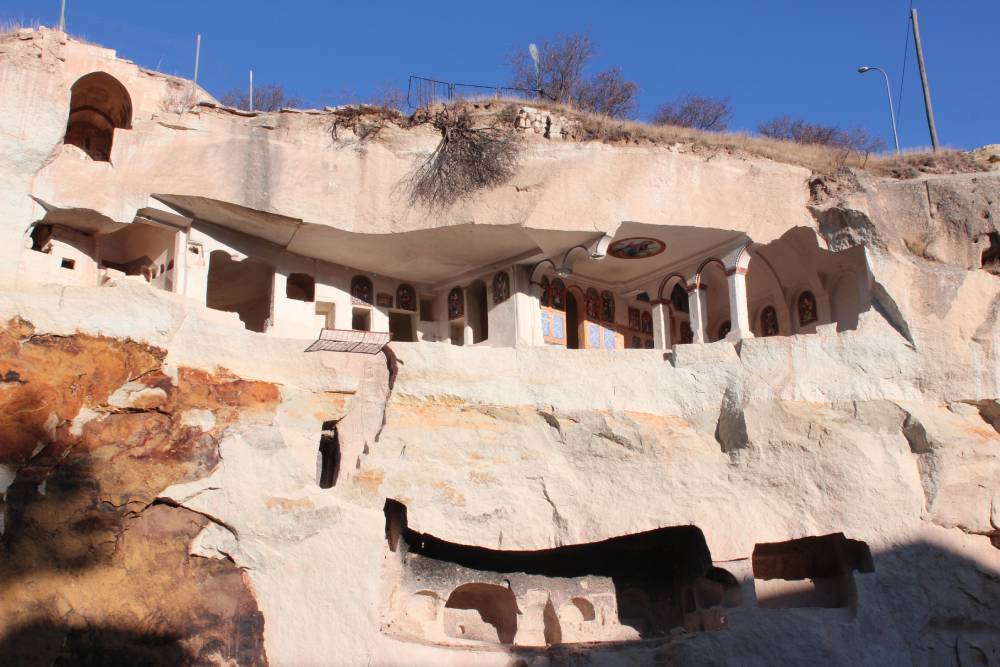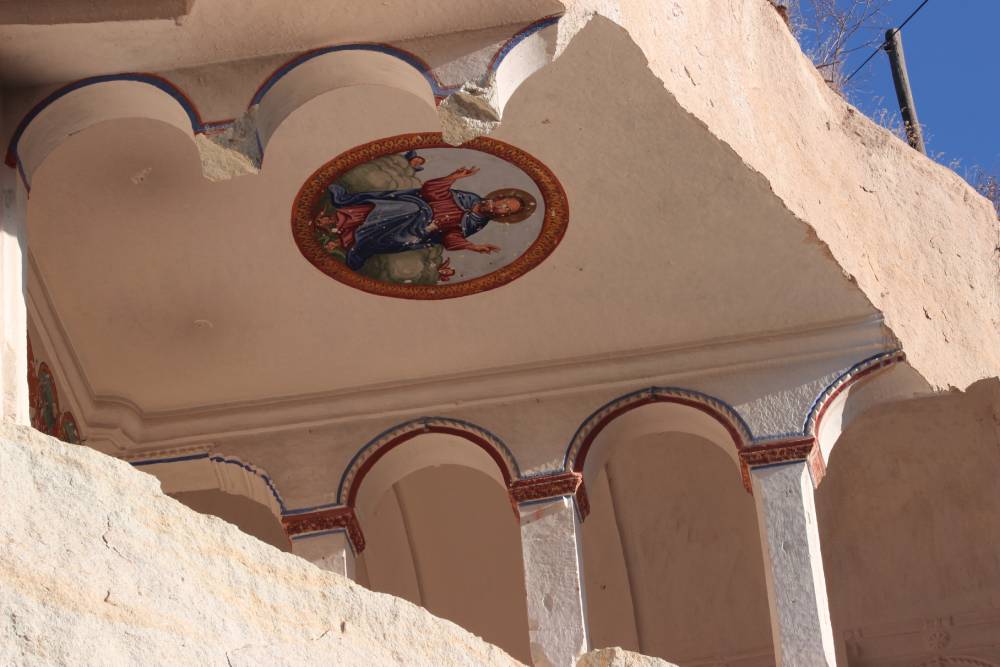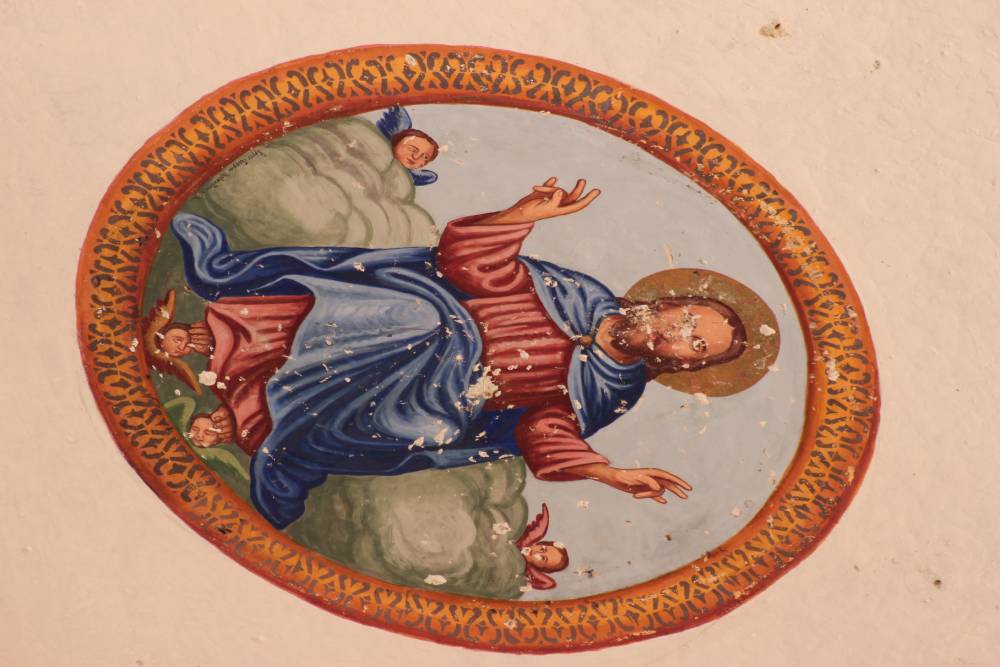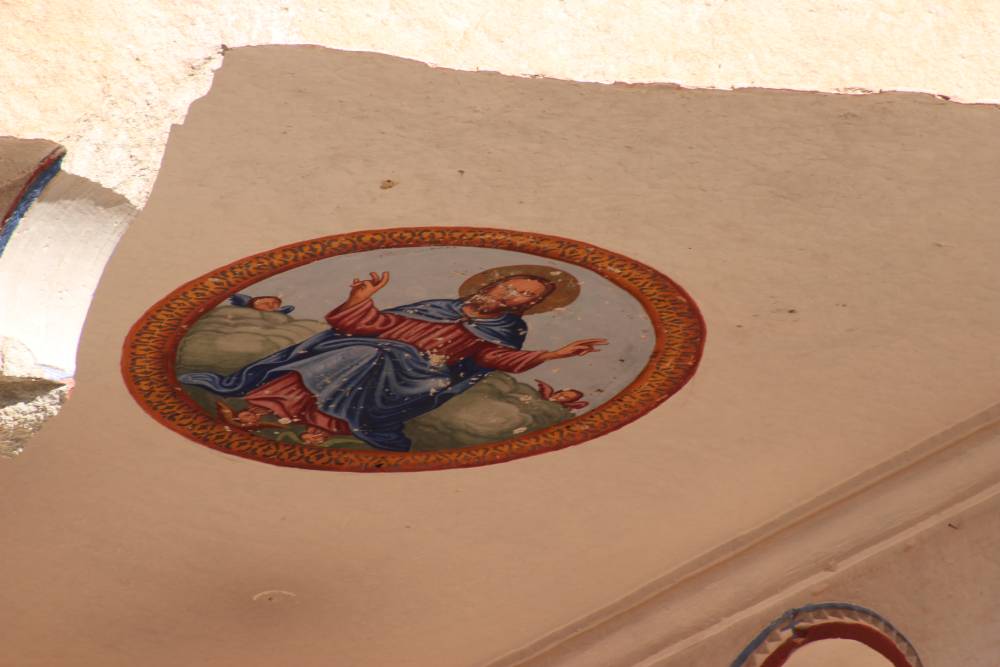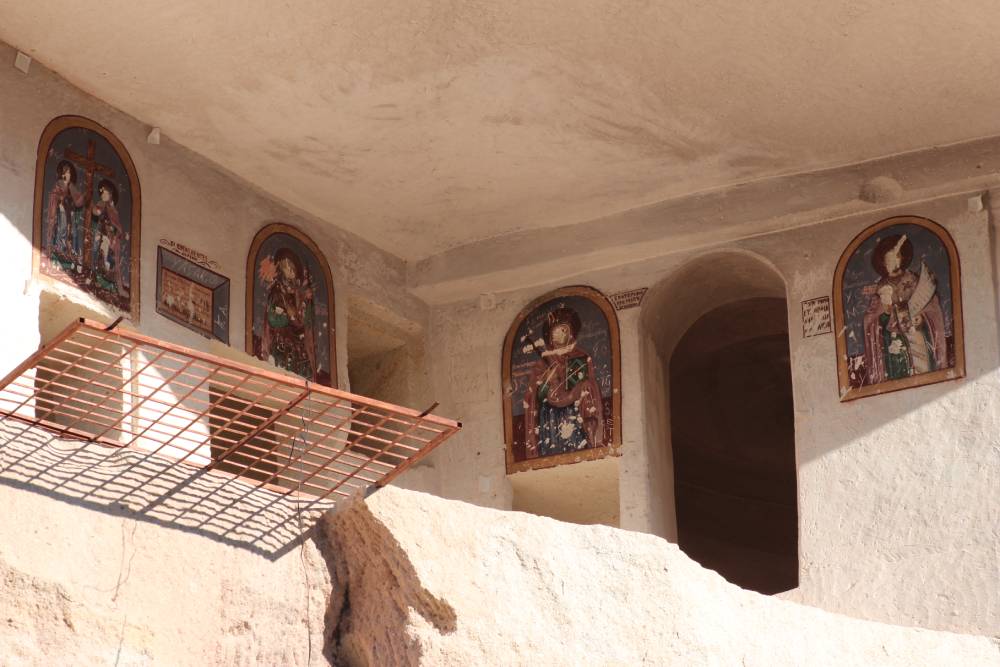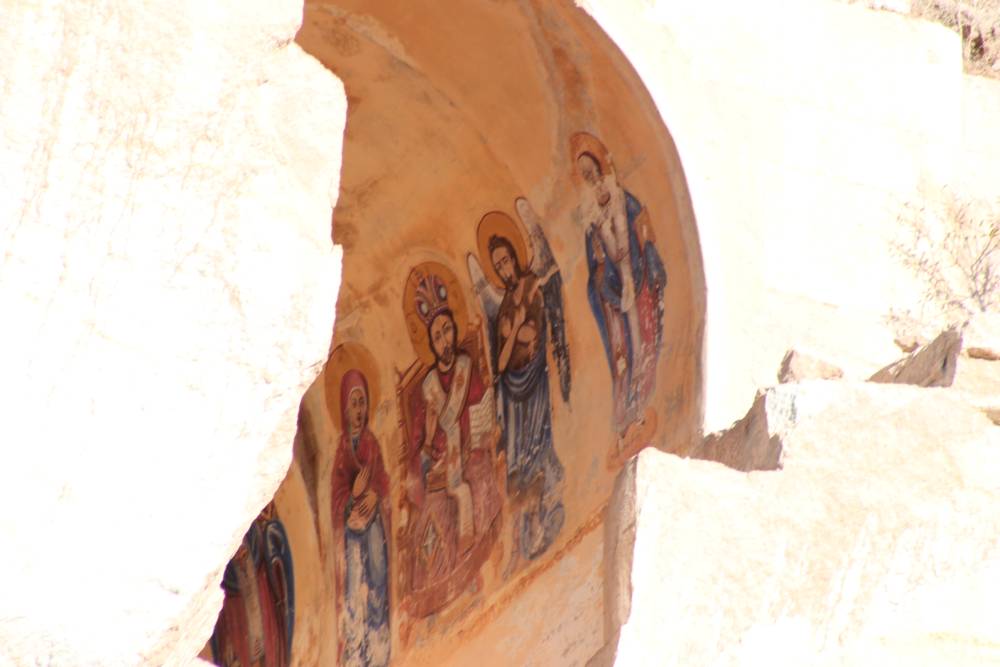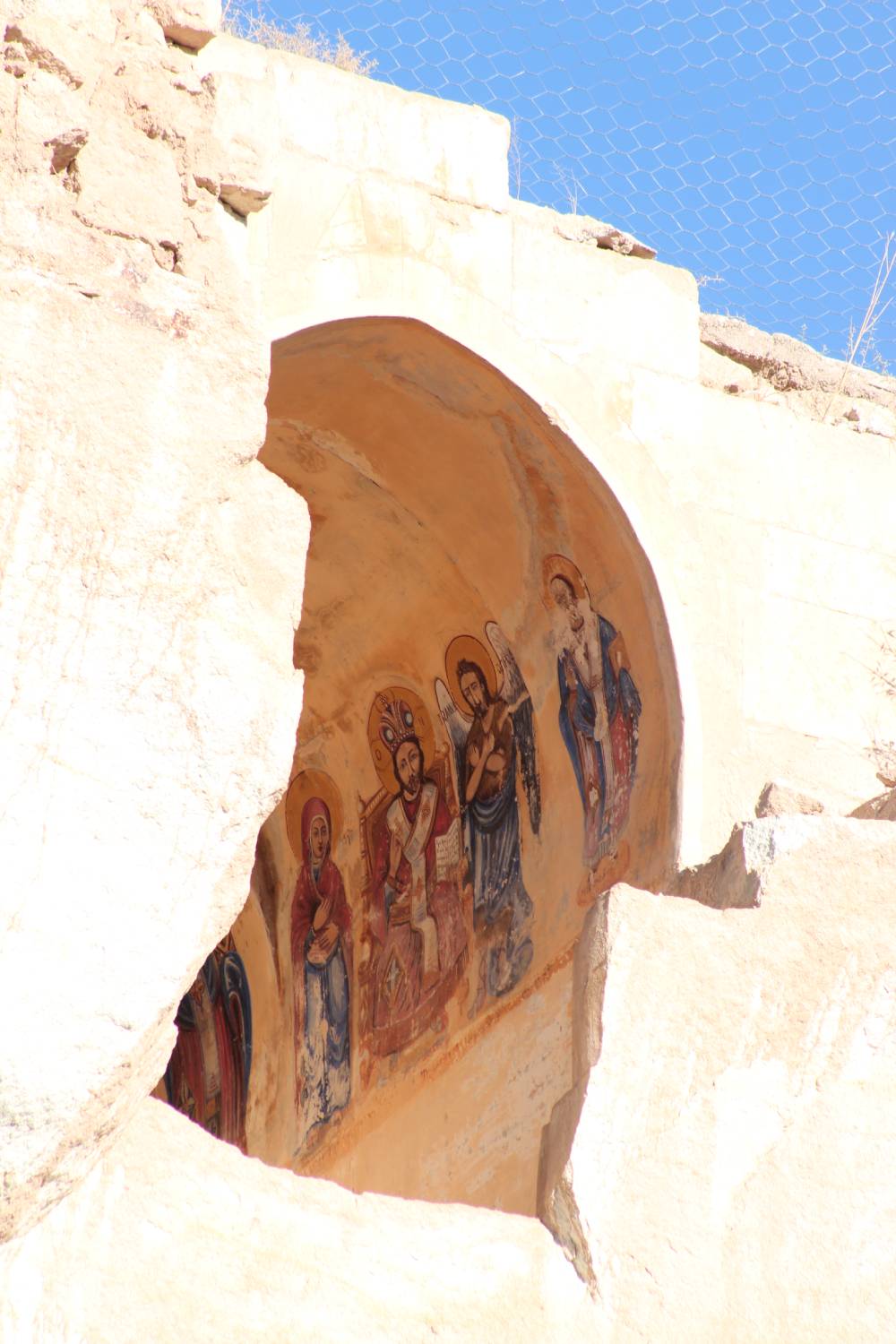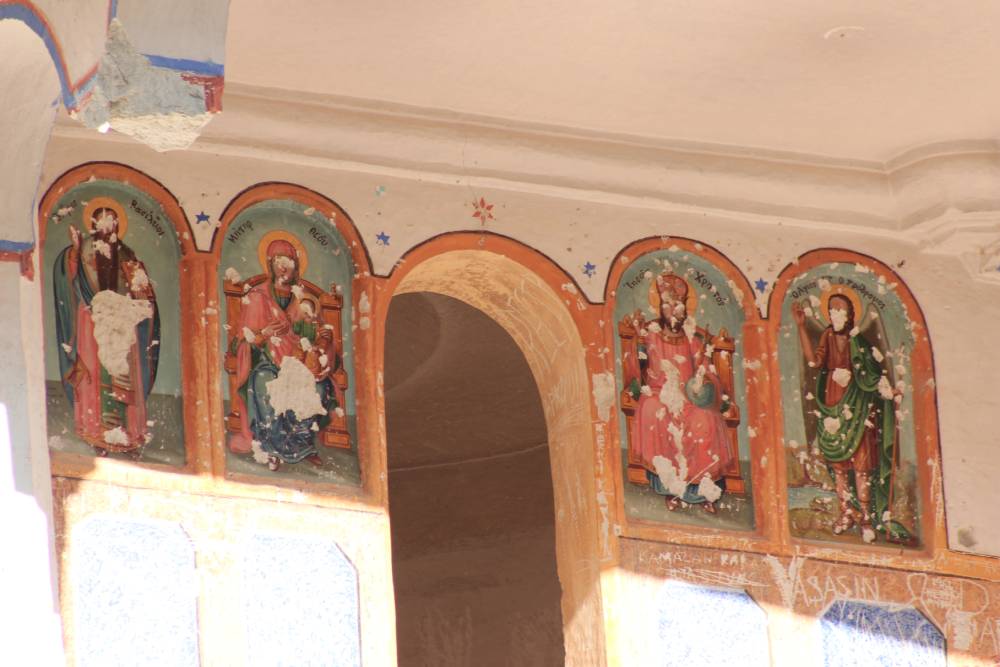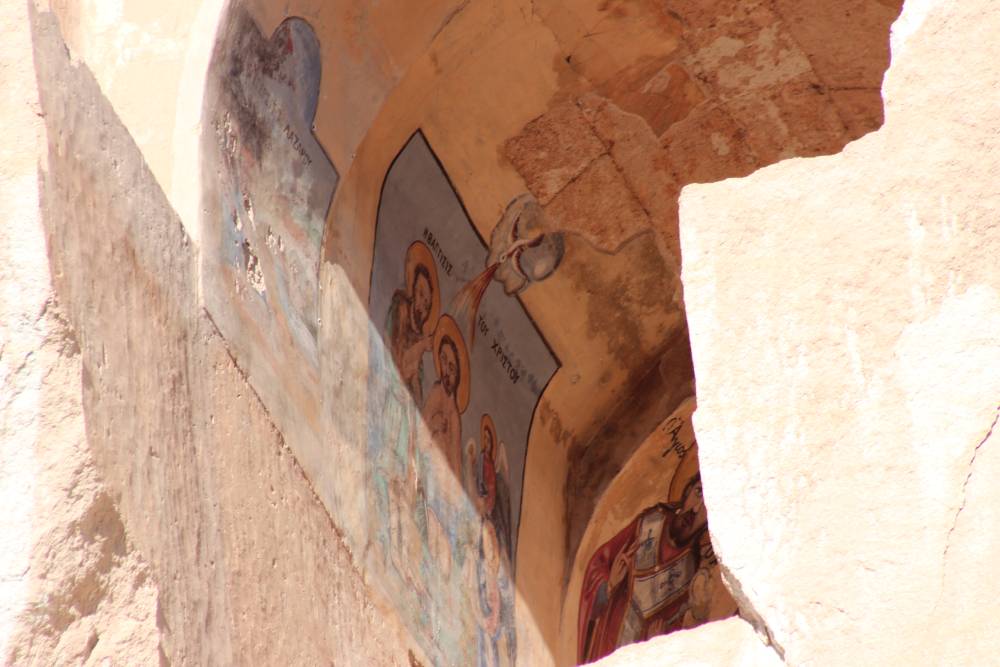
The Church of Saint Basil is located on the eastern slope of the Beyderesi Valley, north of Mustafapaşa, a region previously known as Vrathes (Greek for “rocky place”). A portion of the church was closed to visitors in 2012 due to structural risks; tragically, in 2018, a section of the rock mass detached and collapsed toward the valley, causing significant damage. While the exact construction date remains unknown, murals within the sanctuary bear the dates 1902 and 1915, suggesting the structure reached its final form at the latest by the early 20th century.
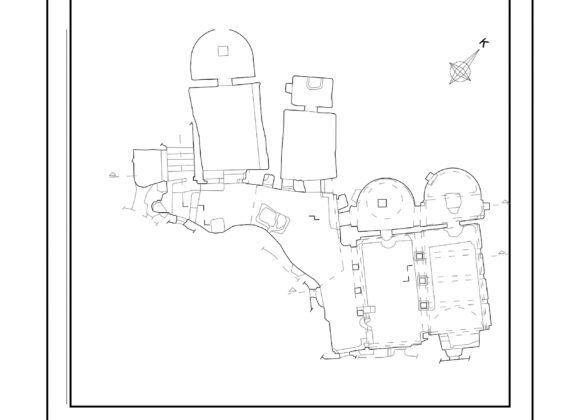
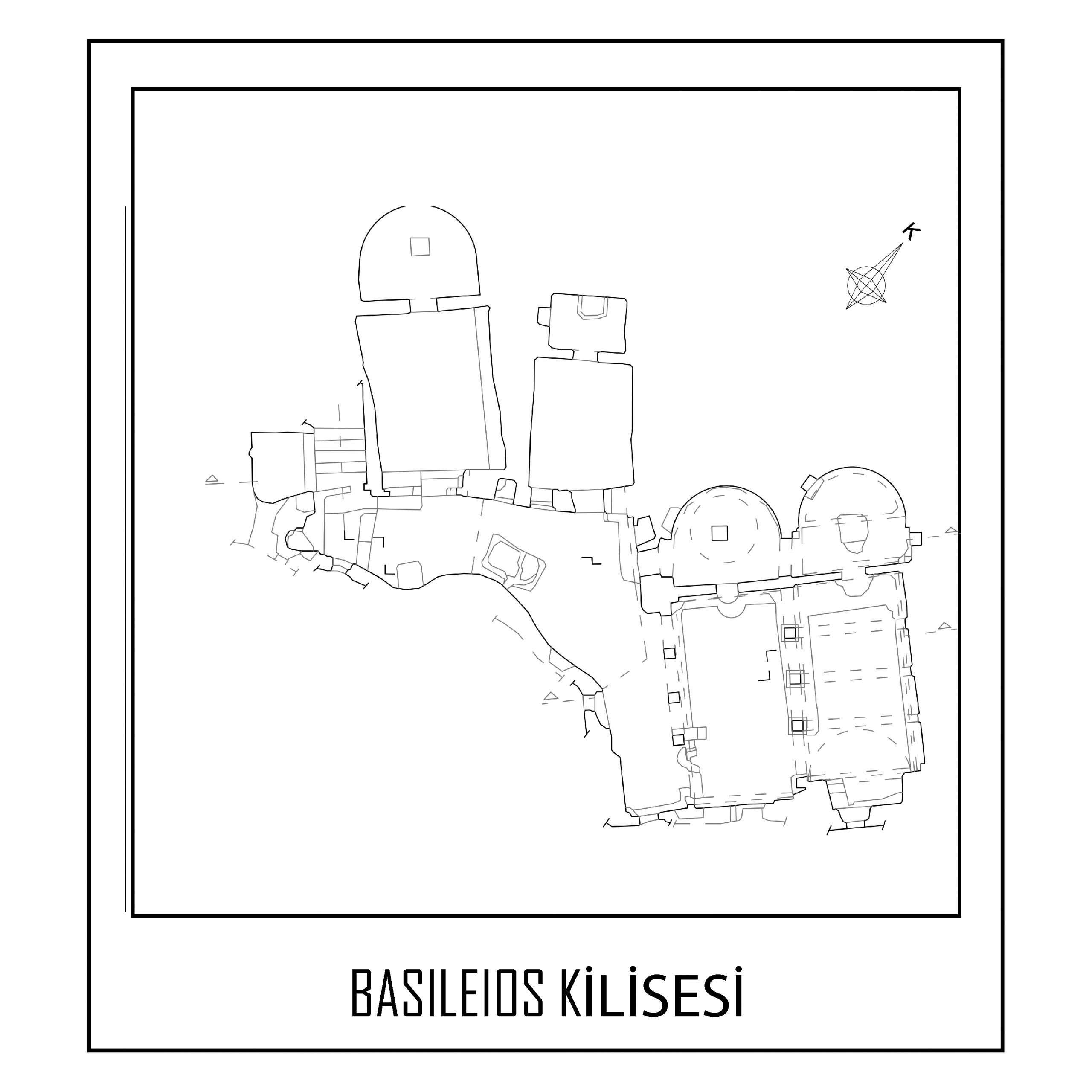
The Church of Saint Basil is a complex consisting of various interconnected sections. Carved into the rock at different elevations below the modern ground level, the structure is described in archival sources as a “three-story sanctuary.” The church itself occupies the middle elevation, while the lower levels are believed to have served as shelters.
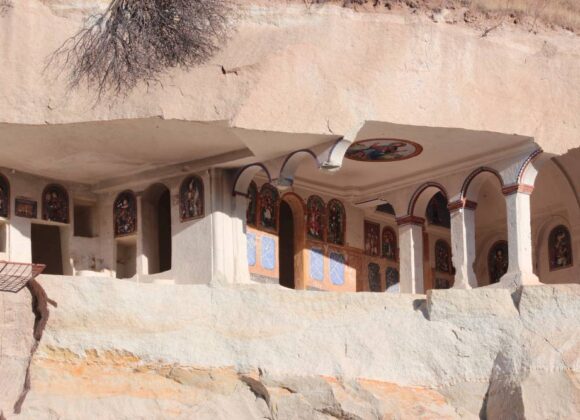
Access to the building was originally provided from the top of the valley through a rectangular entrance, which was later reinforced with concrete. This entrance leads to a landing covered by a barrel vault. From a vaulted staircase at the end of the landing, visitors could reach the middle level where the church is located. This section contains two adjacent chapels, and to the southeast lies the main Church of Saint Basil, which features two apses separated by two rows of piers.
Historical sources state that the sanctuary was dedicated to three separate saints. The central nave, divided by monolithic pillars, was dedicated to Saint Basil. The right nave was dedicated to Saint Demetrios, and the left to Saint Eleutherios. Among these, the primary focus of the complex was the Church of Saint Basil.
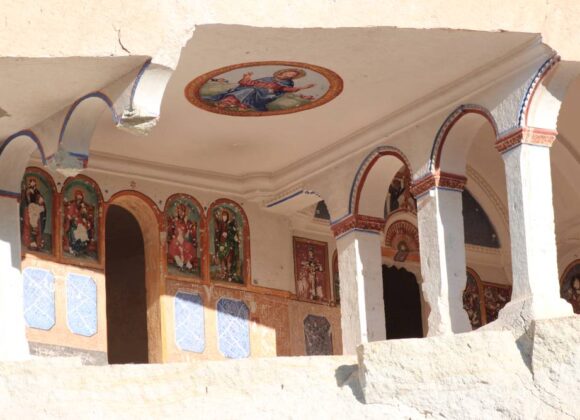
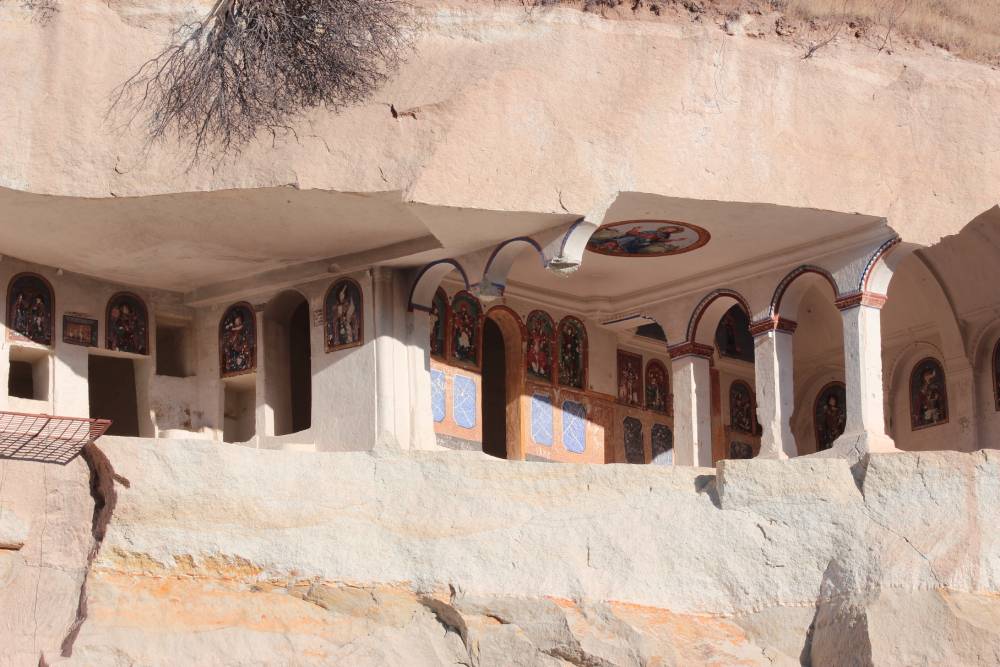
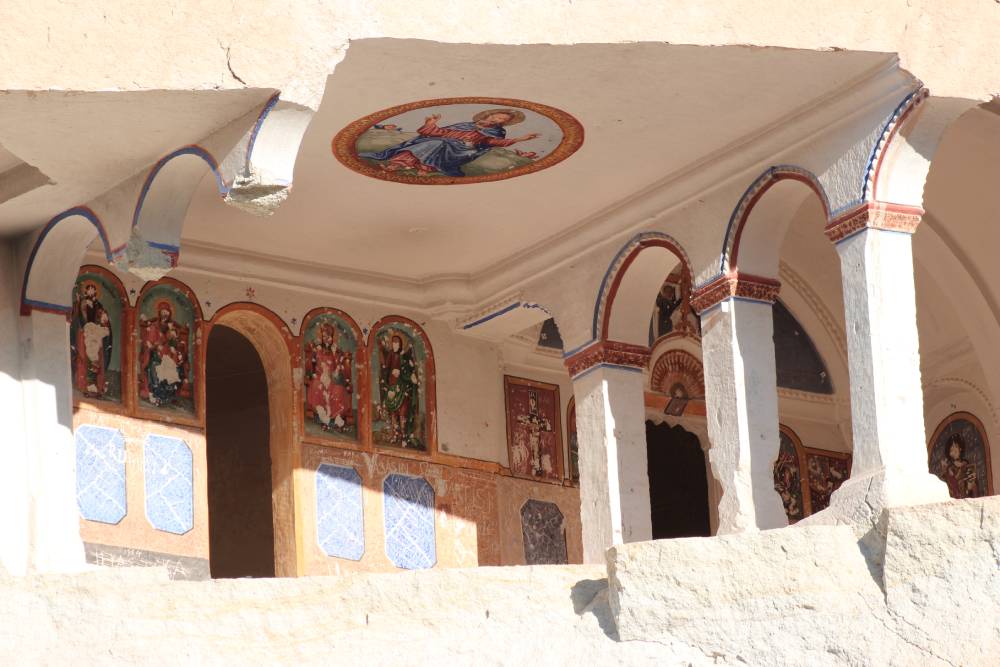
This church holds a unique position among Ottoman-era structures in both Mustafapaşa and the wider region, primarily due to its exceptional murals. Unlike other local churches, the Basilian example contains remarkably well-preserved paintings. Furthermore, the sanctuary features works signed by two of the village’s most prominent painters: Georgiou Iordanidou (dated 1915) and Kostis Meletiadis (dated 1902).
The namesake of the structure is Saint Basil the Great of Caesarea (Kayseri), the most renowned and eldest of the “Cappadocian Fathers.” The Rum community of Sinasos revered him as a “messenger to convey their prayers to God.” Reflecting this deep respect, the names Vasilios and Vasiliki remain very common among the children of the village’s heritage. On January 1st, the feast day of Saint Basil, a grand religious ceremony was held in Sinasos—a solemn event reserved only for the most significant holidays across all the town’s churches.