
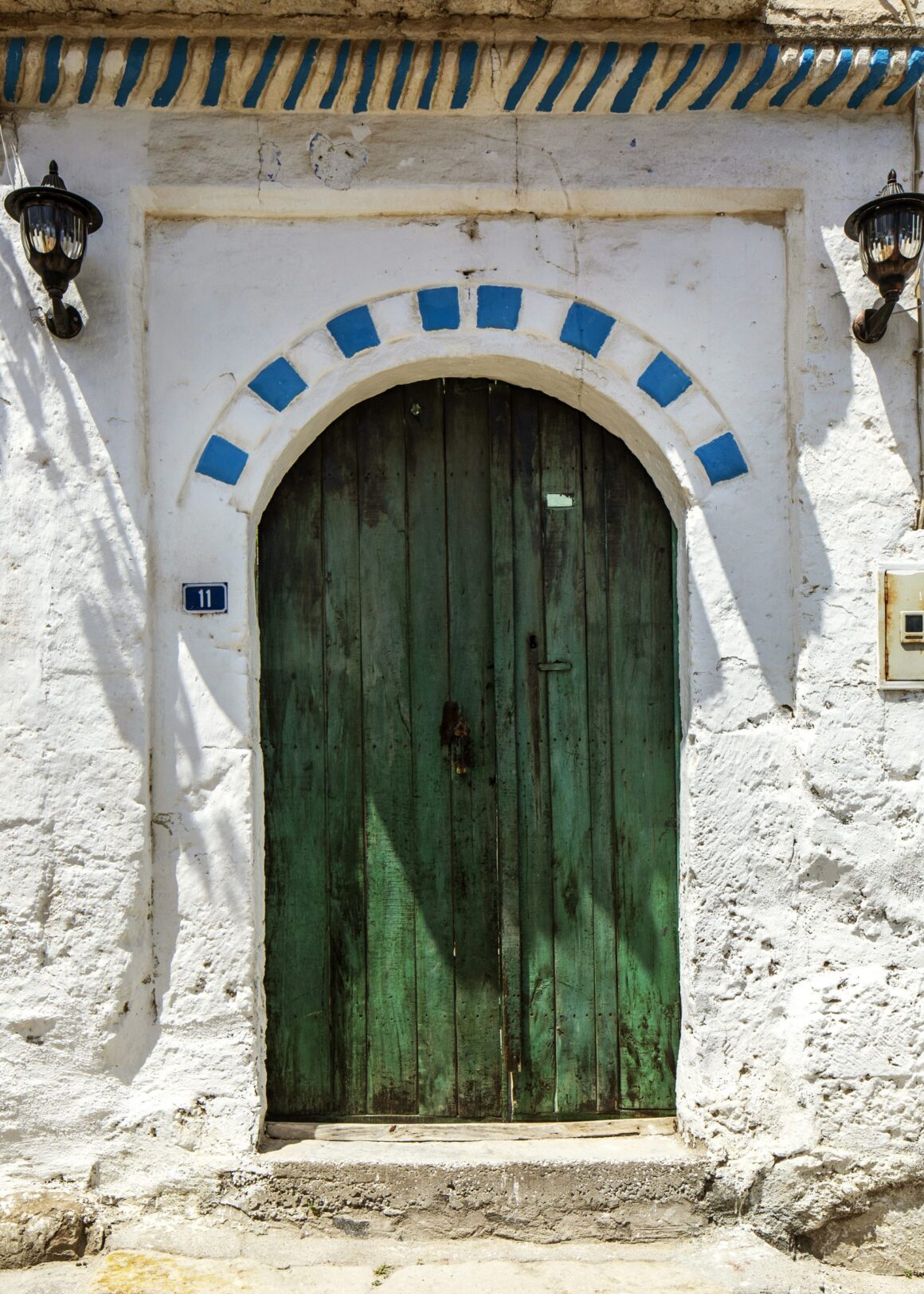
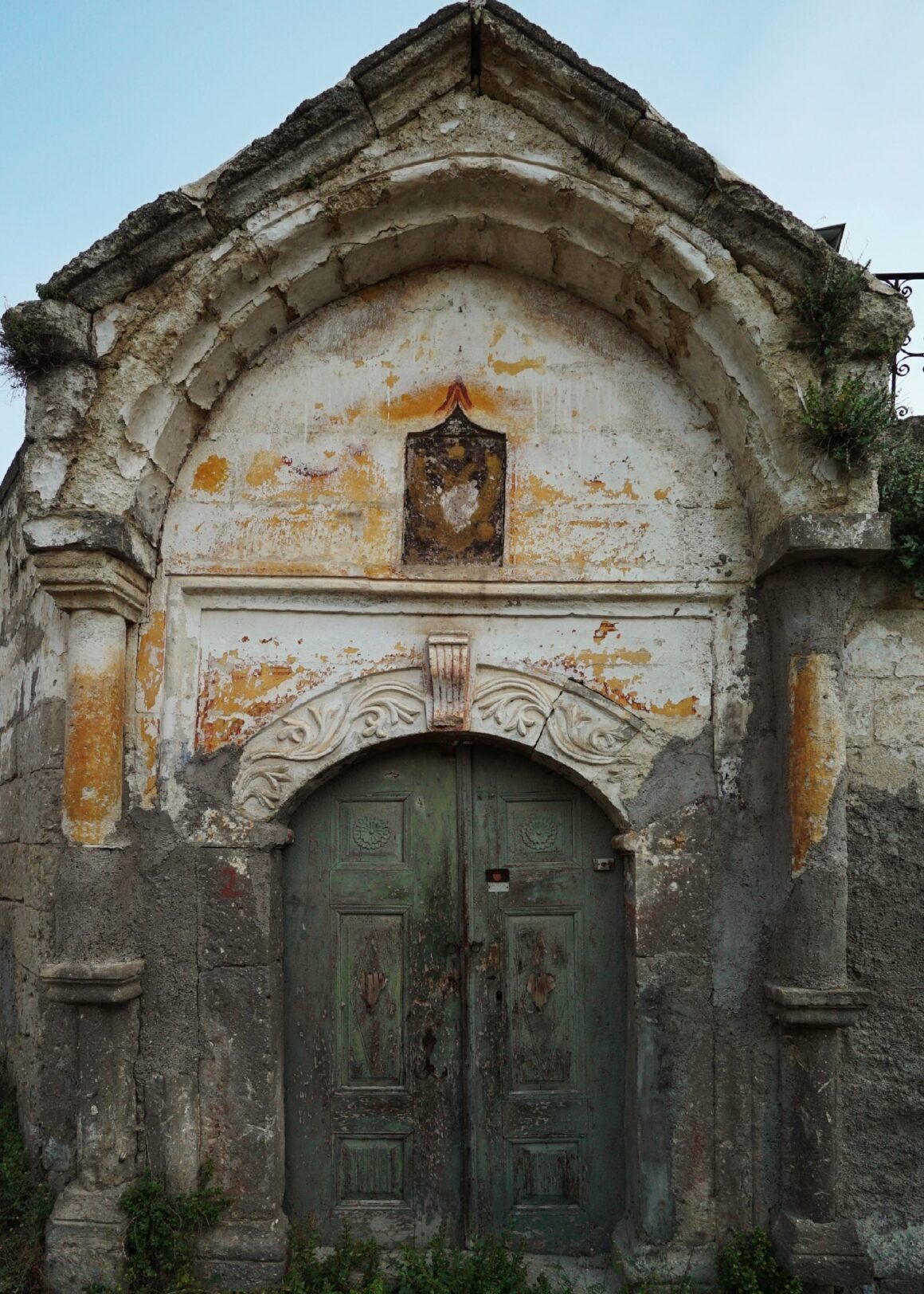
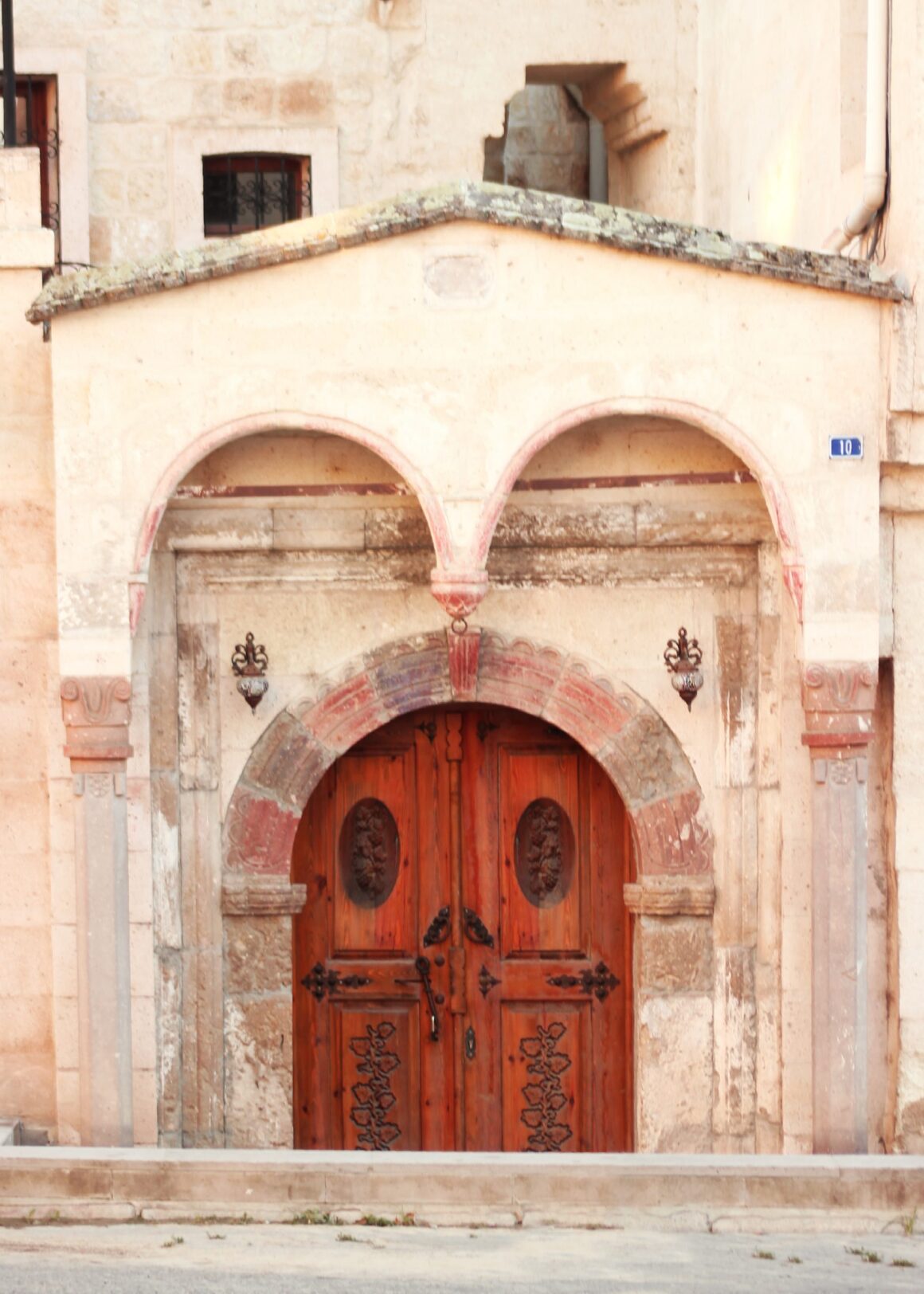
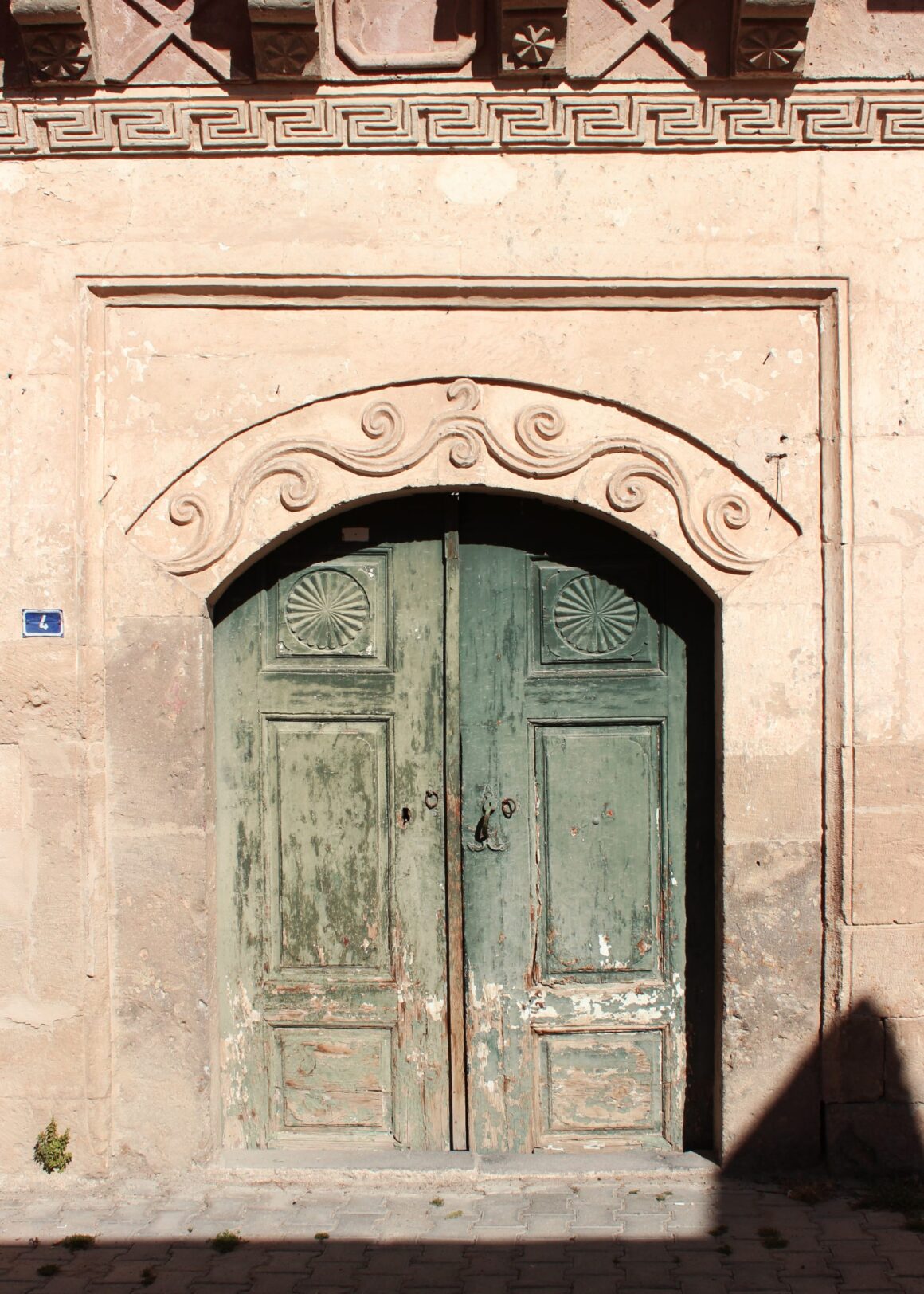
Doors are more than just an architectural element that provides entrance and exit to a space; they are an important building element that contains deep philosophical thoughts and symbolic meanings. Doors, which connect the inside and the outside, carry a symbolism that gives clues about the life inside the space. The aesthetic aspect of the doors strengthens the symbolic meanings they carry…
Considering their historical process, doors, which have always been important in architectural design, attract attention as one of the most emphasized architectural elements of houses built especially in the 19th century. This situation has, of course, changed in the modern times we live in, where functionality is prioritized. The monumentality emphasized in old doors has now been replaced by much simpler designs.
As it is known, the 19th century and the beginning of the 20th century were the most prosperous periods for the people of Sinasos, economically and culturally. This situation is directly related to certain political developments that took place in the last period of the Ottoman Empire, which worked in favor of non-Muslim communities. The Rum people of Sinasos, who became rich through commercial activities in Istanbul with certain privileges that came with this process, returned to their hometown and had magnificent houses built for themselves. The doors, which are a key element reflecting the identity of the building, contributed greatly to this magnificence.
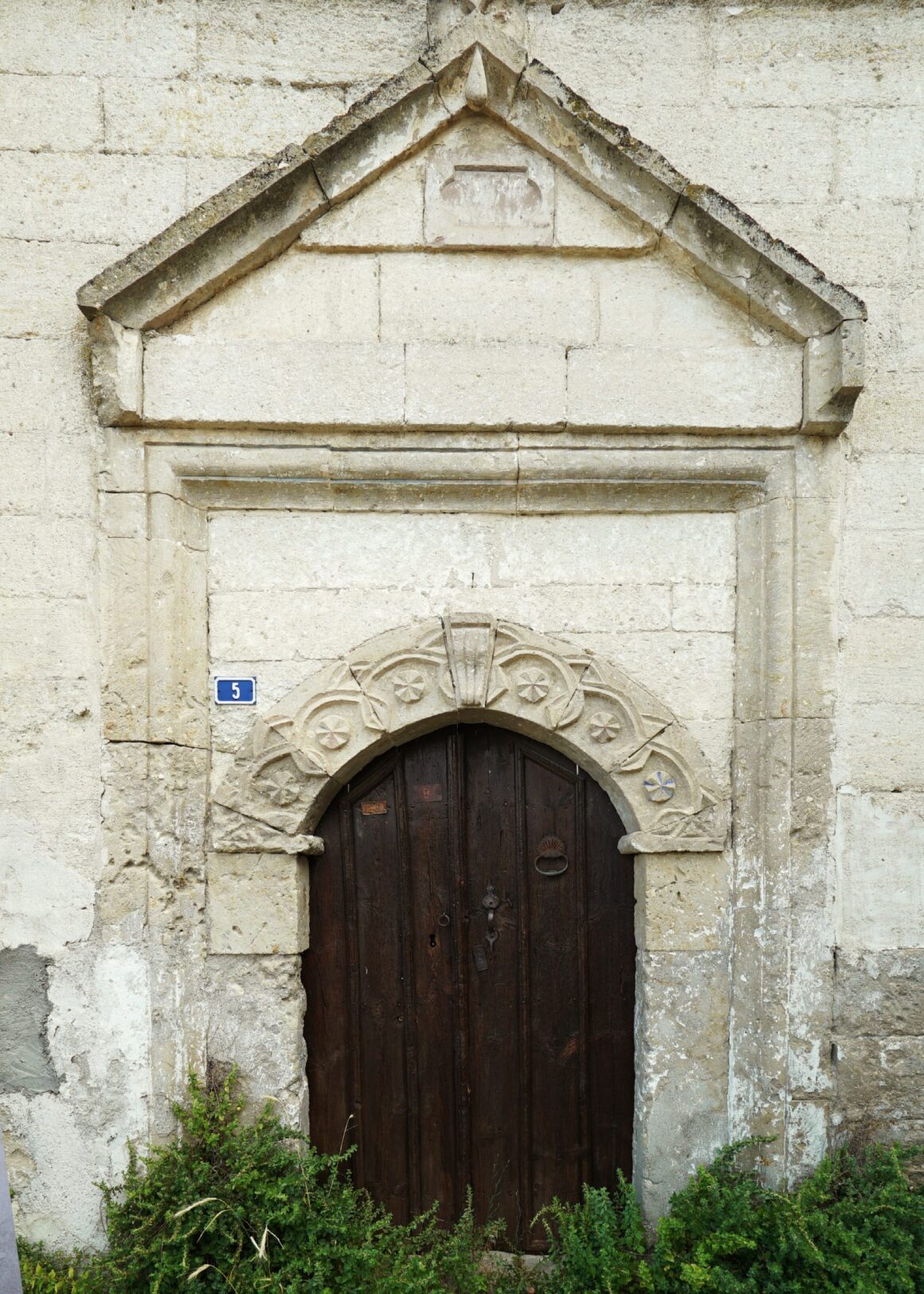
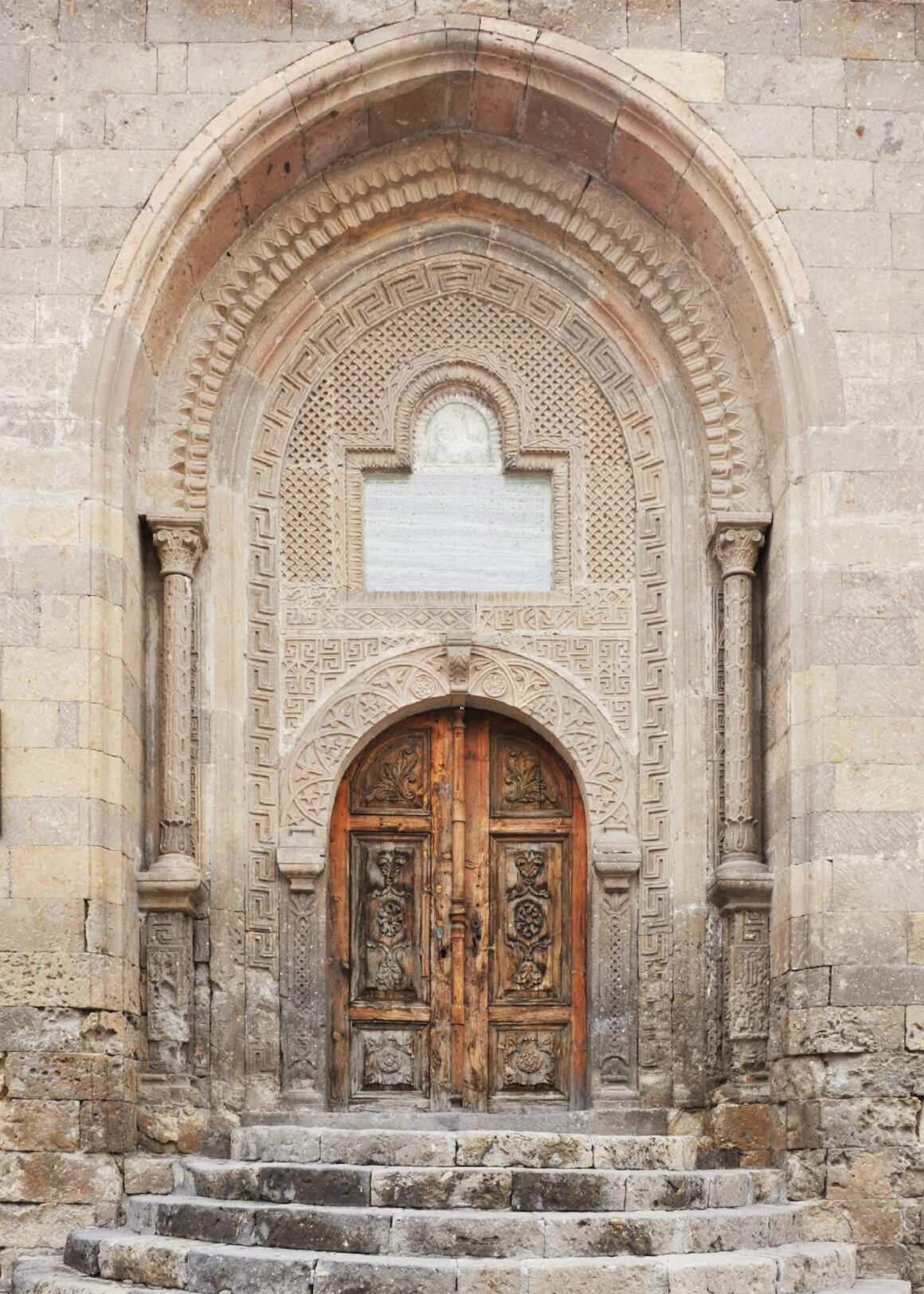
Many of the remarkable doors in Mustafapaşa are seen at the main entrance of the houses built by the Rum community in the second half of the 19th century. In addition, the gate of Mehmet Şakir Pasha Madrasa, built by an Ottoman pasha in the late 19th century, greets those who come to the village with a majesty as if it had gathered all the magnificence on its own.
“Sinasos Gates”
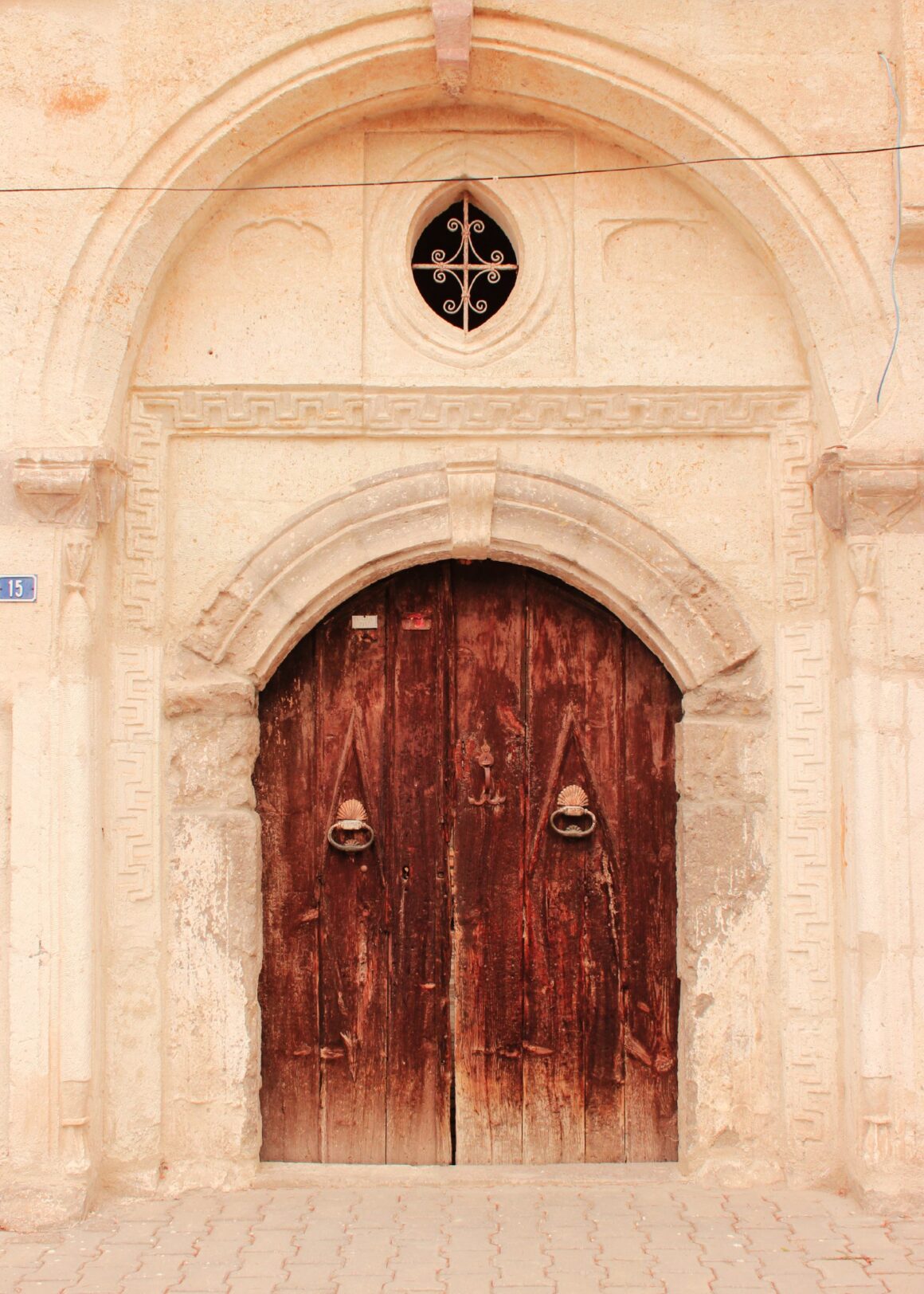
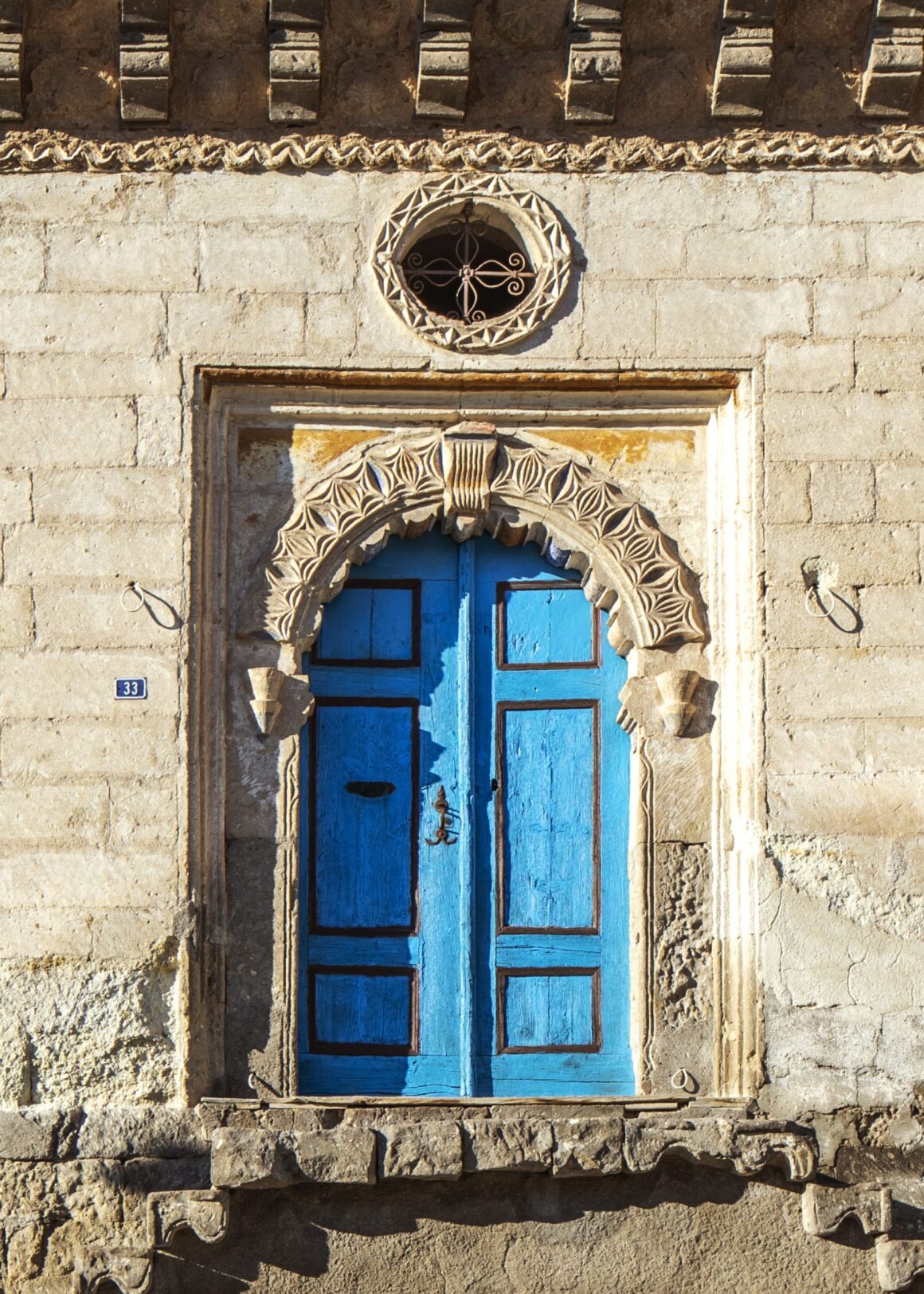
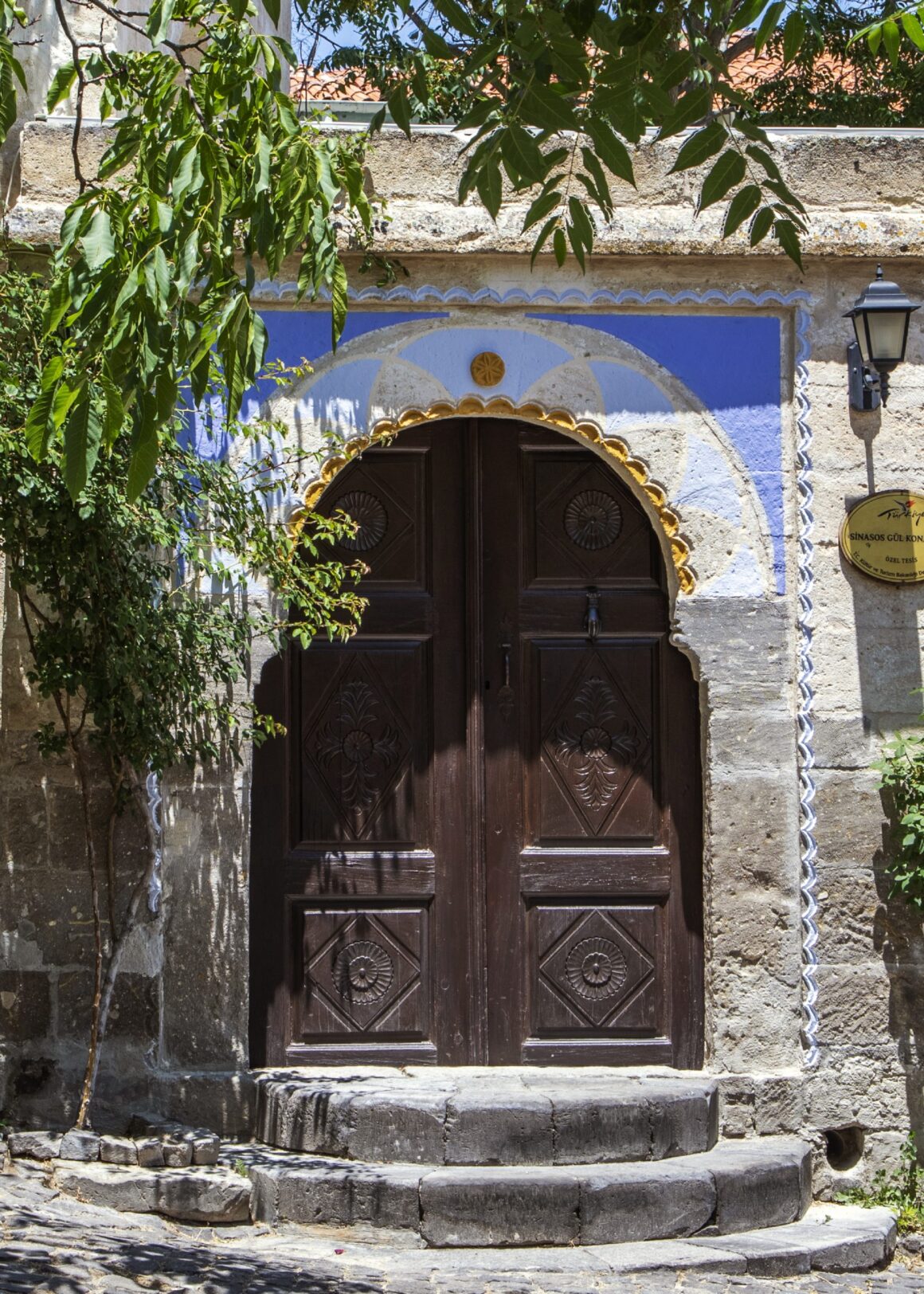
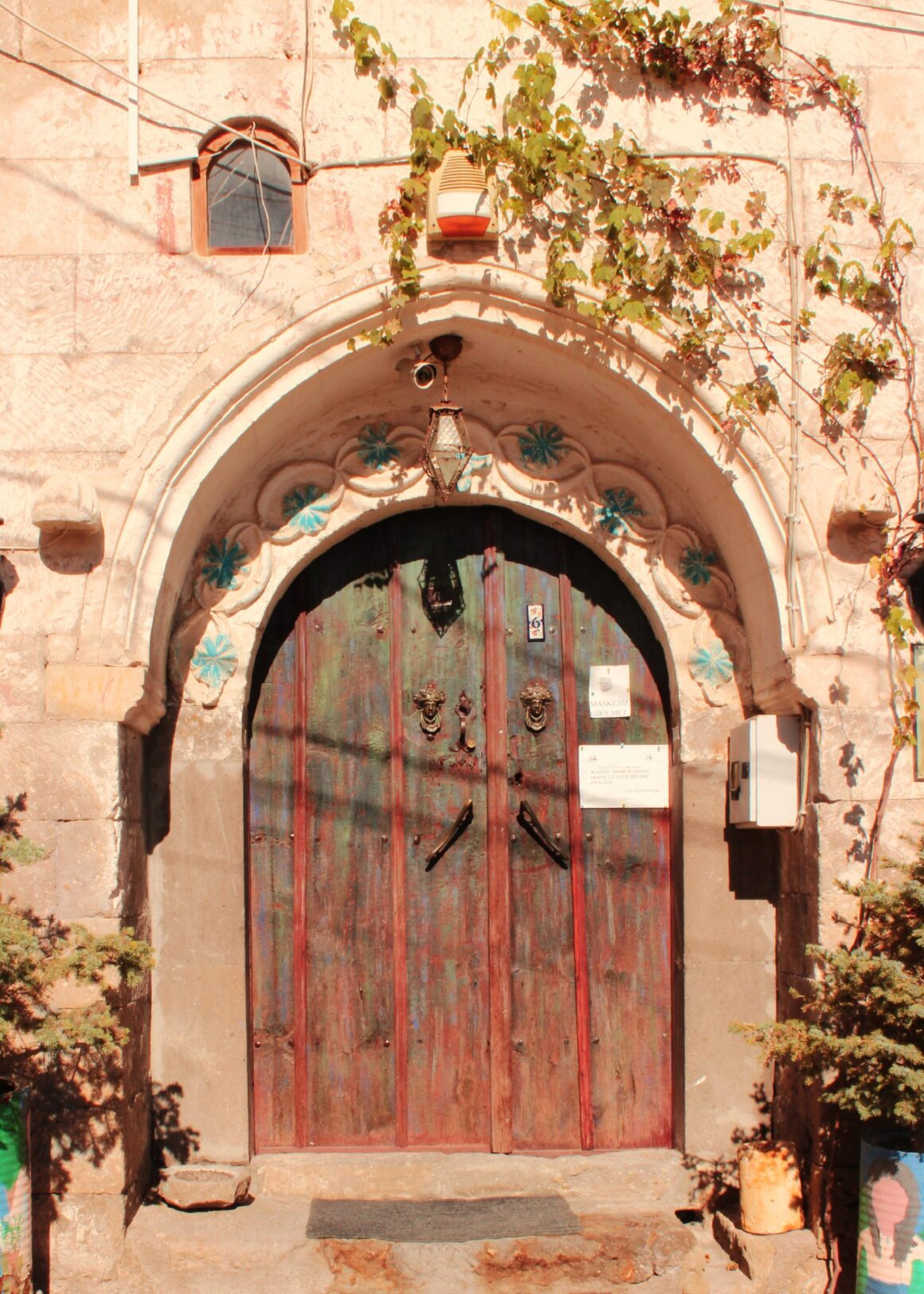
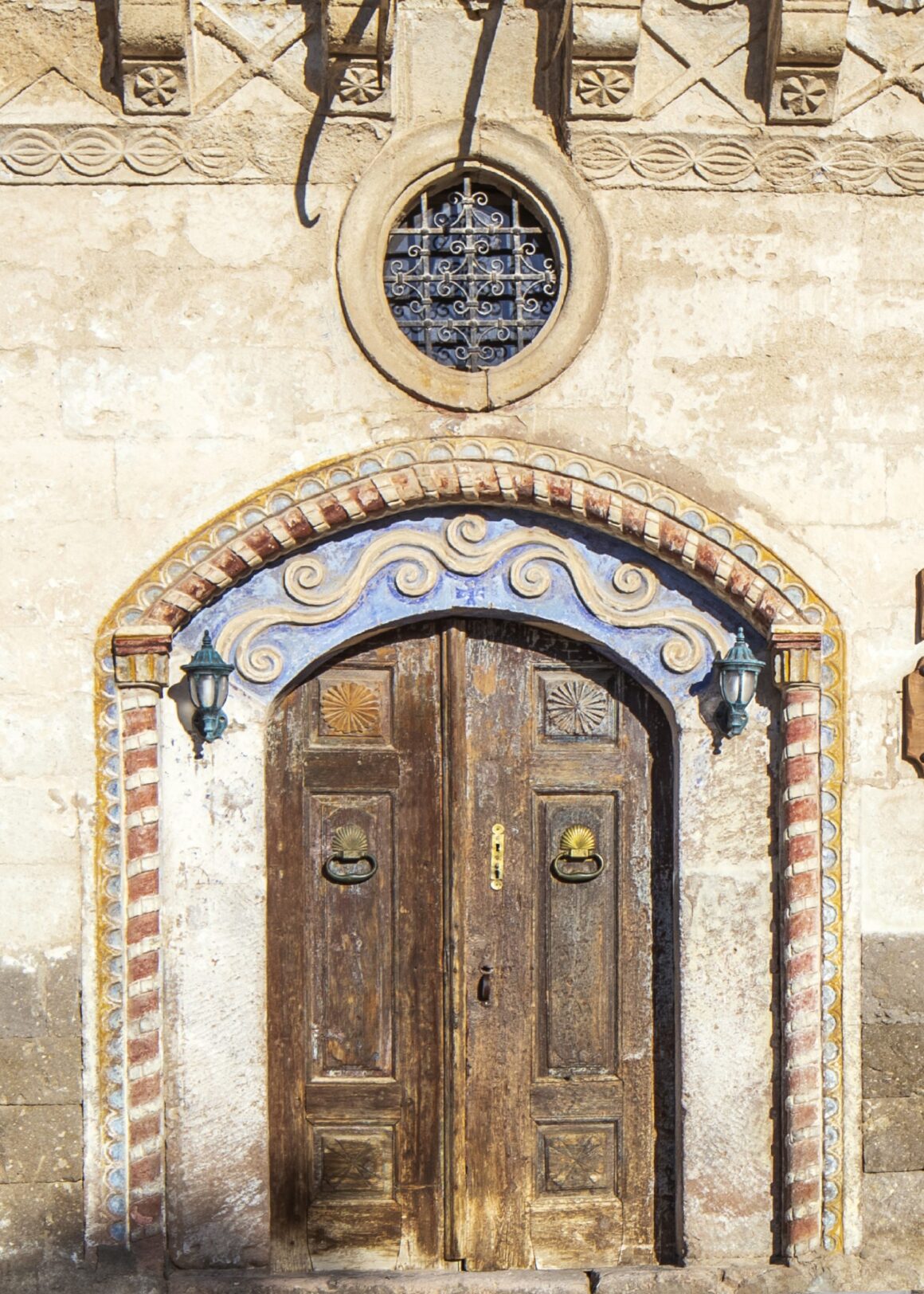
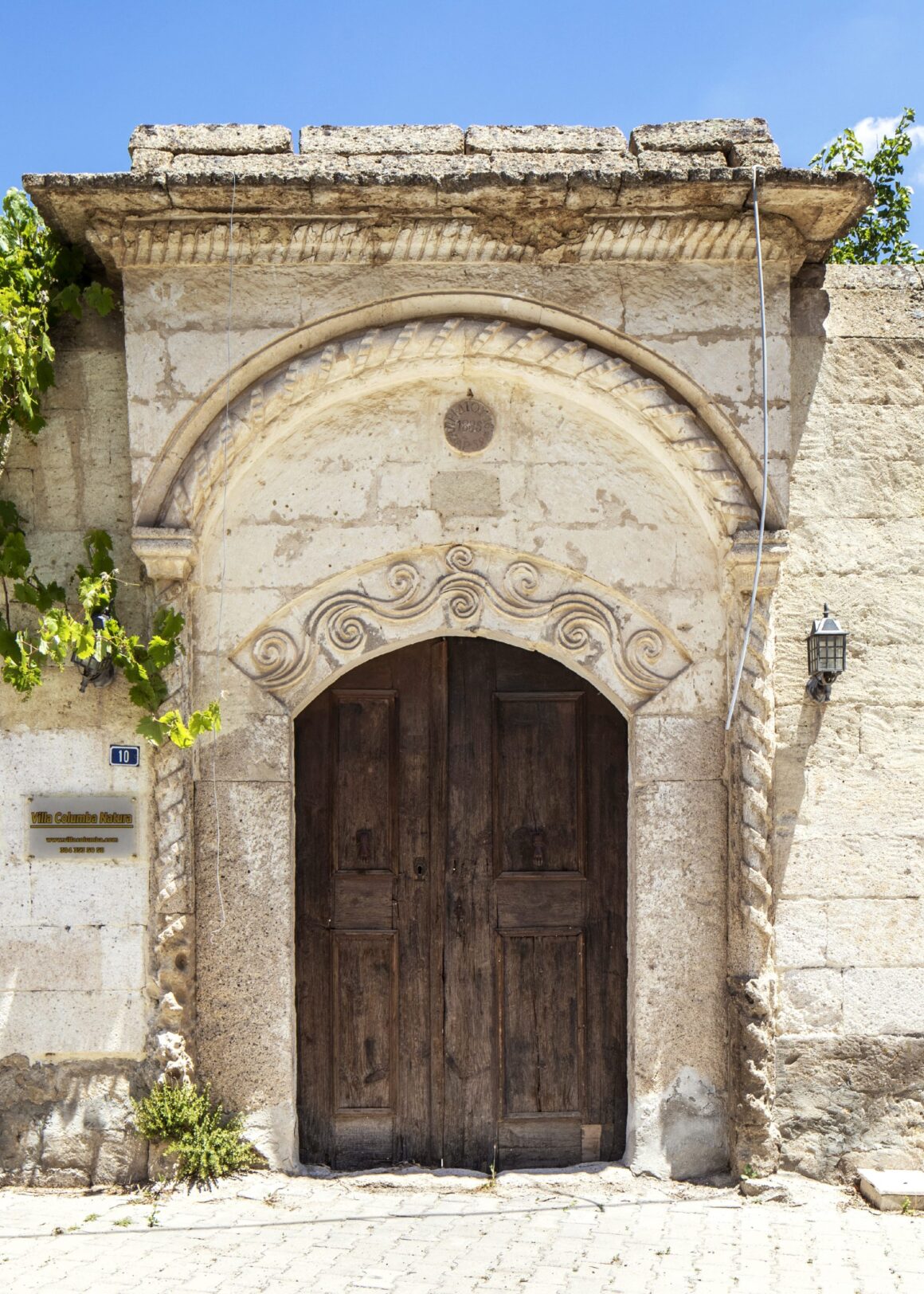
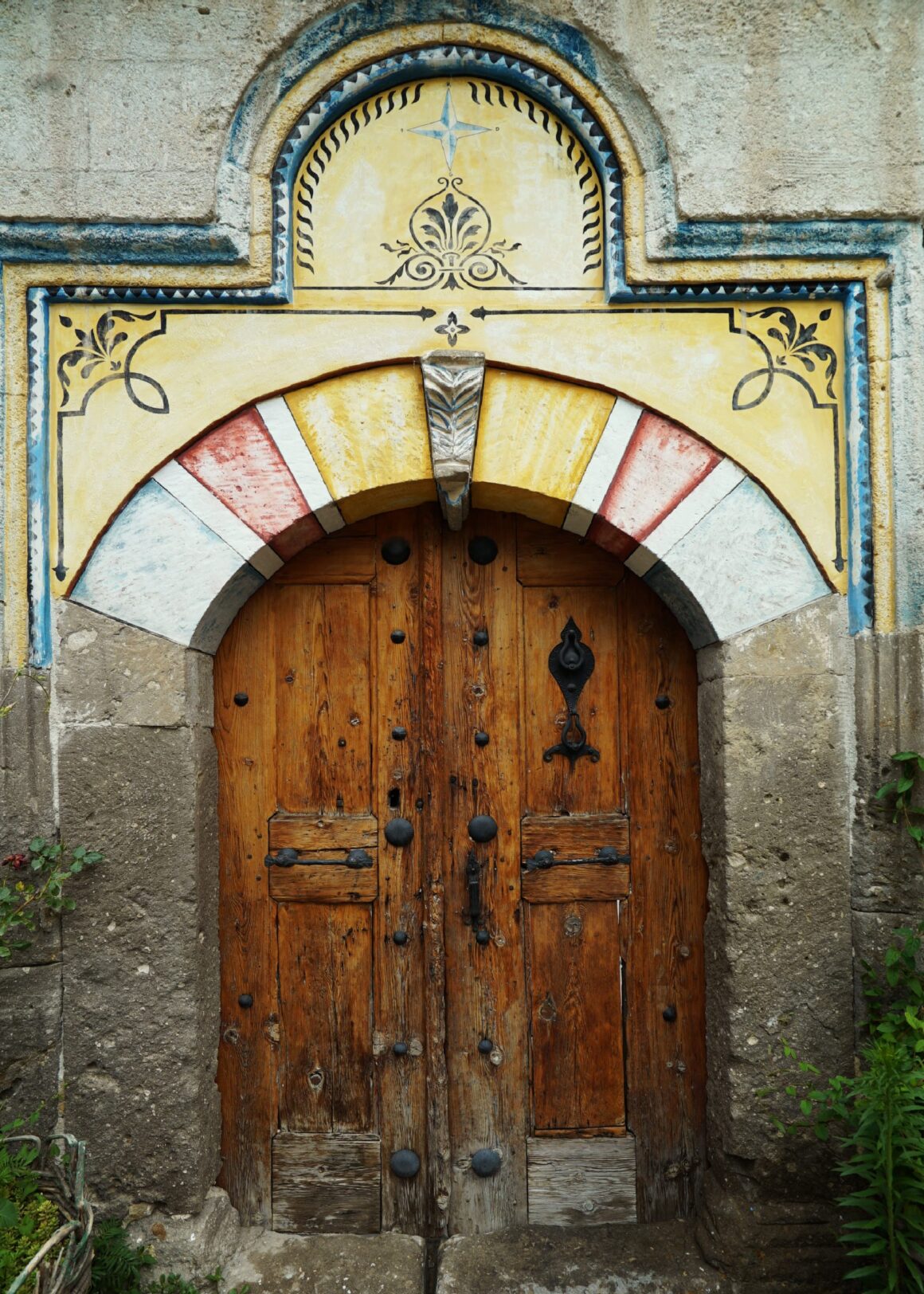
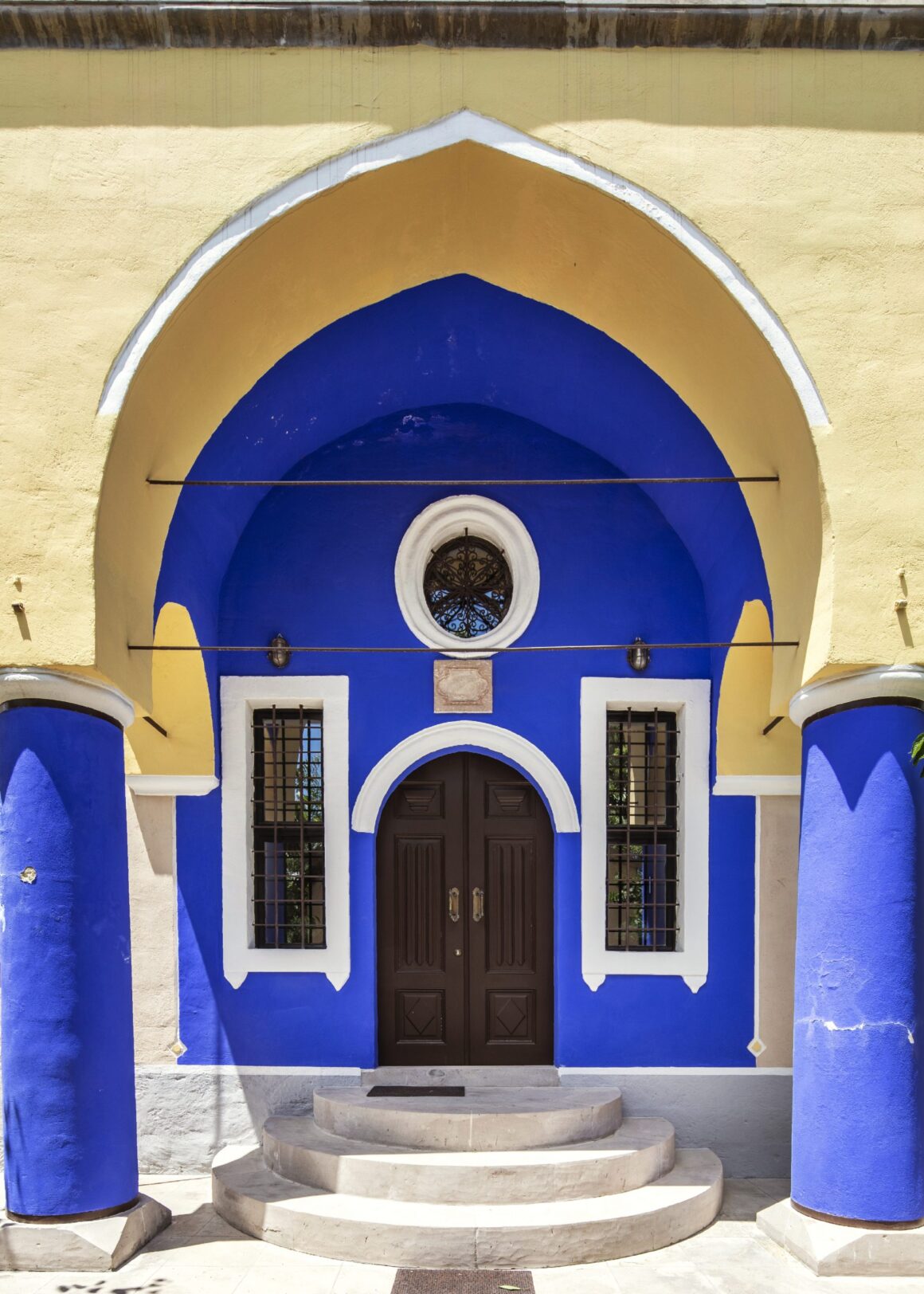
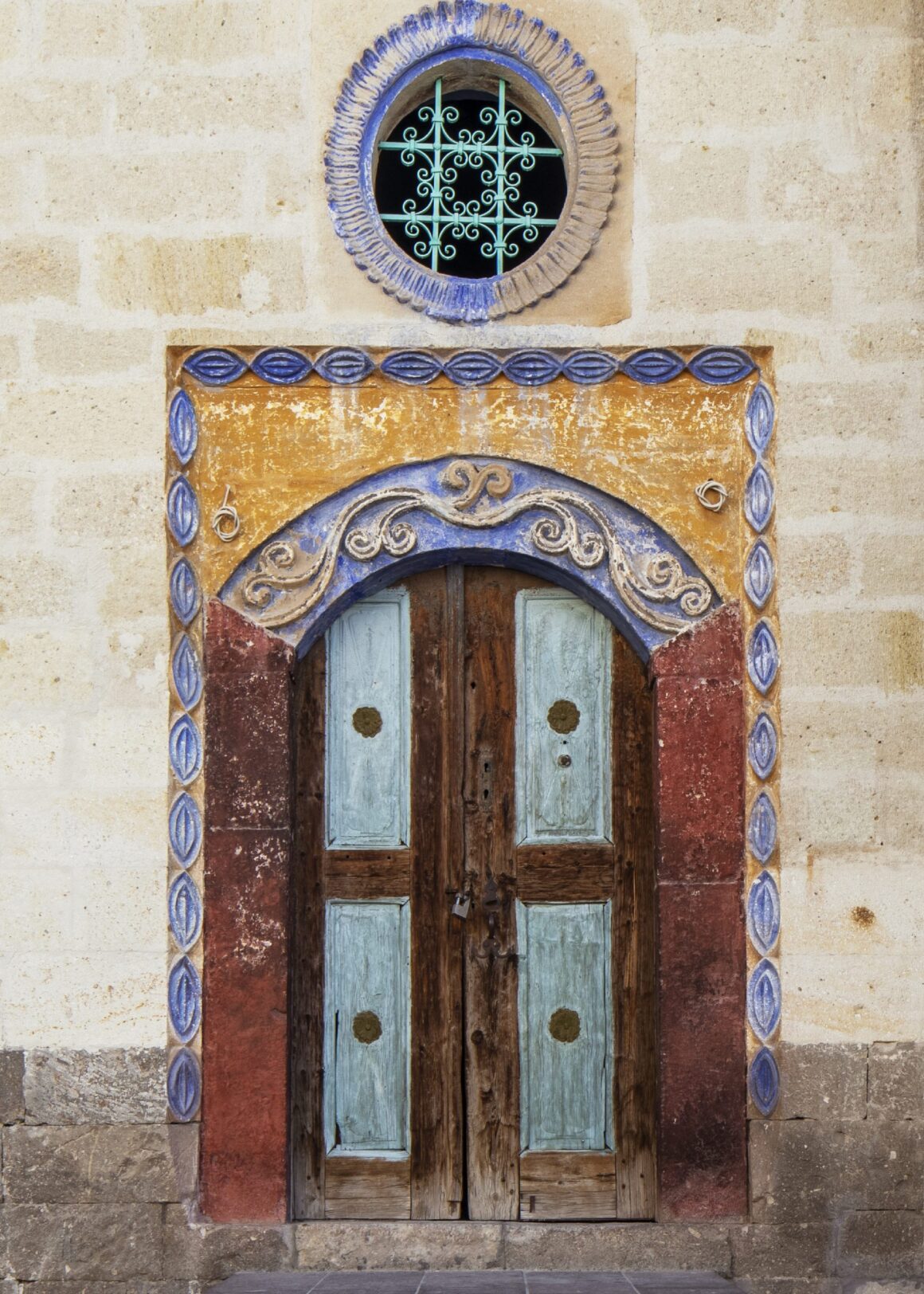
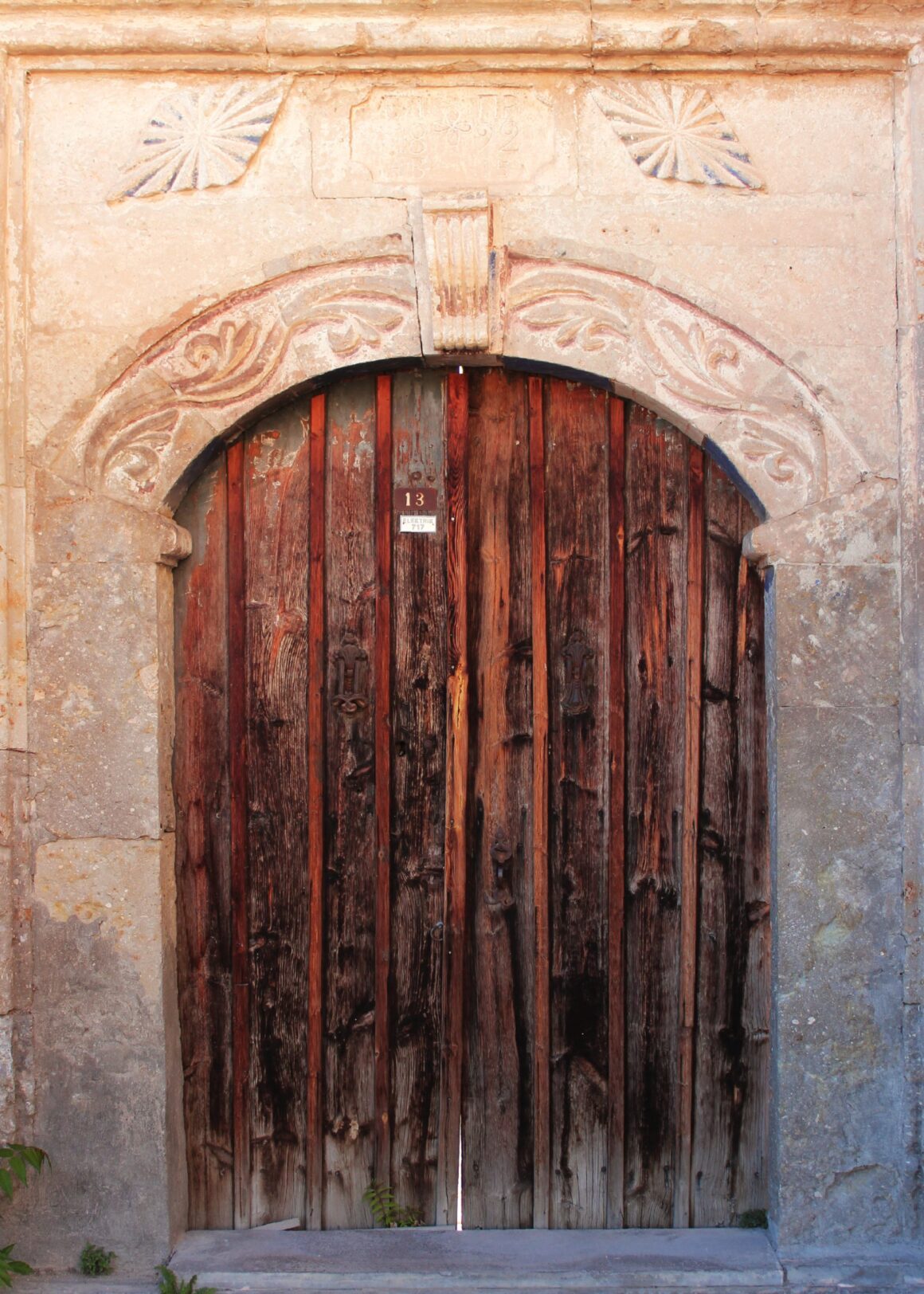
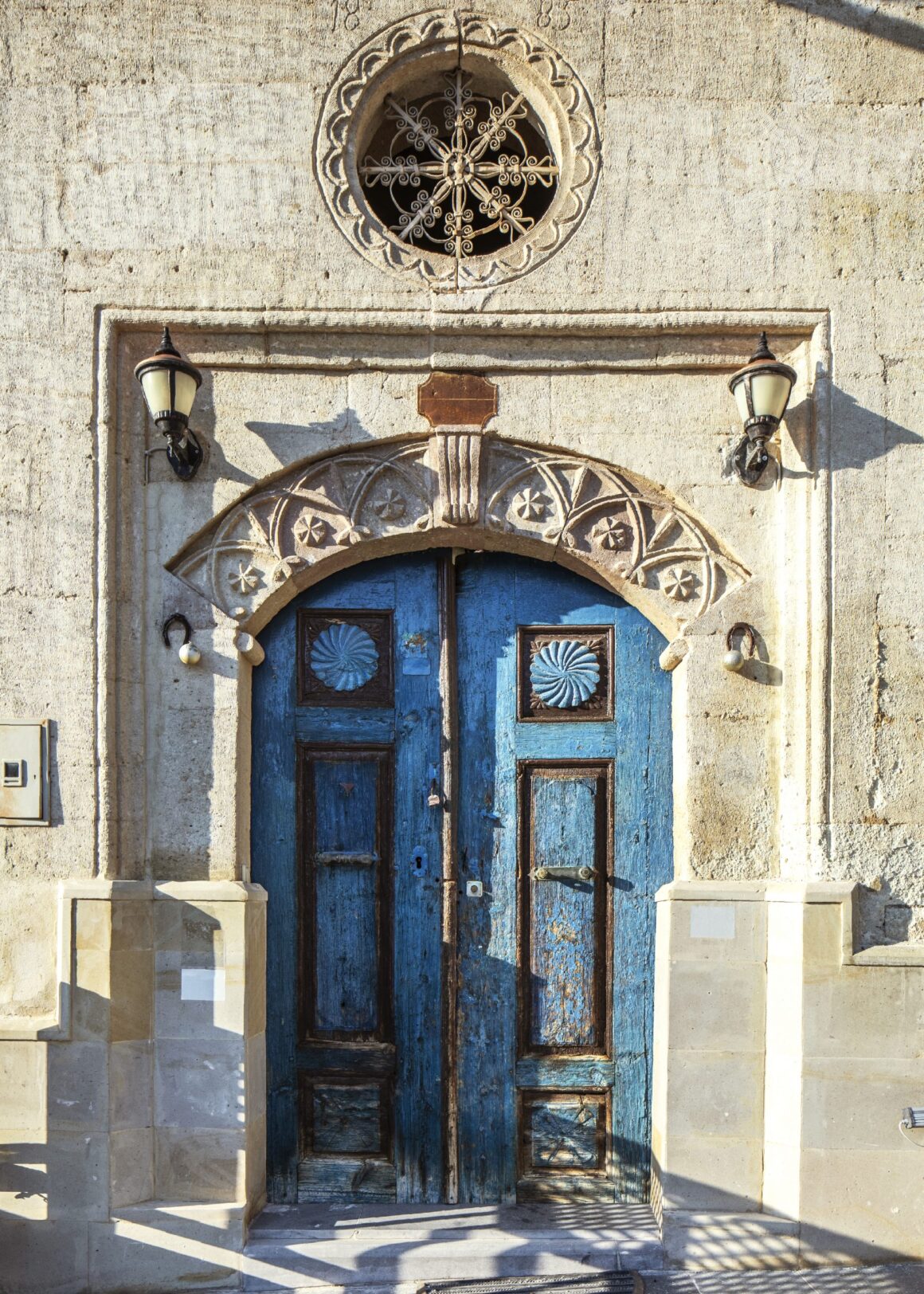
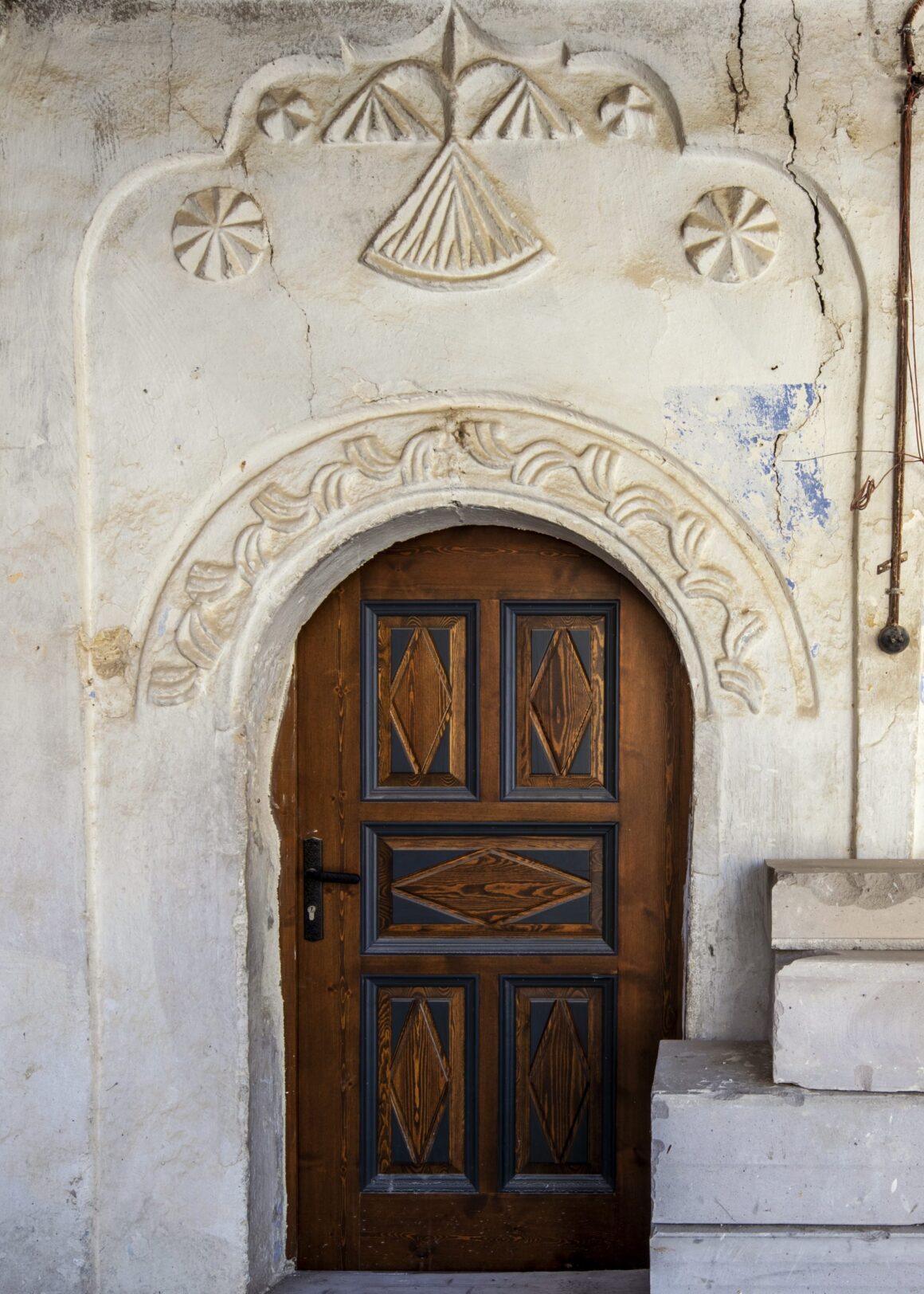
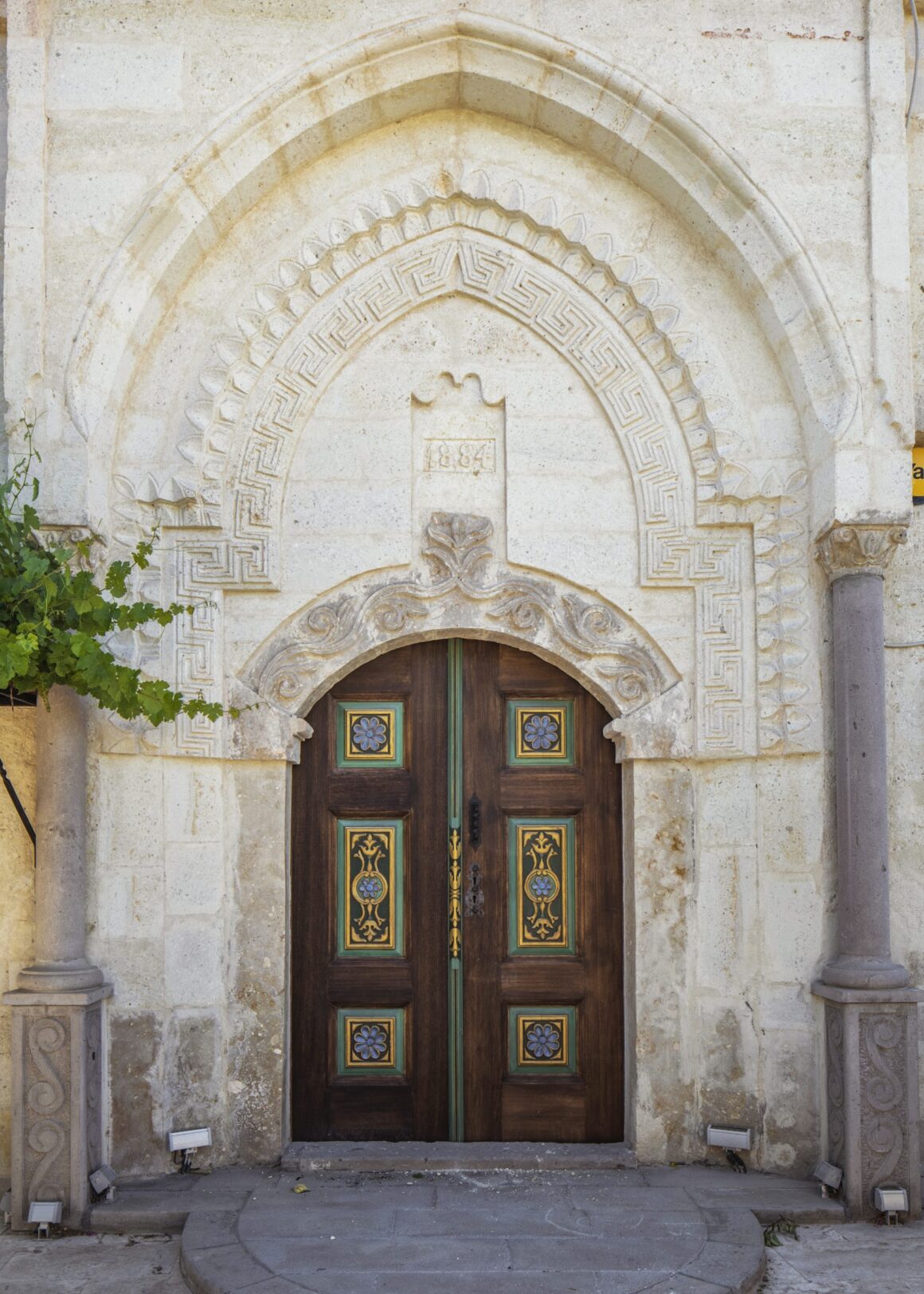
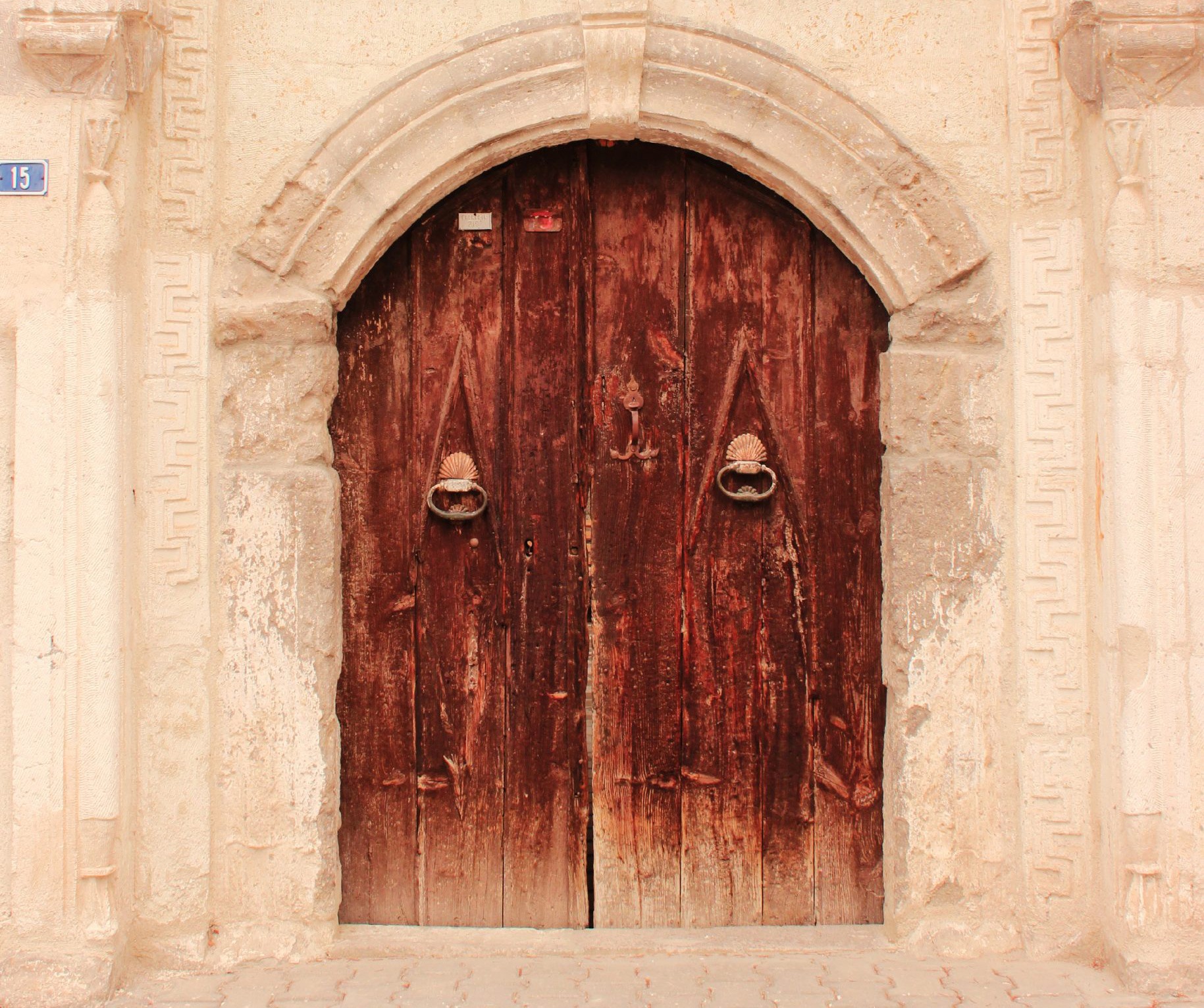
Although examples are found in different places in the Cappadocia region, there are more preserved monumental gates in Mustafapaşa than in other places. Since all of these examples come from the Ottoman period, the gates are identified with the name of the village during the Ottoman period and are introduced as “Sinasos Gates”. When we look at the form of the doors, we see that they are in the form of monumental entrance doors designed as the most prominent element of the external mass of the building. The most common form on the doors, whose frames are wooden double wings and the remaining parts are made of stone, is round and flat arches. Although not as common as these, doors with flat frames are also encountered.
When we take a look at the general decoration program of the historical doors in the village, we encounter diversity, as in other architectural elements. While some doors have typical ornamental elements that reflect a certain style, such as the wheel of fortune motif, we can also see very different designs that reflect personal tastes. It is not surprising that there is diversity in motifs and decorations in Anatolia, which hosts different civilizations and religions and has a deep-rooted cultural background. Each of the monumentally constructed gates in Mustafapaşa, protruding from the surface of the courtyard wall, was designed with a different composition from the other. The doors projecting forward are enlivened with moldings, reliefs of various forms combining stone workmanship with artistic touches, and also colonnades.
For example, the crown gate of Mehmet Şakir Pasha Madrasa was designed with a monumentality rarely seen in the Ottoman period. In addition to the lace-like relief on the double-winged wooden door; its graduated arches, colonnades and the entire wall surface, decorated with floral and geometric reliefs, are a masterpiece of stone carving masters in the region. Even the inscription on the door was handled and designed independently within the decoration program.
Although it is located outside the border surrounding the original entrance door of the Serafim Mansion, which originally belonged to the Rizos family, part of which serves as a hotel today, the lion reliefs, which are part of the door decoration program, are striking. This motif, which is an important decorative element accompanying architectural structures that we have encountered since the first civilizations in Mesopotamia and the Hittites in Anatolia, undoubtedly has an “apotropeic” feature.
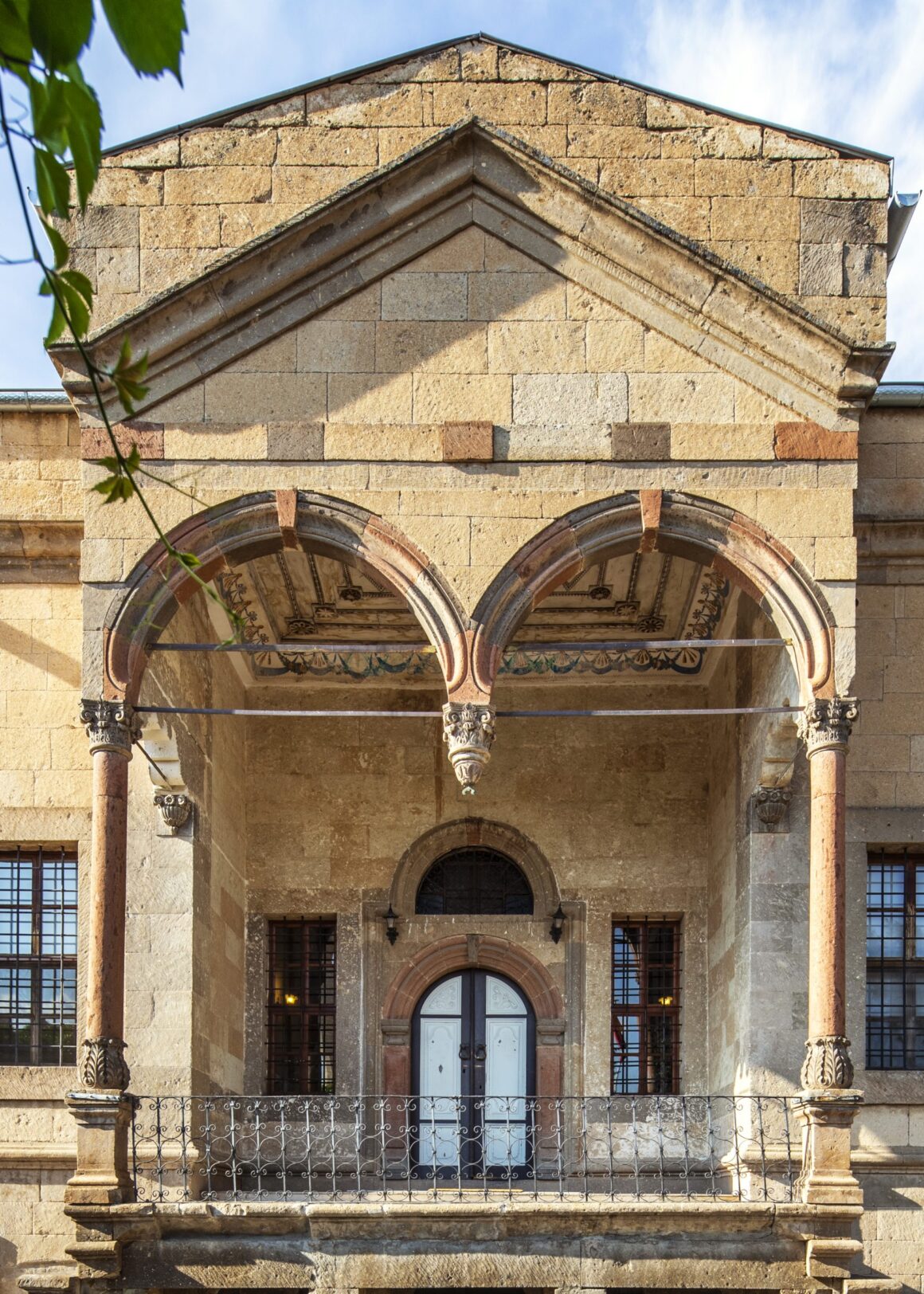
In his work titled “Sinasos Houses”, Roides points out that column capitals were not used on most of the doors in the village and states that this is an important form element in different regions in Anatolia. Instead, he adds that arches and colonnades were mostly used in Sinasos. At the same time, the researcher draws attention to the fact that although many of the magnificent houses in Sinasos were built by the Rum community, the triangular pediment, which is one of the elements that most reflects the Greek identity on the facades of the houses, was not applied much (1985, pp. 151-152). Although the researcher explains this deficiency mostly for technical reasons, this situation can be better explained by the fact that the village is an Anatolian village with a rich cultural heritage.
An Ancient Way of Communication: Door Knockers
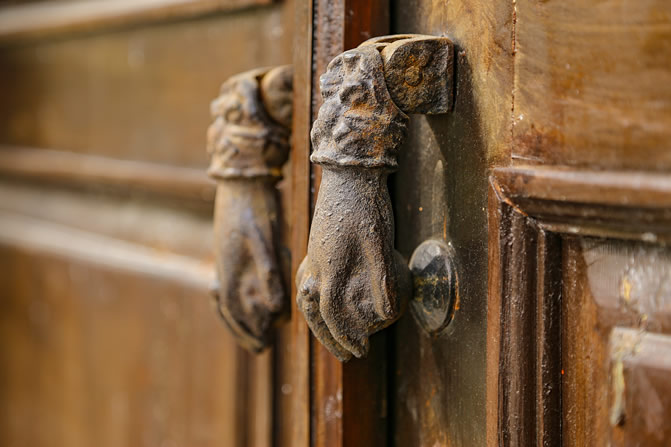
Another striking feature of the doors in Mustafapaşa is the knockers on the doors that were built during the Ottoman period, although unfortunately many of them are not in place today. Knockers, which are thought to have emerged under European influence, became widespread throughout the country in the 18th and 19th centuries during the Ottoman period.
When these knockers are examined, we see that in the past, they served a function beyond being just a means of informing the person inside about who was entering the place. Through the patterns, depictions and decorations on the knockers, the homeowner literally expressed his presence in the region where he lived. Thus, knockers allowed the householder to position himself within the society as a whole. He attributed many characteristics of the person, such as his economic status, social status, religious beliefs and world view, to the symbols on the knockers.
The metal door knocker on the wooden door of the Sultanidis Mansion—originally known as the Sultanidis Mansion, which serves as the Administrative Building of Cappadocia University today—is in the shape of a human hand depicted from the wrist. The ring on the middle finger of the hand attracts attention, and it is possible to come across such ringed knockers in many cities of Turkey, such as Hatay, Antep, Antalya, Izmir (especially Buca and Alsancak), and Safranbolu. These knockers, which in some examples appear as a hand without a ring, were designed to reflect the marital status of the individuals living in the house. Some studies reveal that having a ring on the middle finger of the hand on the knocker was a sign among the Rum and Muslim communities that the people living in the house were engaged or that there was a young girl of marriageable age in the house.


