

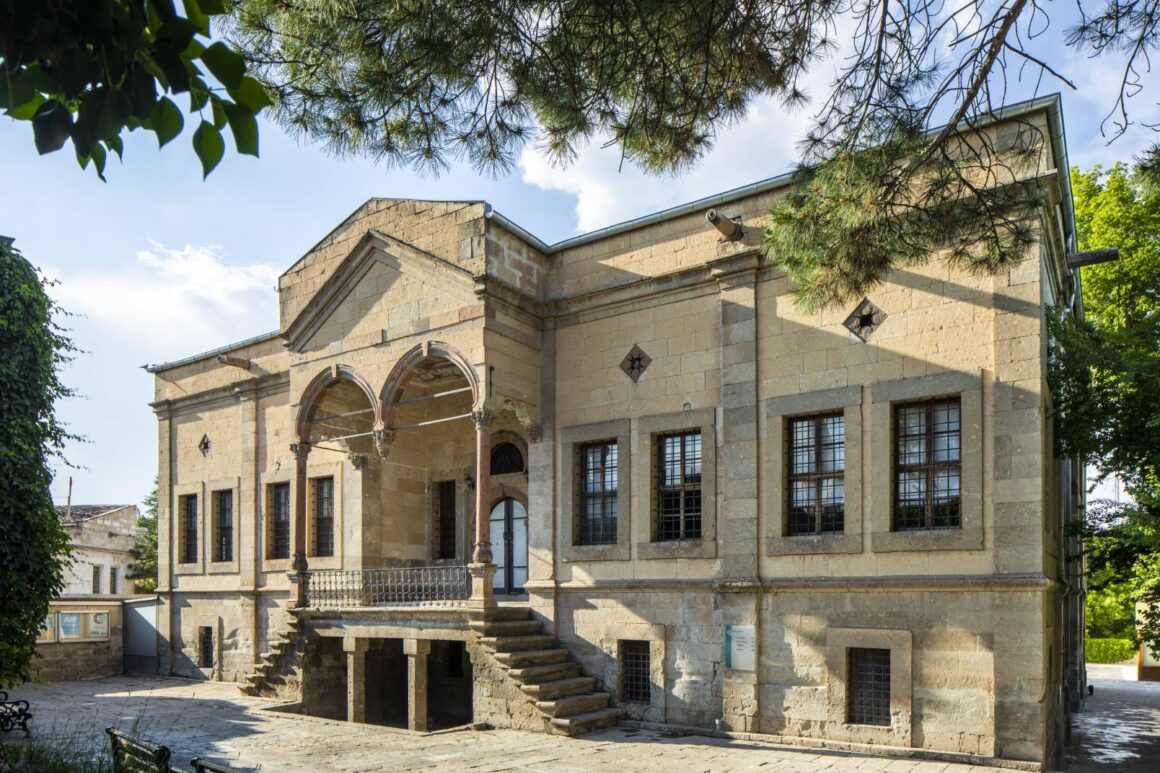
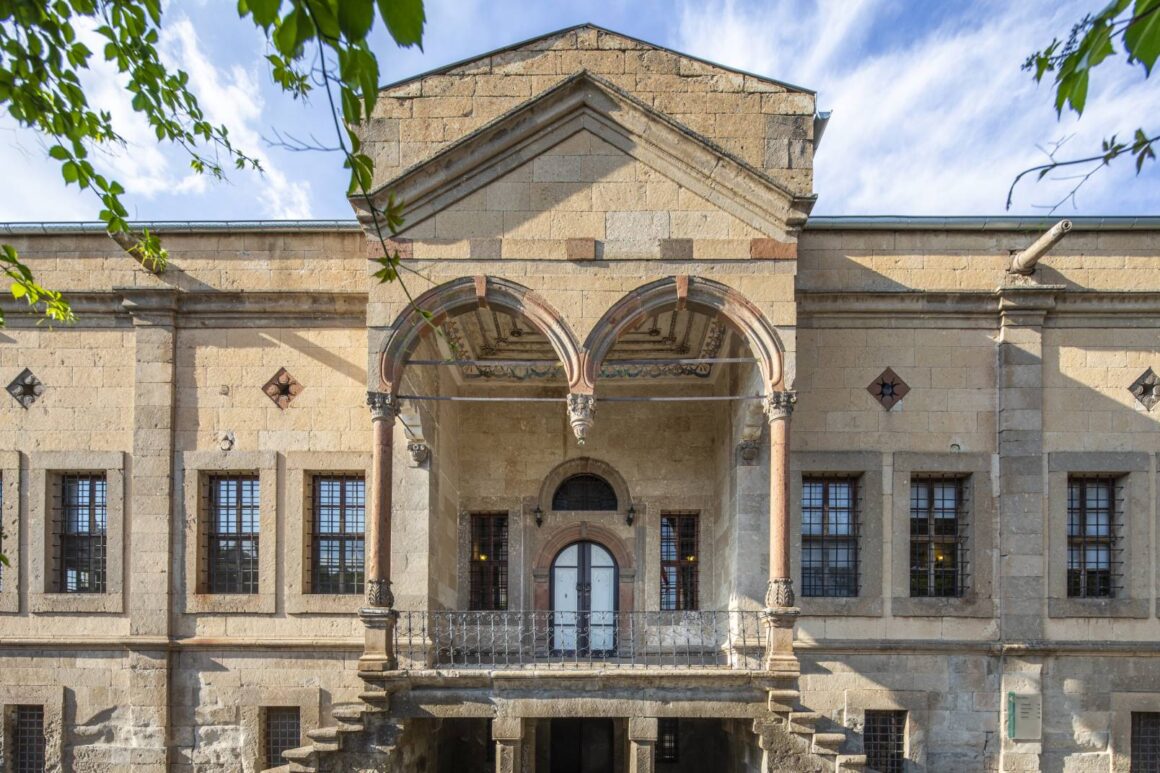
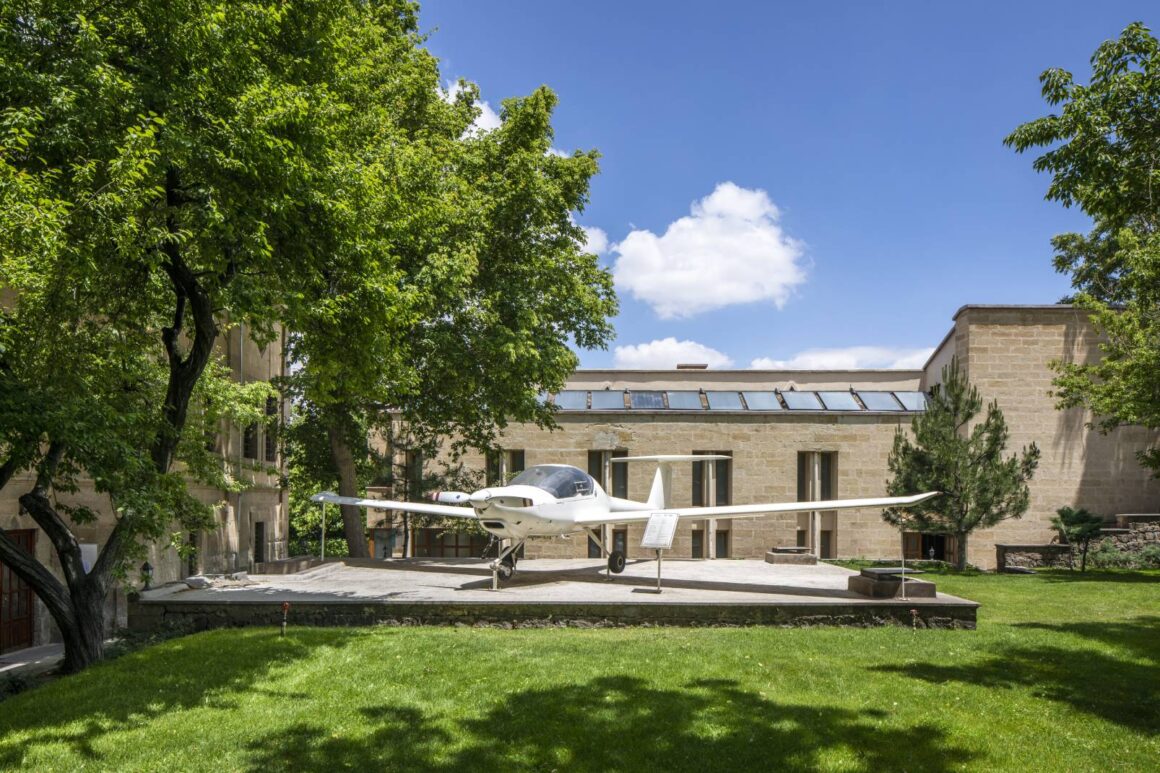
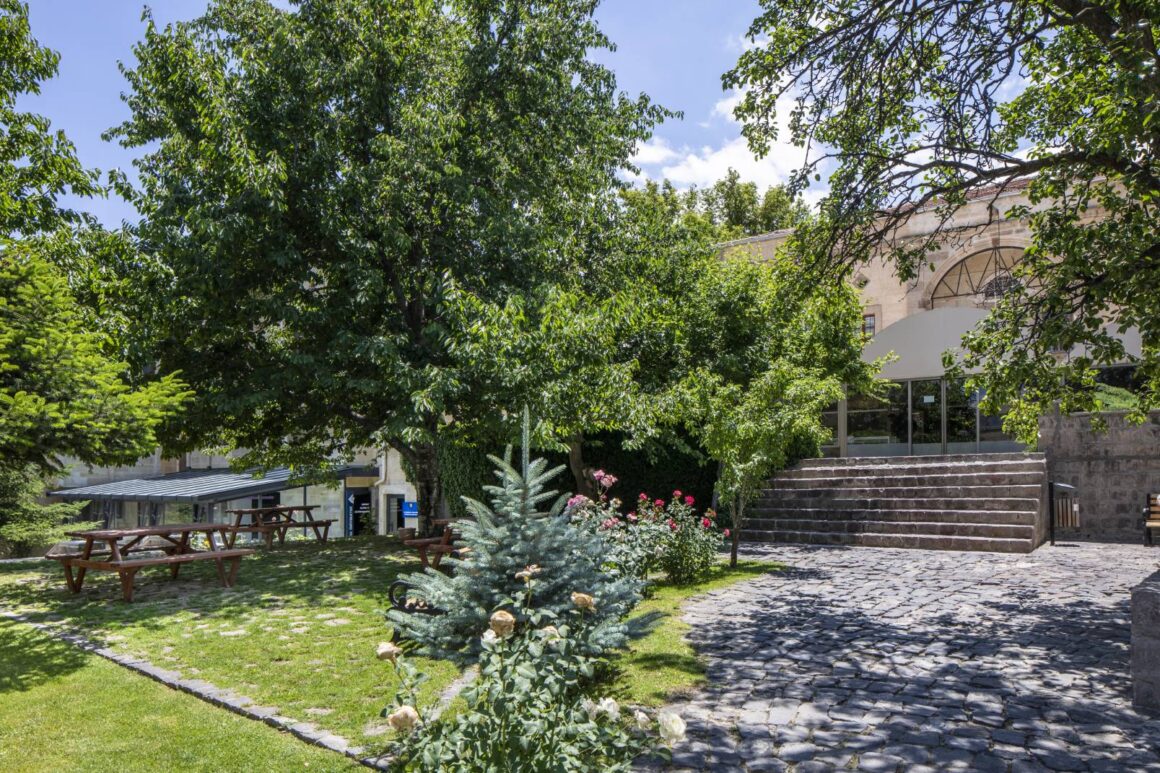
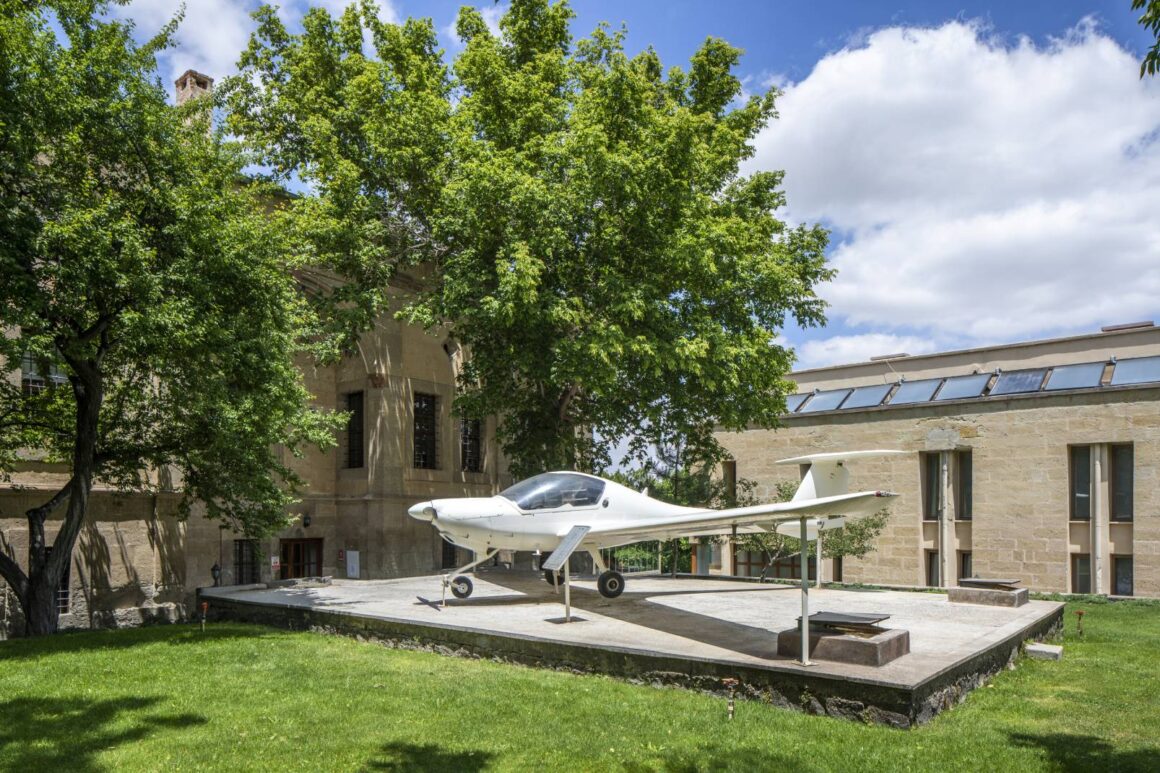
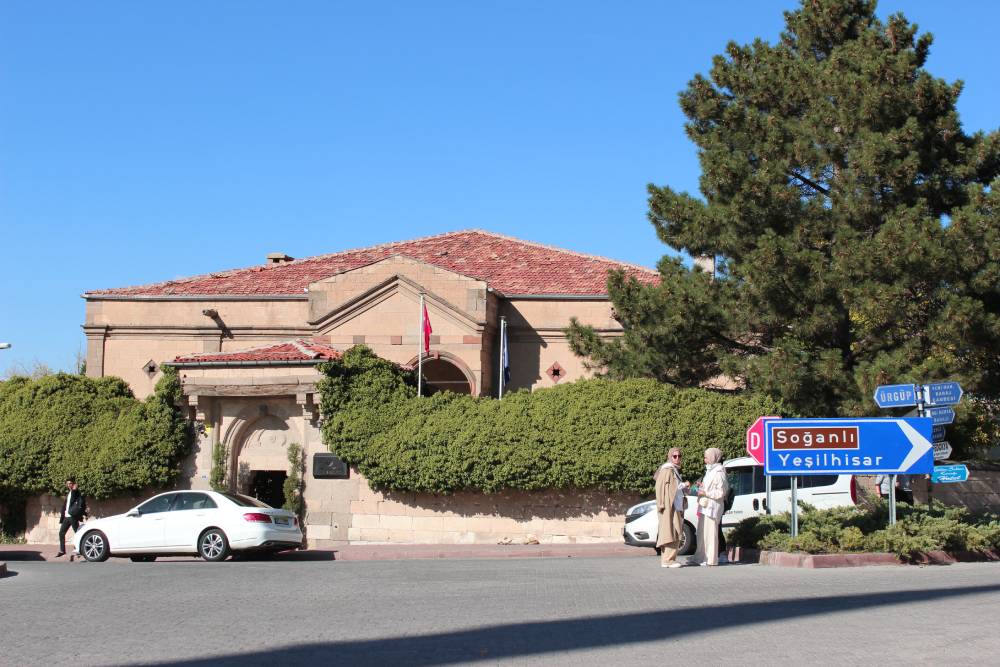
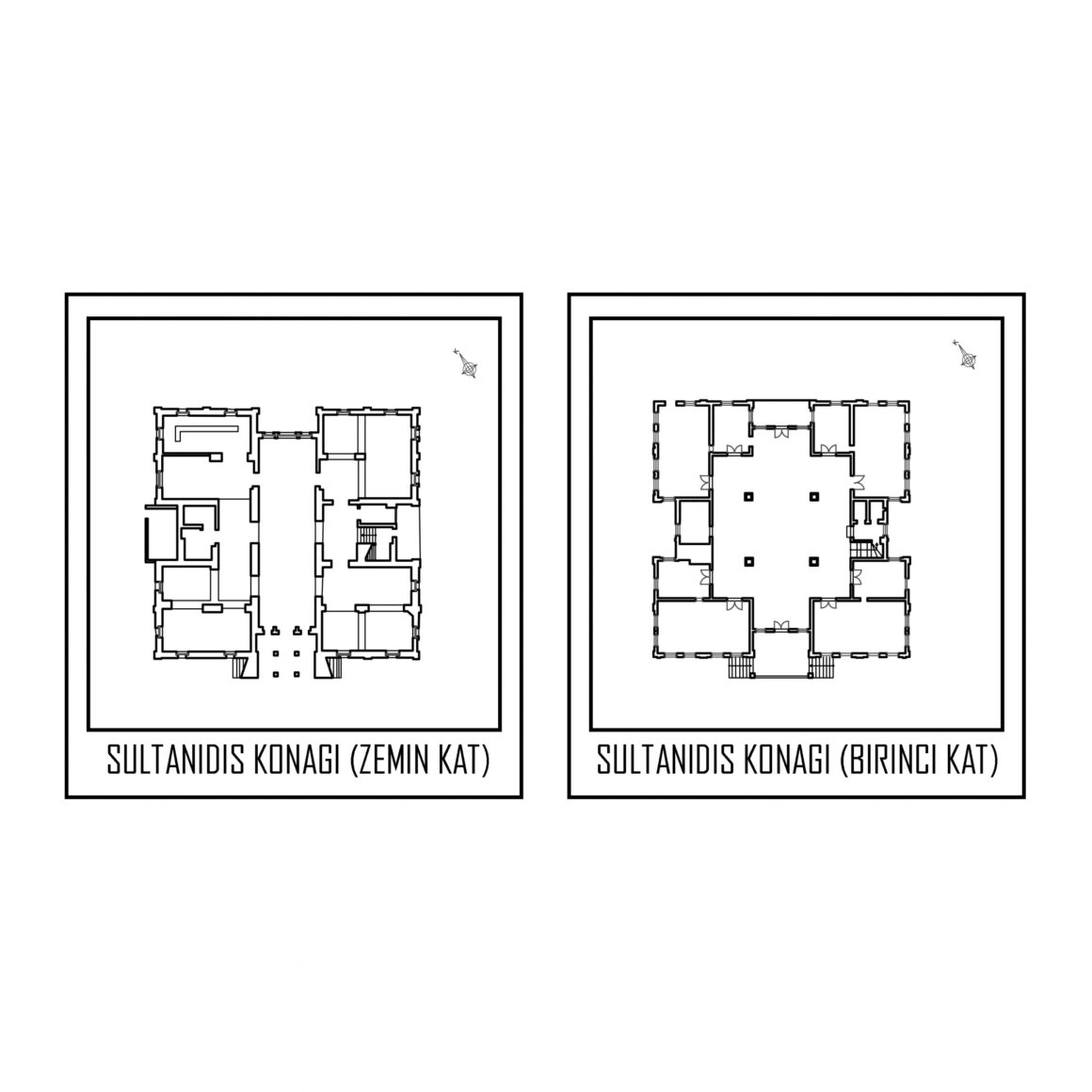
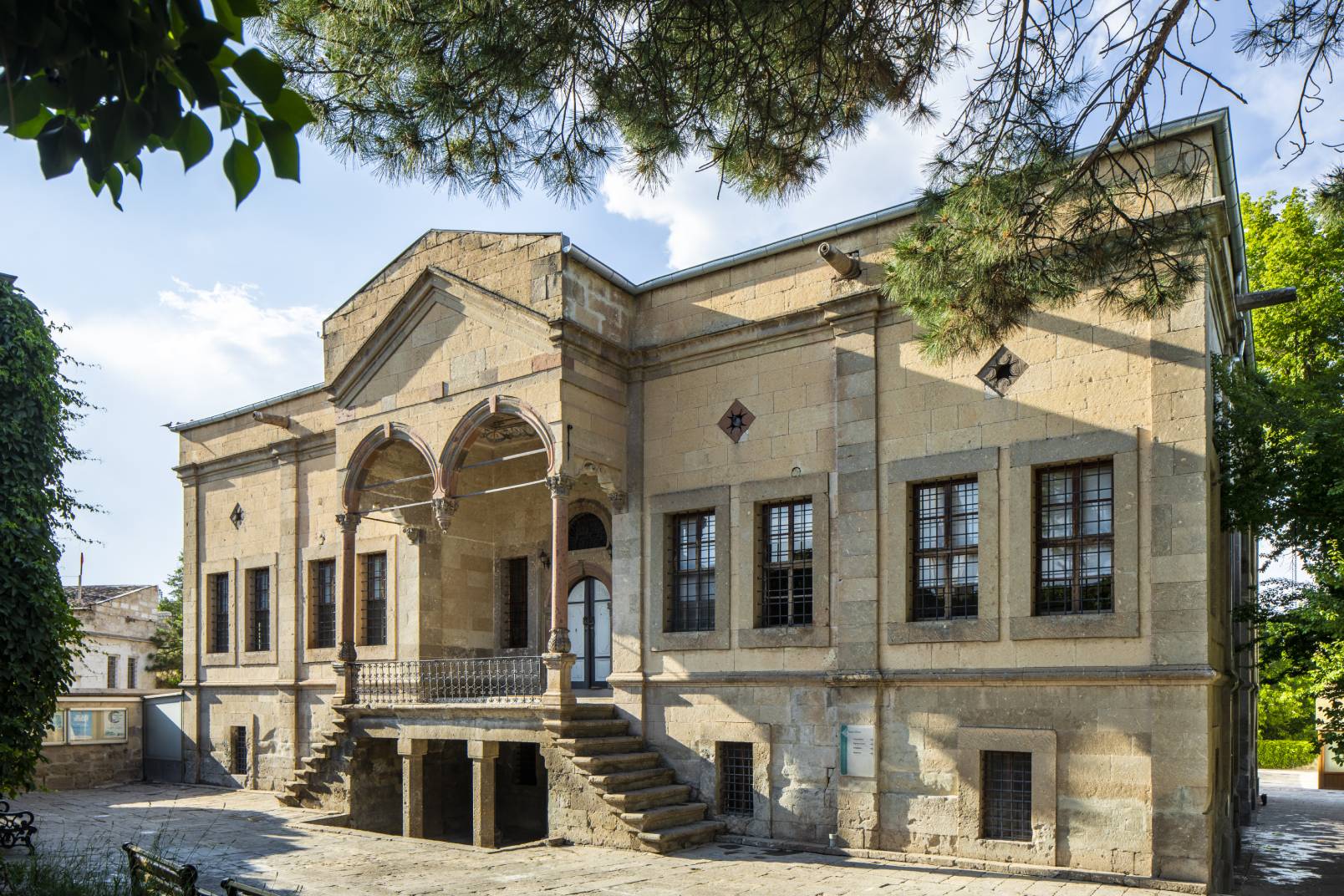
The mansion, which is known to have been built in 1892 according to the inscription on the entrance door, was built by a rich Greek businessman named Haralambos Sultanidis. The building, which was originally designed as a house, was also used as a venue where balls and entertainment were held. The mansion, which hosted various functions such as a guest house, primary school and hotel after the population exchange, has been serving as the administrative unit of Cappadocia University since 2005. The mansion, which is one of the most spectacular examples of civil architecture in the Cappadocia region, has a privileged place among the historical mansions in Mustafapaşa. The building has a plan type with a courtyard on four sides and a central hall. The two-storey building has a rectangular plan.
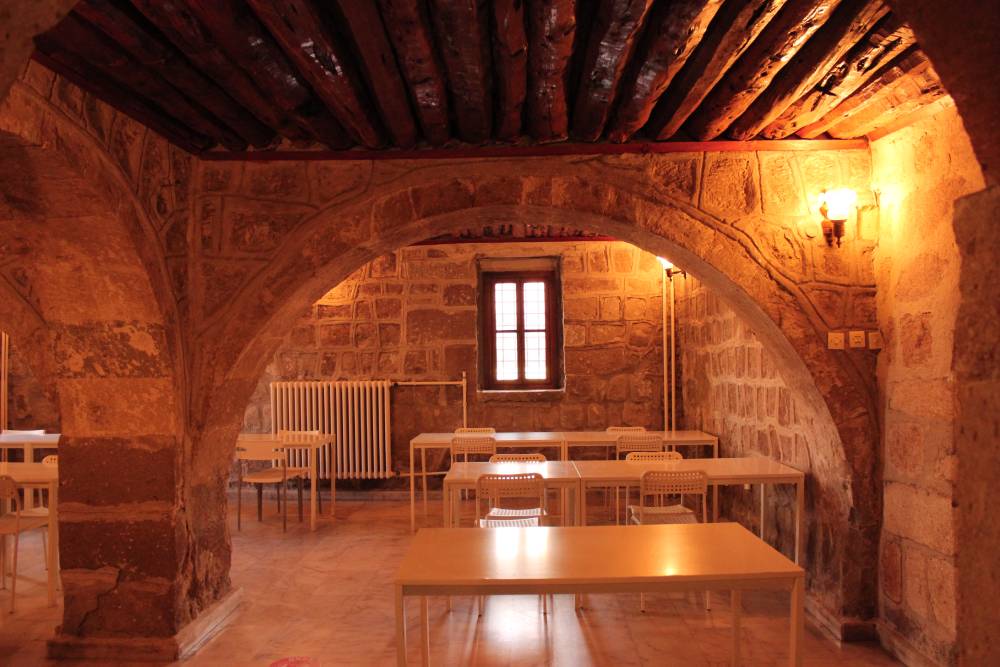
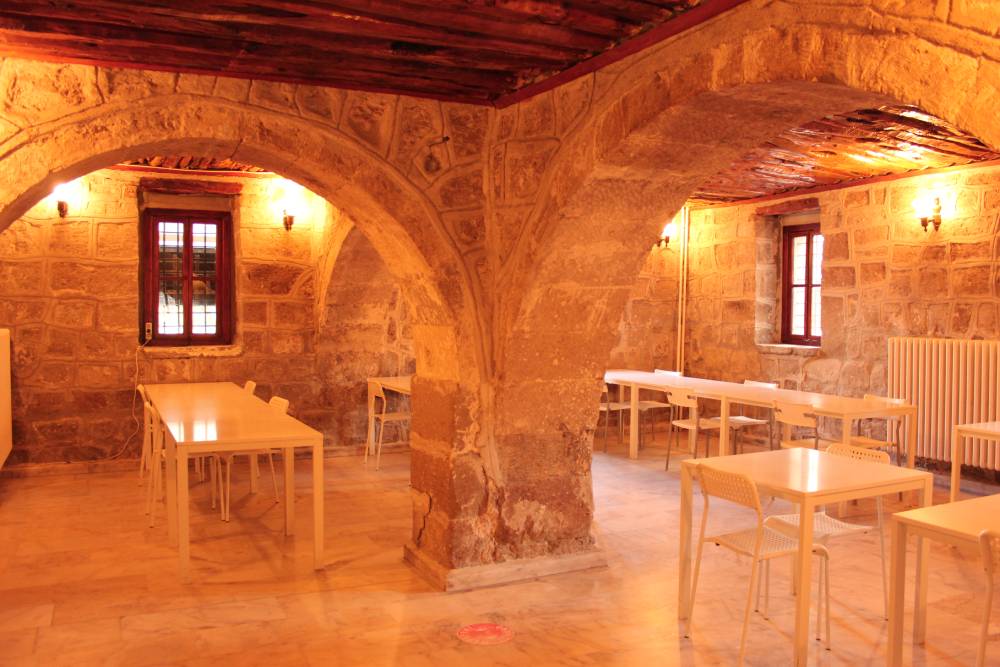
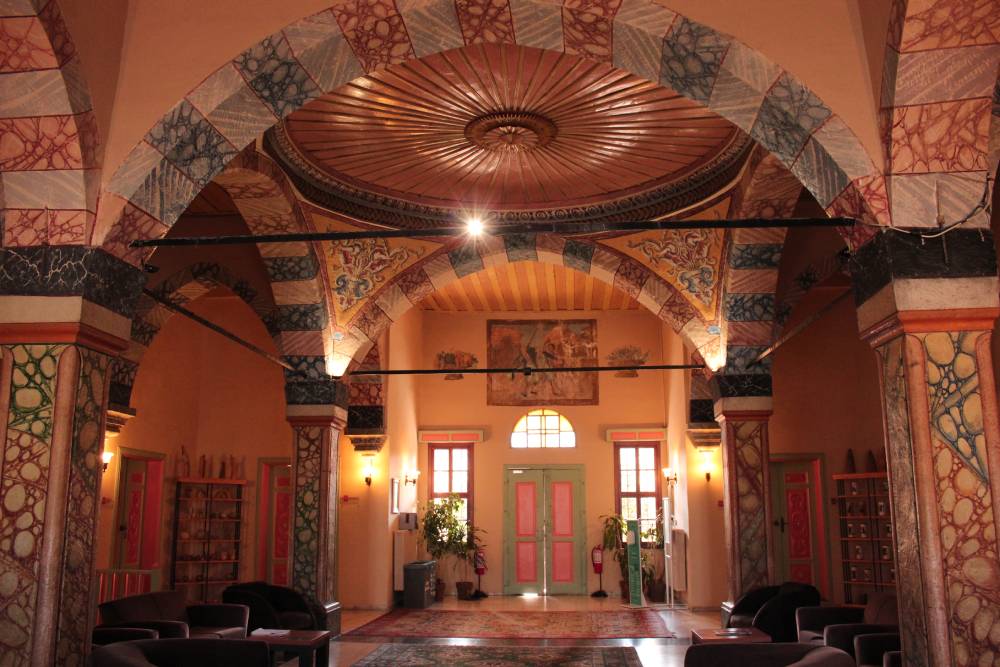
With two symmetrically placed staircases designed adjacent to the building, the mansion’s bit-hilani (columned portico) style porch section with monumental columns and hanging arches can be accessed. While the architectural design of the place adds a monumental appearance and dynamism to the facade; The hand-carved decorations on the ceiling add color to the space. From here, you can enter the sofa section of the mansion. The middle hall inside the building is covered with a dome, and eight rooms of the mansion open into it. The stairs to the east of the hall lead down to the basement floor, which is located on the ground floor and is used as a dining hall today. The walls of the building, made with masonry technique, are made of stone; Wooden materials were originally used for door, ceiling and window elements.
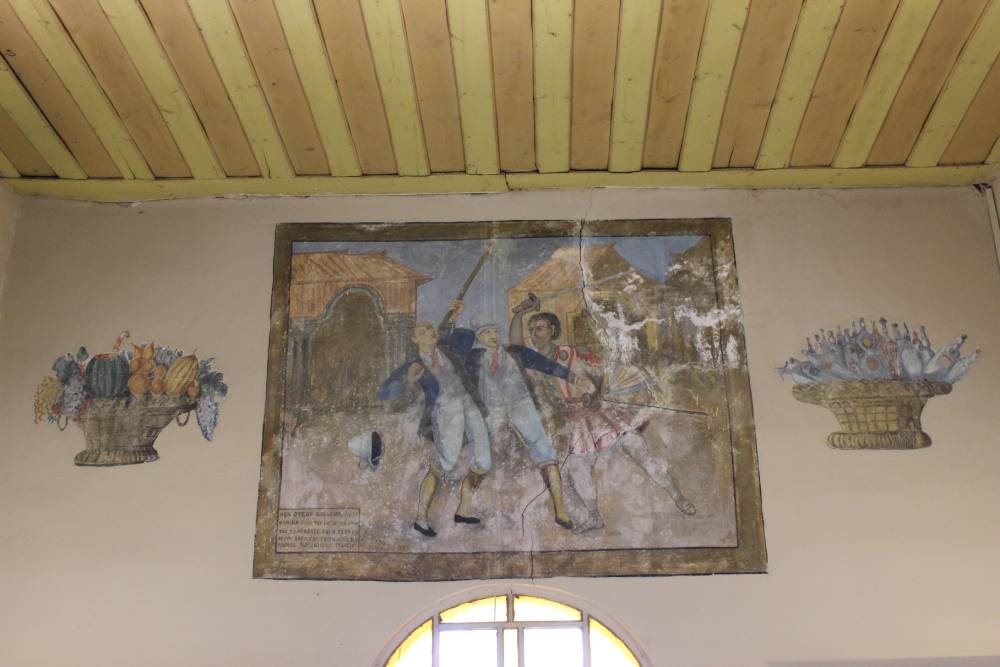
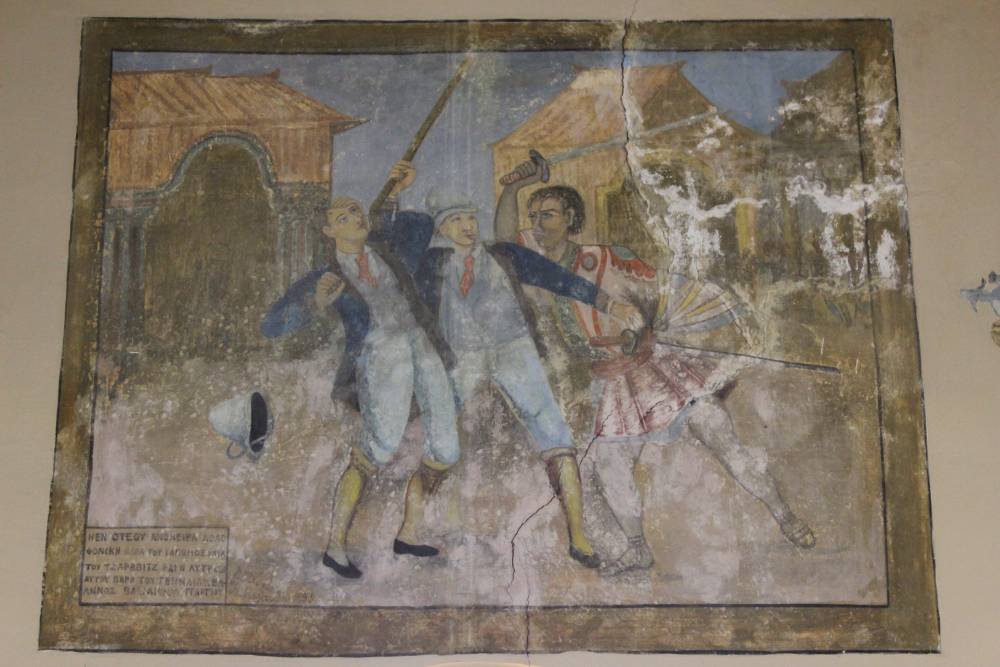
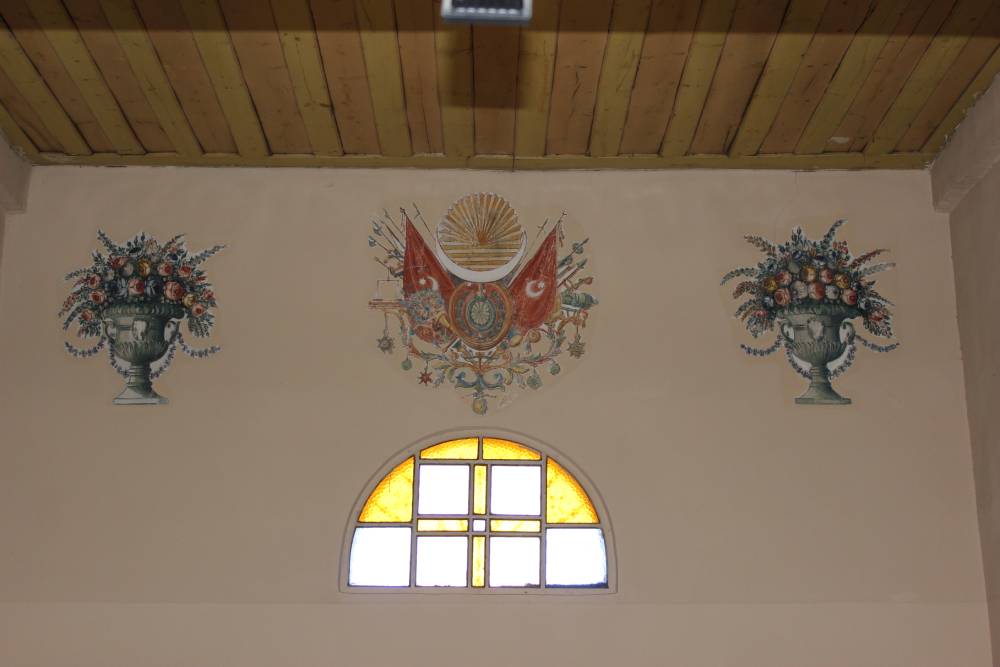
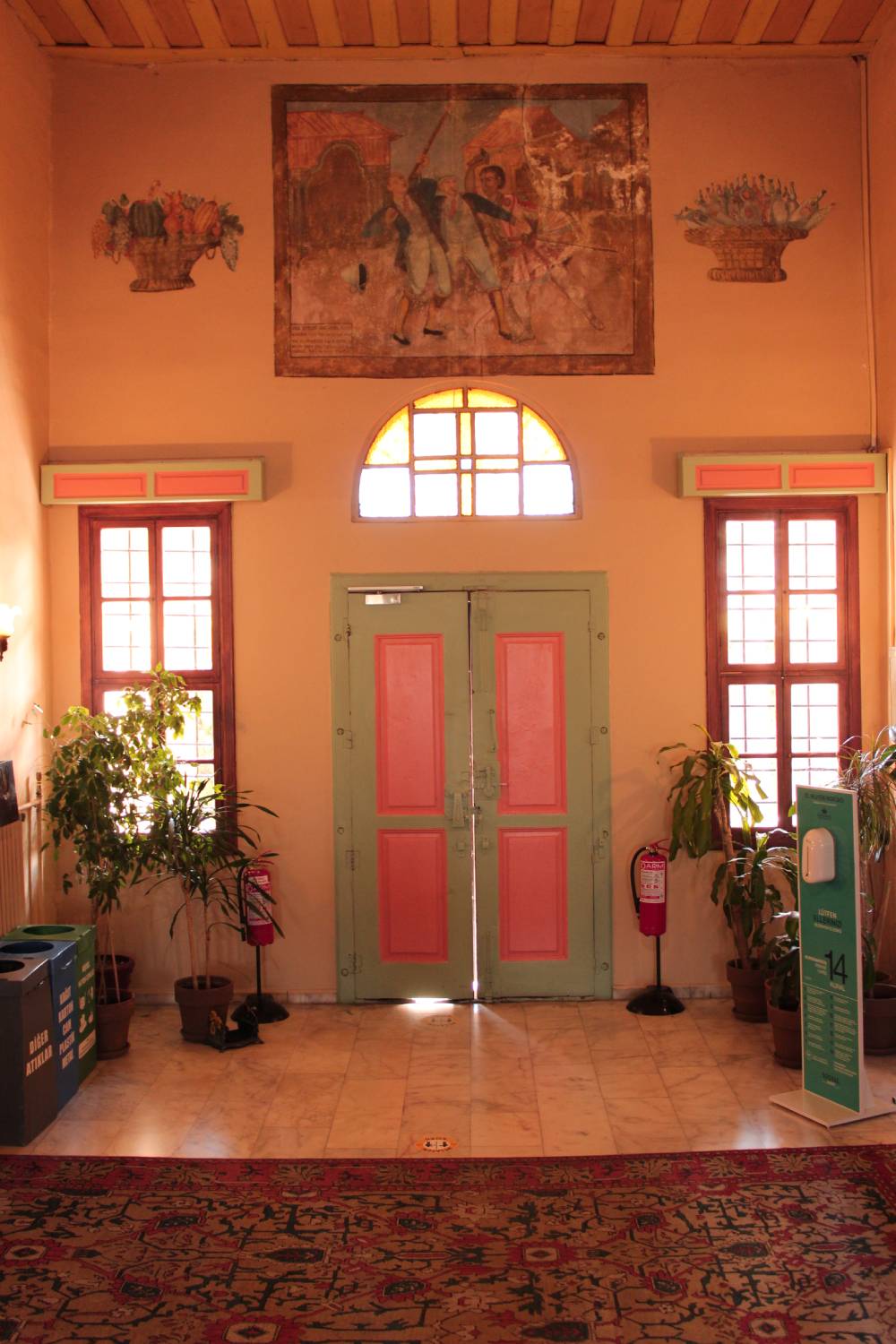
In addition to the themed and figured wall paintings in the mansion; Elements such as flowers, coats of arms and marble imitation paintings, wooden ceiling decorations, chests and sherbet bowls add color to the space. On the wall of the entrance door to the hall, there is an interesting mural on the subject of “Assassination of the Russian Prince”. The painting was depicted by Kostis Meletiadis, one of the most important painters of the village. In the lower left corner of the picture there is a Greek inscription meaning “The attempted murder of the Tsar’s son by the Japanese …… in Otsu and the rescue of the Greek king by his son“. This historical event was reported in Le Petit Journal Supplement Illustré, published in France, with a scene depicted in 1891. Tsuda Sanzo, an officer in the Japanese police force, attempted to assassinate the Russian Prince Nikola, and the Russian prince was saved from death by the intervention of the Greek prince Georgios. The fact that the owner of the house knew about this event and had it depicted in his mansion can be explained by the political and religious conditions of the period. The depiction of the Ottoman coat of arms on the wall opposite this painting is an indication that Sultanidis also wanted to show his loyalty to the Ottoman state.


