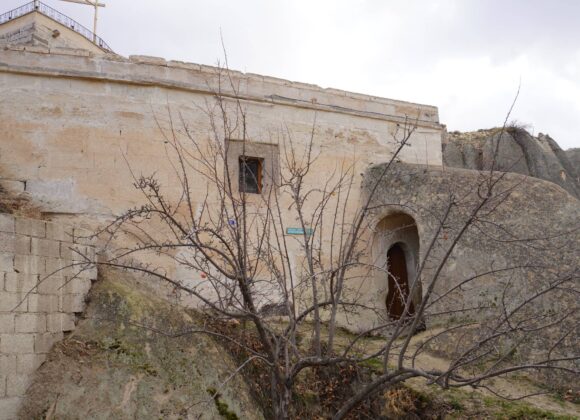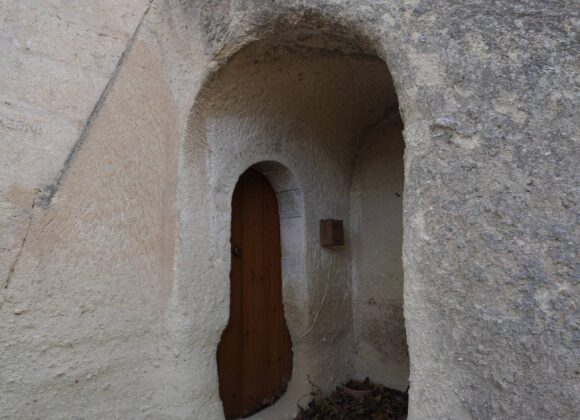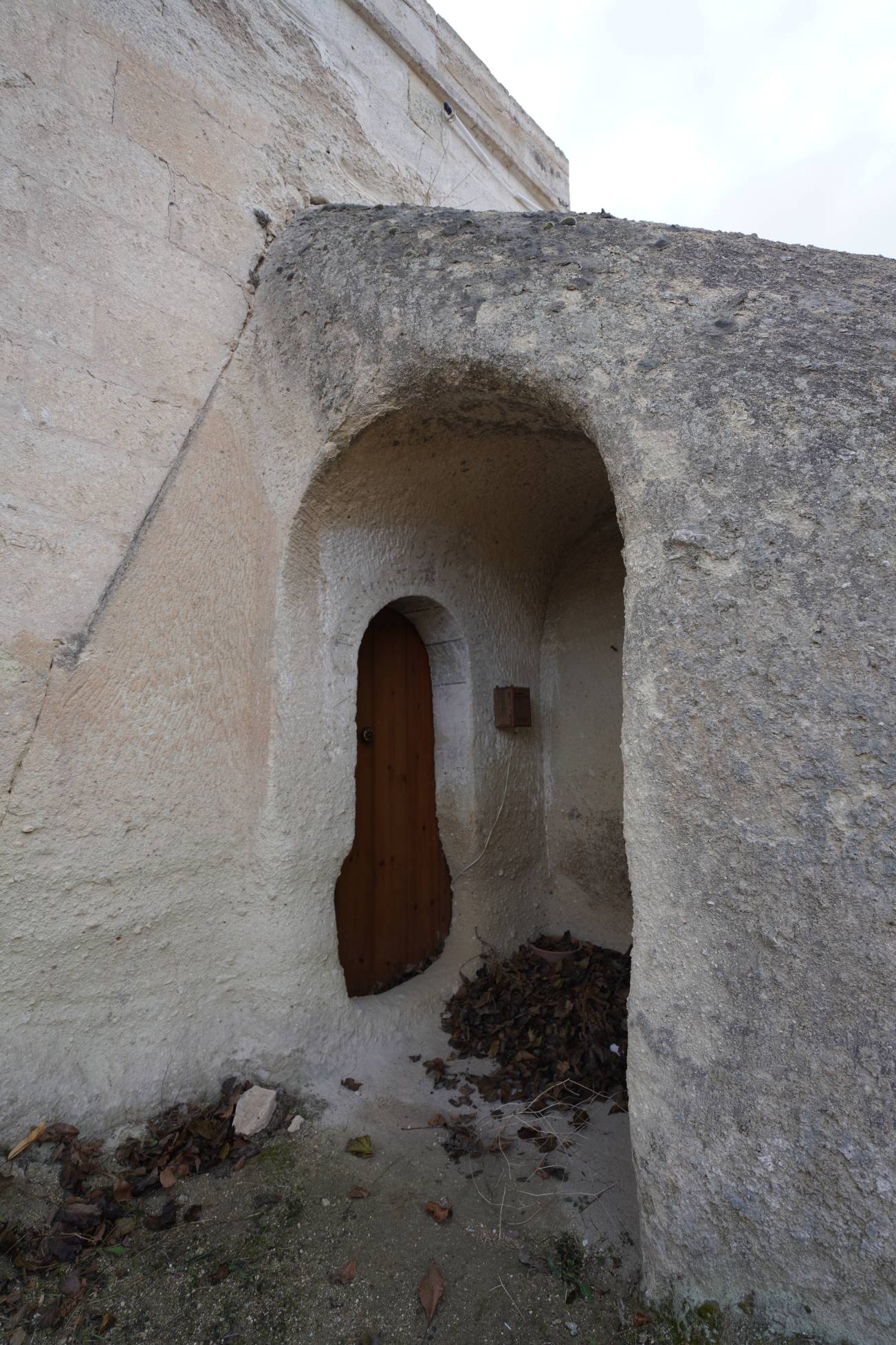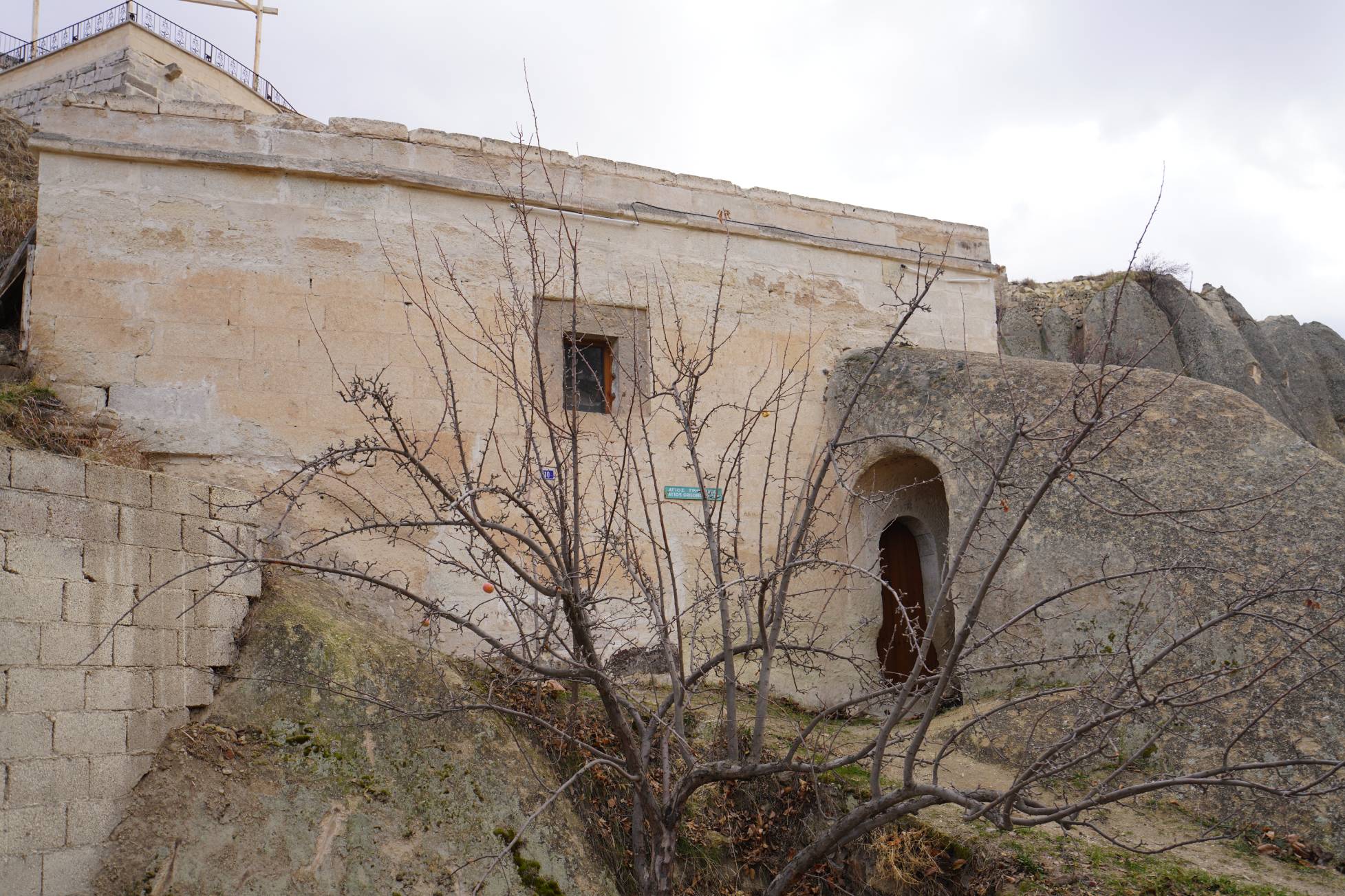
The church is located in the southwest of Yukarı Mevkii, approximately 800 meters below the end point of the Gibos valley. During the Greek period, the church was reached through a 60-70 meter tunnel from Yeni Mahalle. The church, which is now privately owned, was identified as church No. III by S. Pekak (2009). As a result of the research of Dimitri Katsikas Kapadokias, the grandson of a family who left Başköy, a village in Ürgüp, through population exchange, it was understood that this was the St. Grigorios church in Mustafapaşa.
The church, which is in generally good condition, owes this largely to the late Mehmet Balta. For many years, Balta has been maintaining and cleaning the valley, which is an extension of the Gibos Valley, where the church is located, and brought this place to tourism.
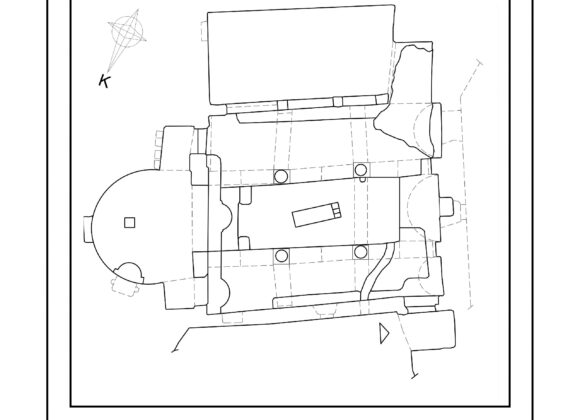
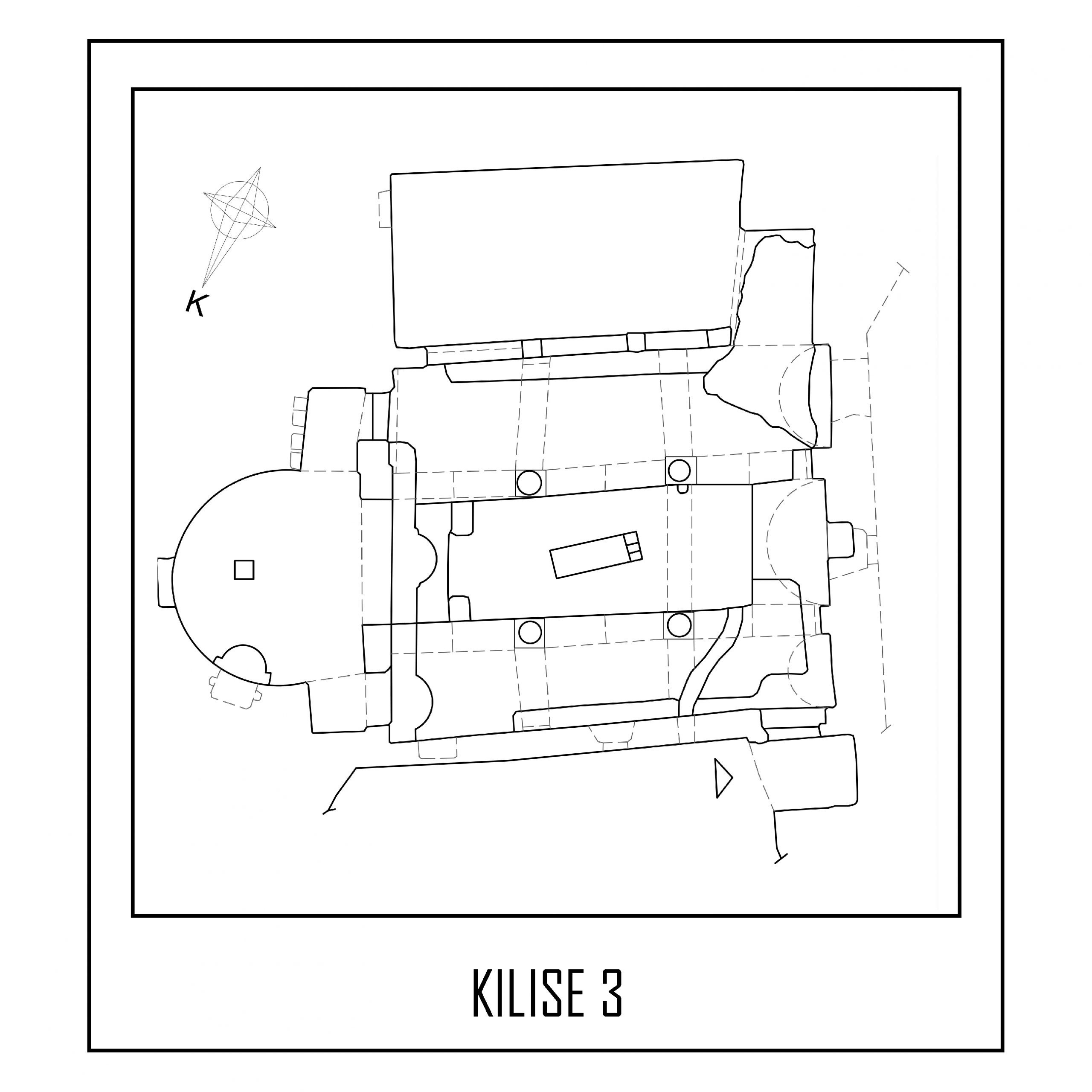
Part of the church is carved into the rock; Some of them were made using the masonry technique. The church has a rectangular naos in the east-west direction. This main place of worship is divided into three naves with two rows of columns, and all of the naves are covered with barrel vaults. To the east of the building, there is an apse covered with a semi-dome. There is another room to the south of the naos, and it was entirely carved into the rock.
The most striking feature when entering the church is the rectangular tomb on the floor of the central nave, right in the middle of the four columns. In its current state, the decoration program of the church appears to be simple. Today, all that remains in the church are stone imitations painted with dark and light colors on the jambs and arches of the windows opening to the naos.
Tevfik Balta, who belongs to a local family of Mustafapaşa and has been doing research on the village for years, stated that, according to the family elders, especially women frequently visit this church. Additionally, Balta stated that there was a stone portrait of a woman at the top of the window on the western wall at the entrance of the church. Considering the information provided by Balta, it can be thought that there may be a woman’s grave in the church, which was a frequent destination for women.