
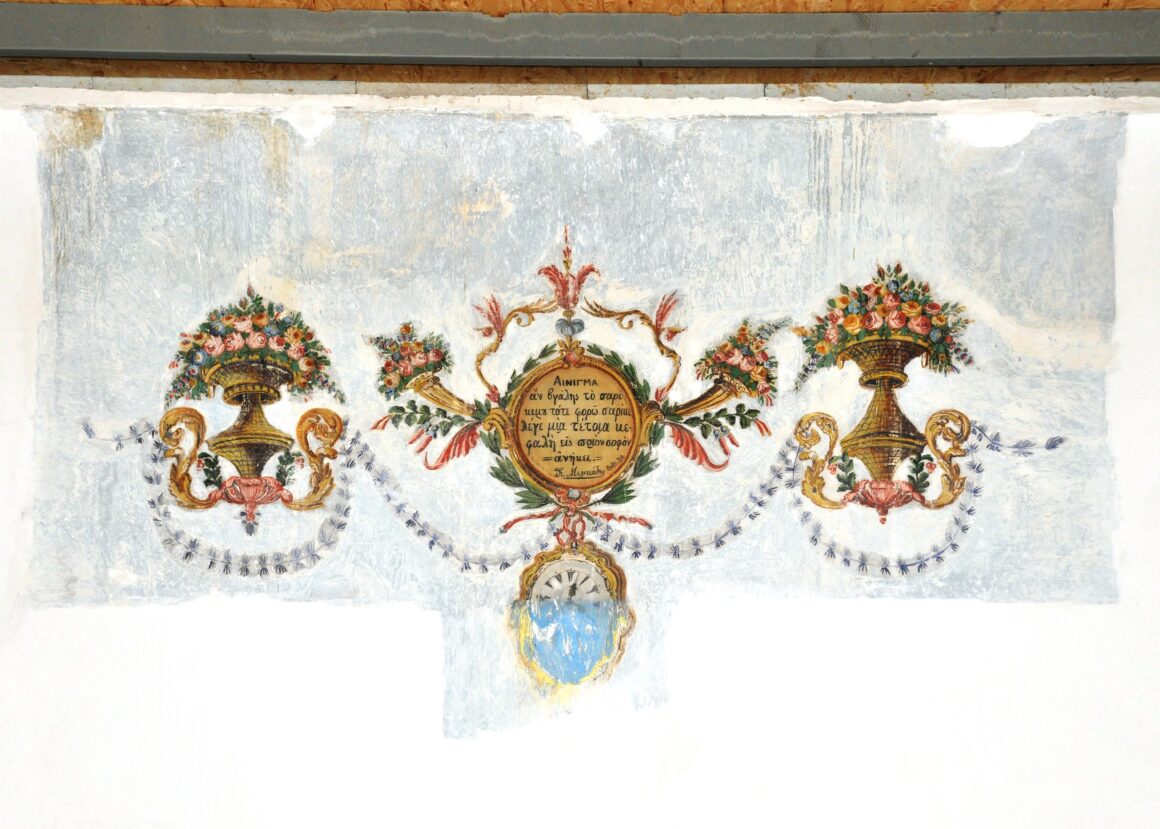
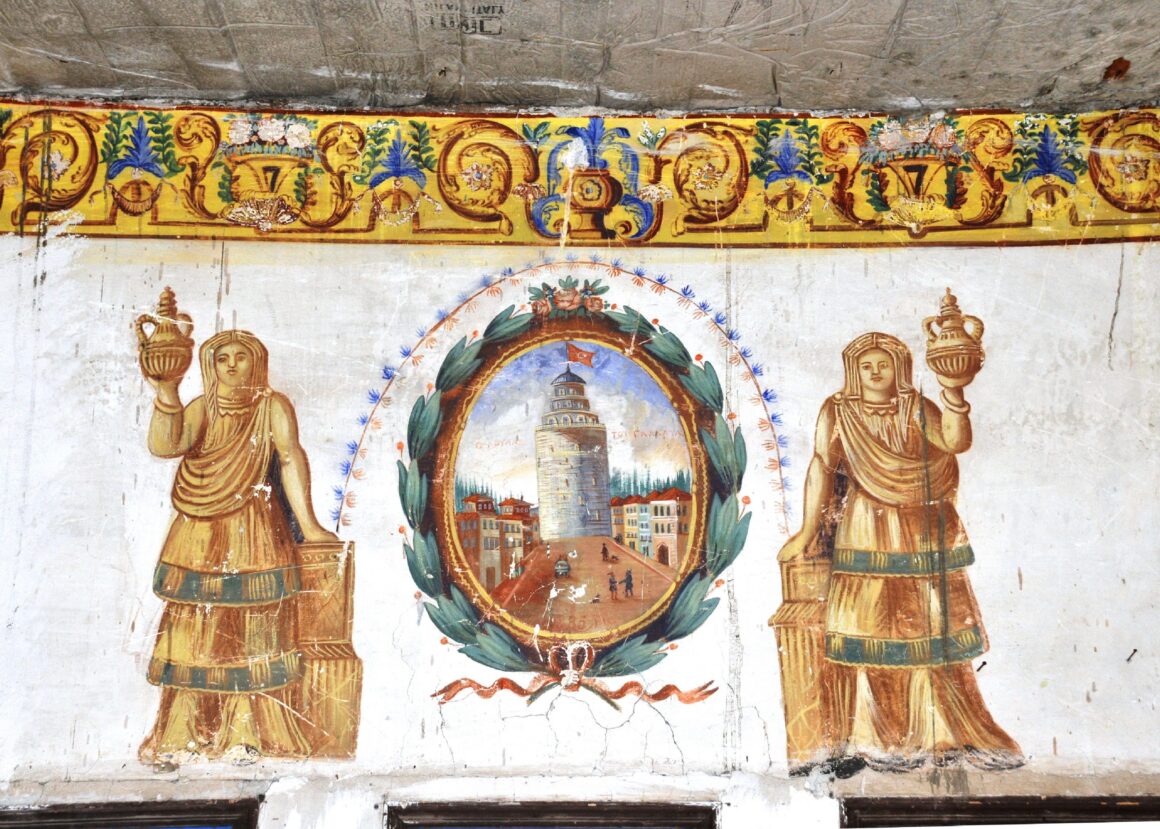
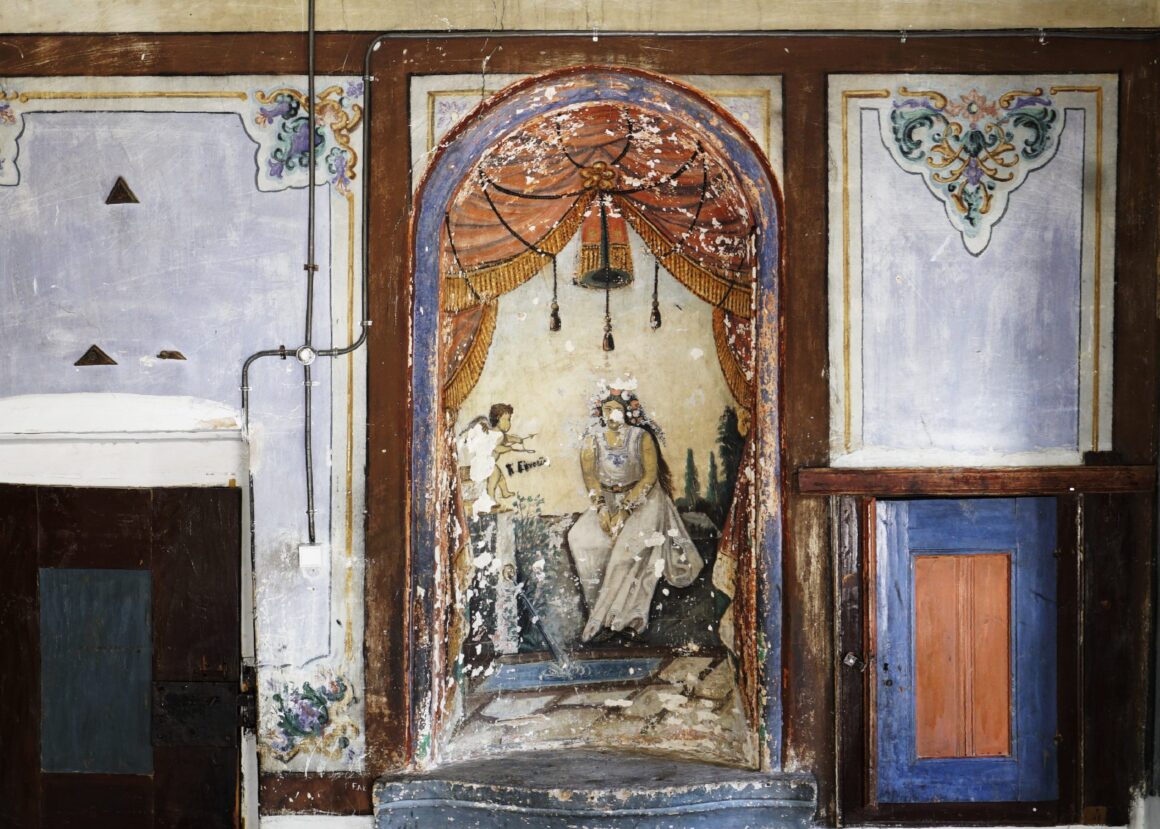
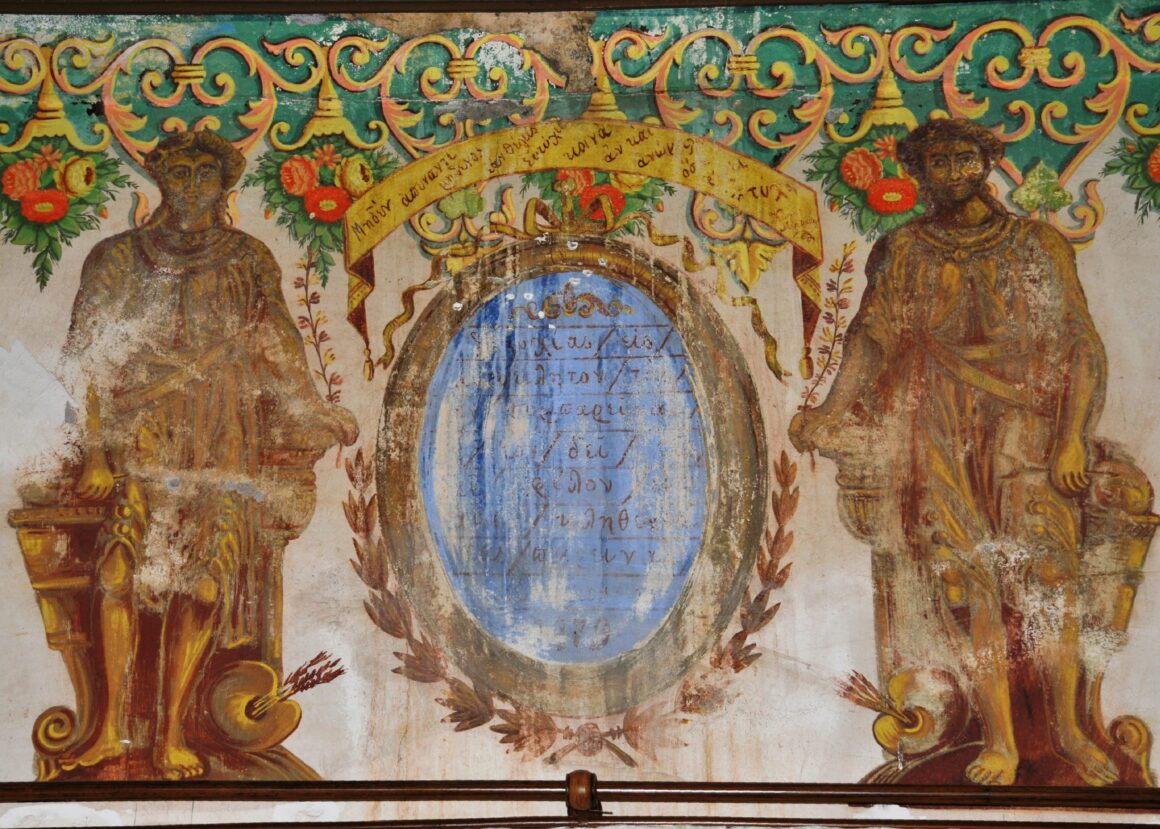
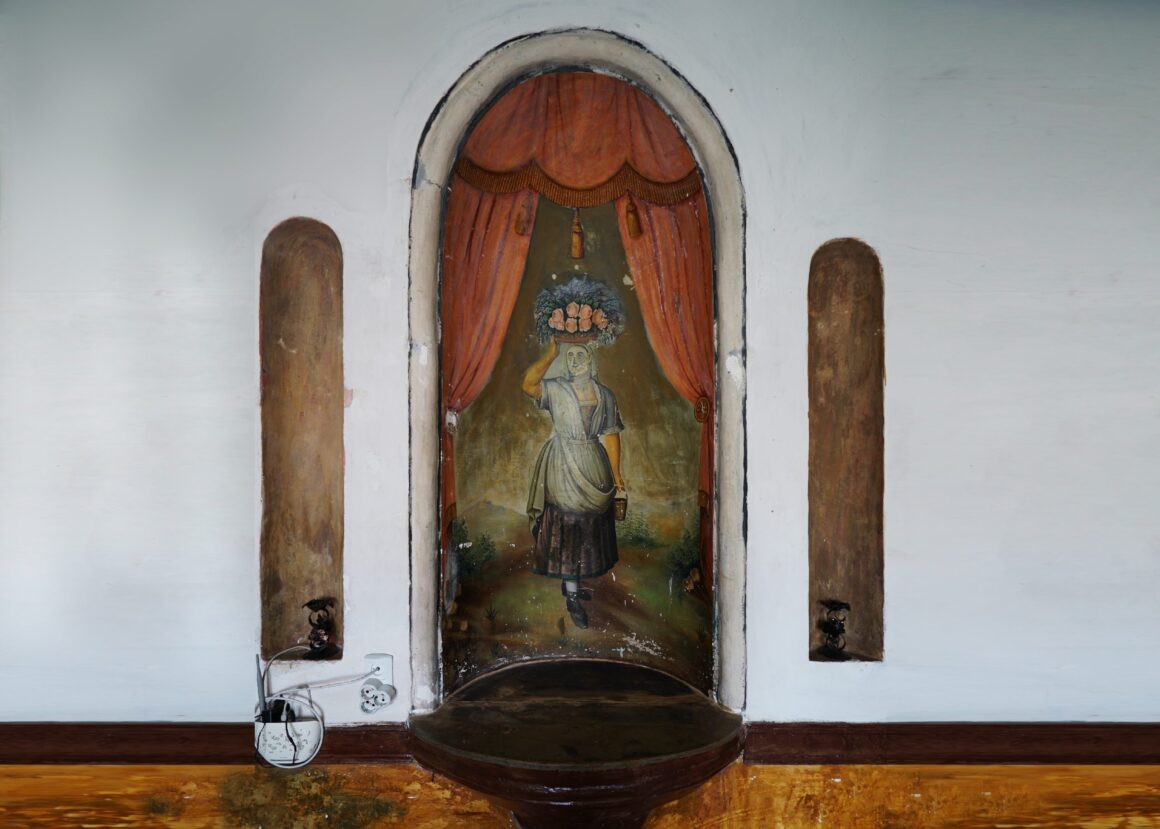
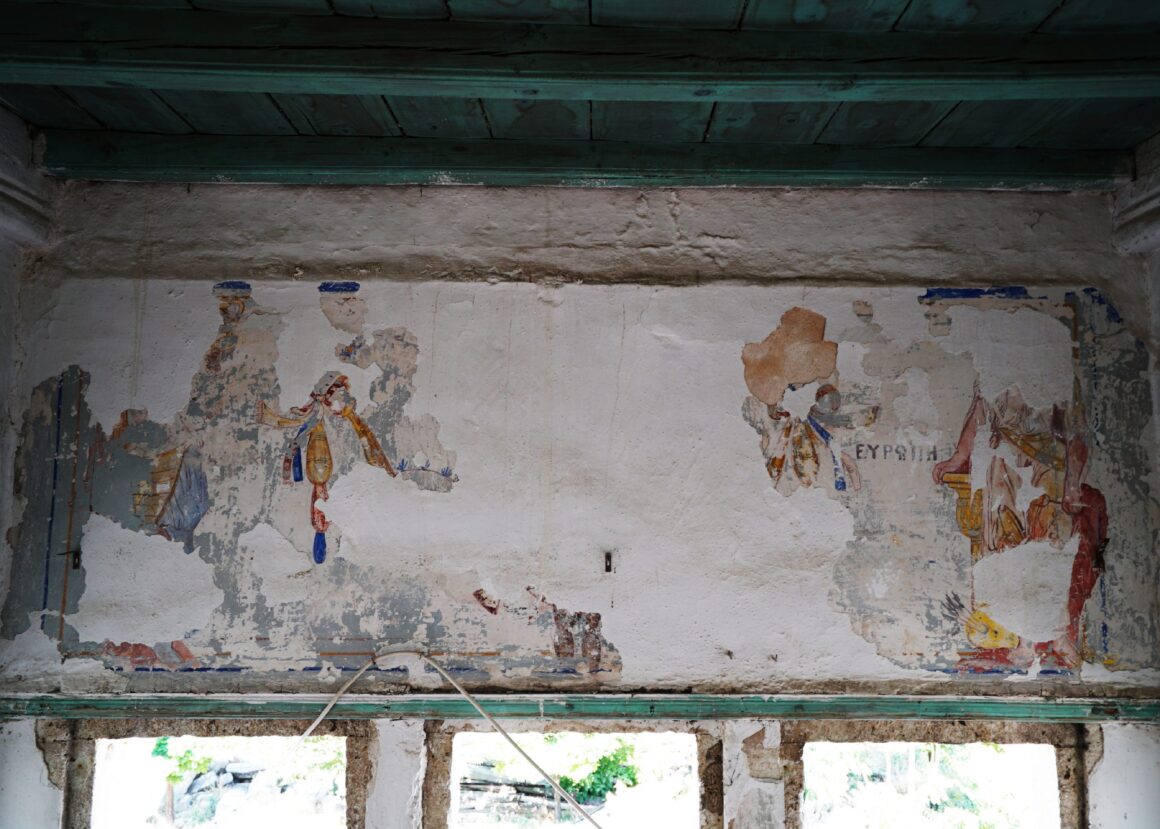
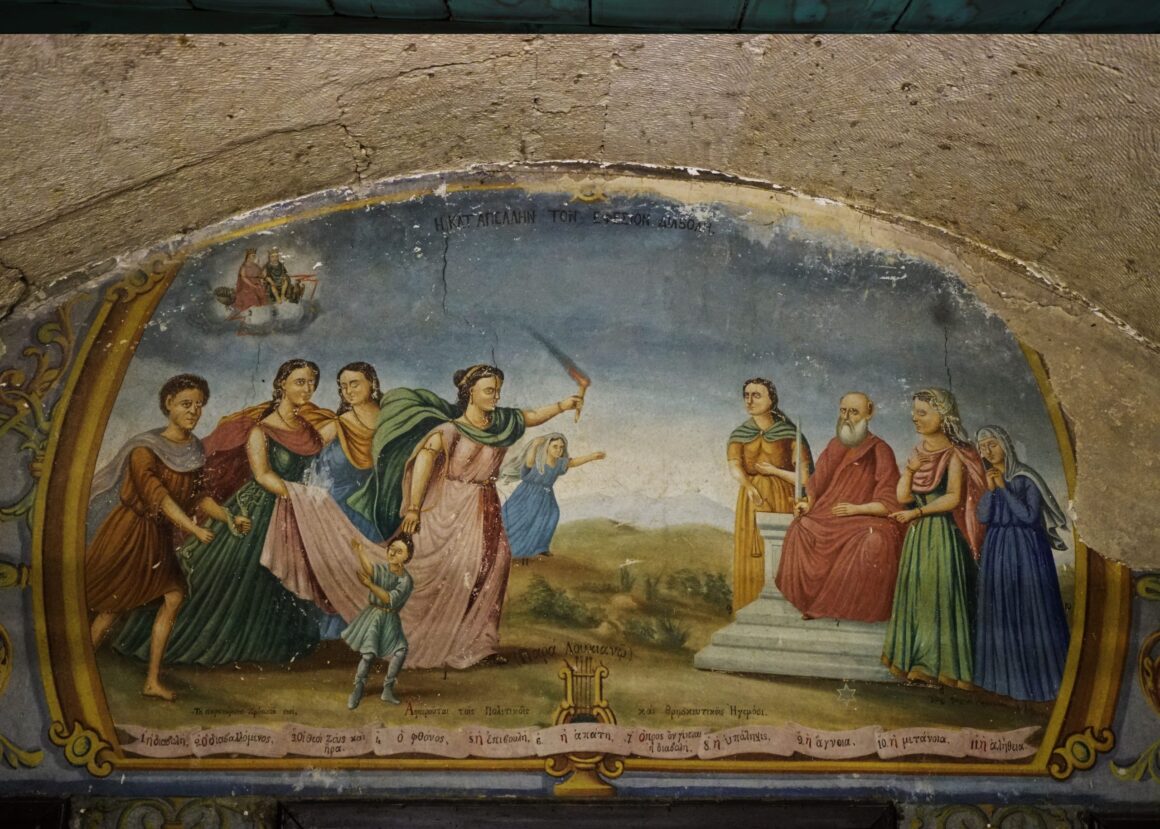
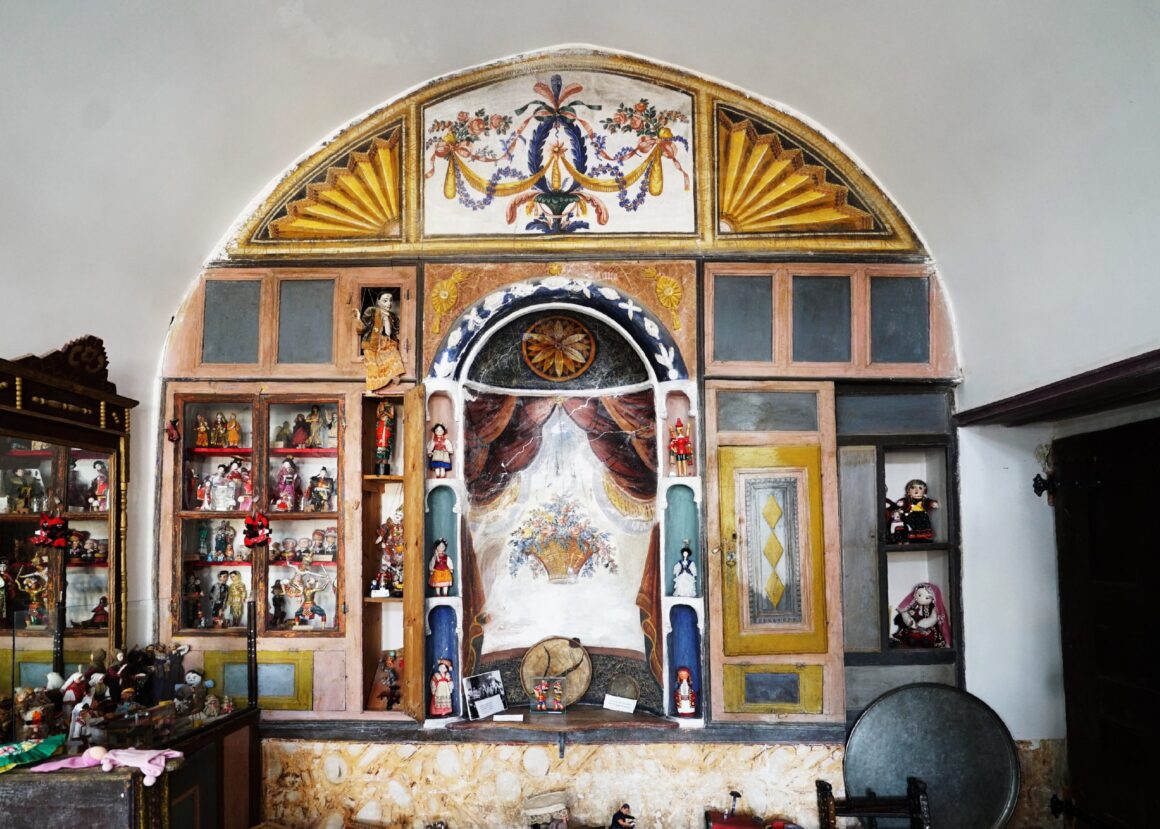
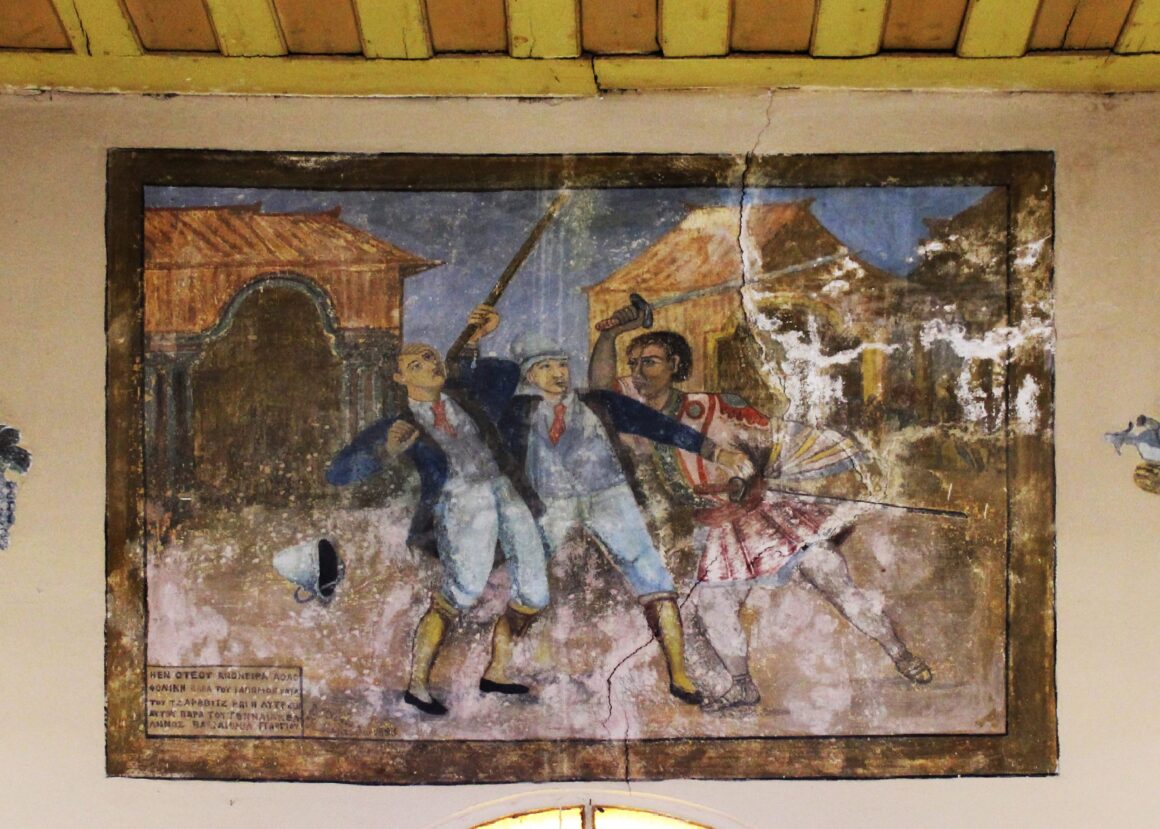
In addition to their architectural qualities, another important feature of the houses built in Sinasos during the last period of the Ottoman Empire is; These are fireplaces, cabinets, ceiling hubs, architectural plastic decorations consisting of various motifs and wall paintings inside the houses. These types of decorative elements in houses, which add an aesthetic identity to the space, give an idea about the owner’s worldview, taste and wealth. We undoubtedly get this idea mostly through the pictures on the walls.
When we take a brief look at the modernization process of Ottoman painting before looking at the wall paintings, many of which are seen in mansions in Mustafapaşa, we see that Ottoman painting entered a new process starting from the second quarter of the 18th century. Until this period, image depiction was limited to book pages intended to explain the texts of manuscript books. The change that started with the tulip era and then came with the European style of education was also reflected in daily life, and the effects of this situation were also seen in Ottoman painting. There has been an increase in the number of civil architectural works in Istanbul, and a new decoration such as wall paintings has been seen in the interior decorations of these works (Renda, 2002). In the 19th century, we encounter wall paintings in many residences in Nevşehir and its region, especially in Ürgüp and its affiliated Mustafapaşa village.
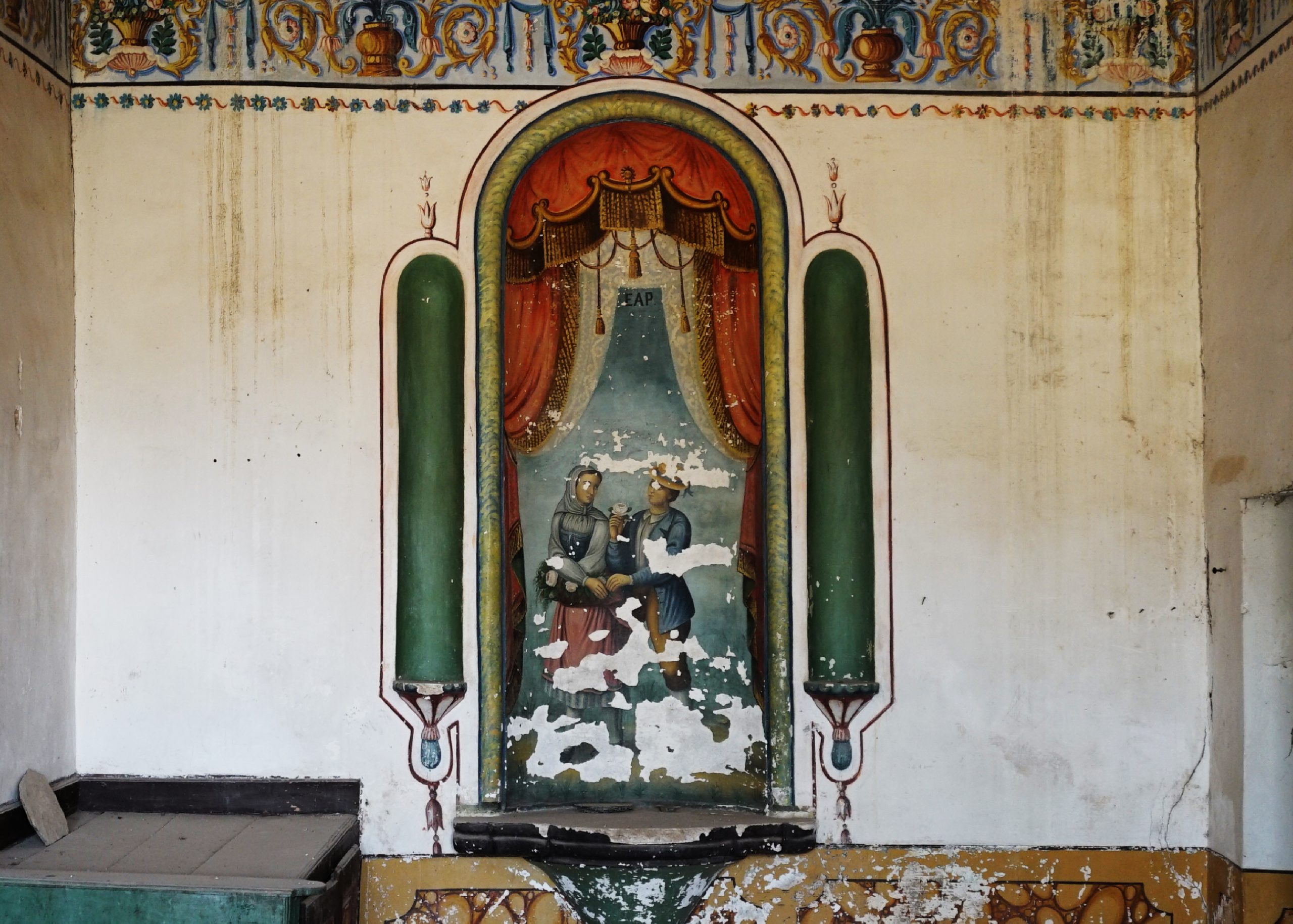
Wall Paintings in the Mansions in Mustafapaşa
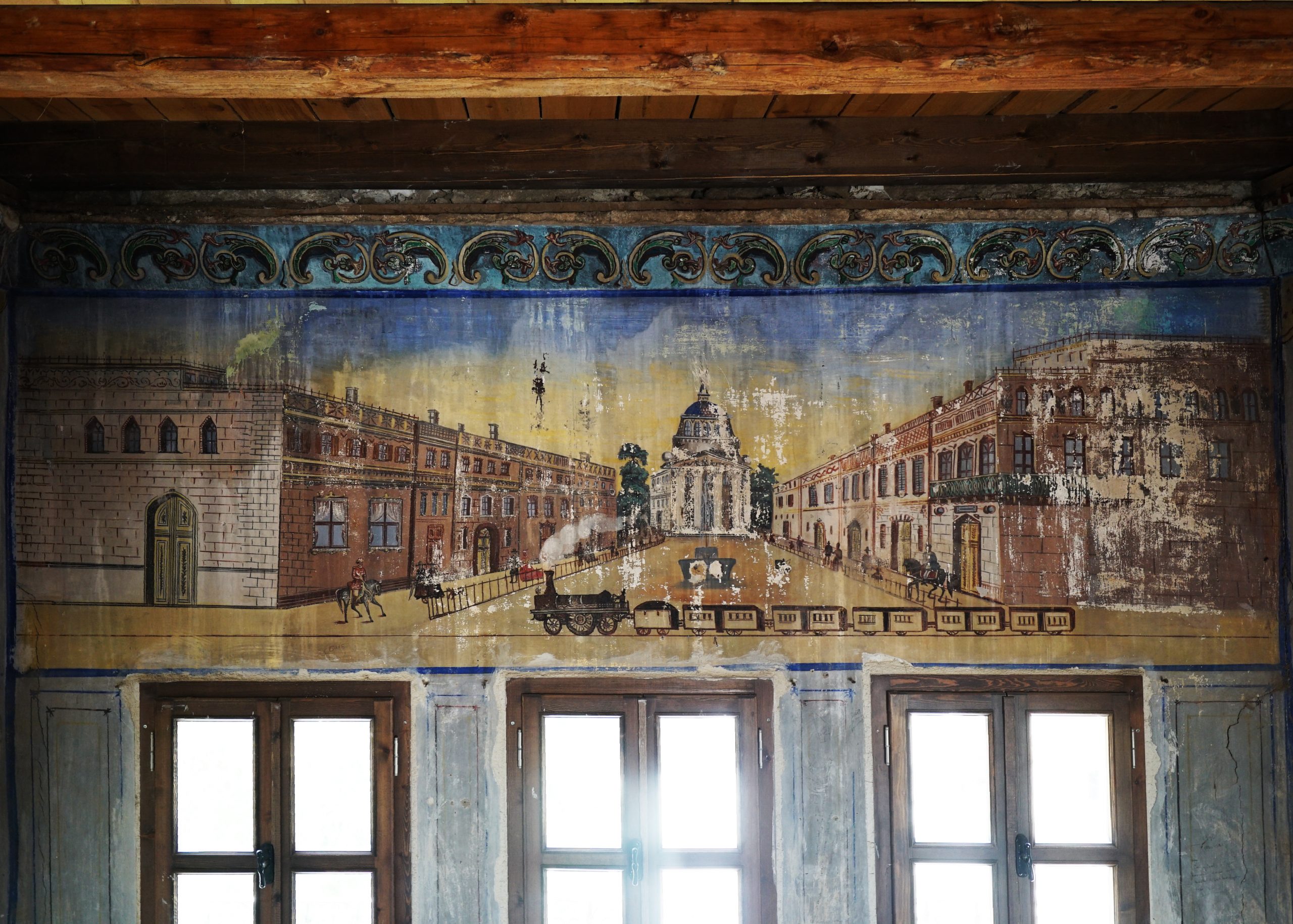
It is noteworthy that the wall paintings in the houses of Mustafapaşa possess characteristics close to the Western style. It is evident that most of these paintings are products of high-quality workmanship and artistic knowledge. In many of the paintings—which feature a wide variety of subjects such as panoramic landscapes (real or imaginary), figures within landscapes, single figures, and mythological scenes—perspective rules are applied and light-shadow effects are skillfully rendered. When examining overall Ottoman wall paintings from this period, we see that the majority are landscape paintings where figural expressions are much less common, often depicted only as small details within the landscape without much depth. However, in the Mustafapaşa examples, the figures are notably handled as individual portraits, within thematic narratives, or as central elements of a landscape.
Another piece of information regarding the materials used in these murals is that the paint and other supplies were brought from the Ottoman capital, Istanbul. Rum people from Sinasos played a leading role in the paint trade in Istanbul as of the 1800s. Although there was a small-scale paint production industry in Kayseri, located close to Mustafapaşa, it is stated that it was not strong enough to compete with the Rum merchants from Sinasos (Roides, 1986).
Painters:
Another feature of the murals in the village is that the name of the person who painted them is often mentioned. The murals of many houses in the village bear the signature of Kostis Meletiadis, one of the most important painters of the village. In Rizos’ manuscripts, there is information that Meletiadis, who was also a very good clarinet player, went to Italy and received training there, while working at a caviar shop in Unkapanı, Istanbul. In his study about the houses in Sinasos, Roides states that the European influence on the wall paintings in the houses may be related to Meletiadis.
Another painter who was active in the village during the Ottoman period, about whom we have much less information, is Georgios. It is stated that the painter in question painted saints and was a master of icons, while Meletiadis was more fond of painting landscapes (Balta, 2005; Roides, 1986). This painter, whose name we encounter in the murals of some houses and some surrounding churches, must be Georgios Iordanidis.
Apart from these private residences in the village, there are also murals painted in churches or monasteries (For example, the Basileios Church in Beydere). However, since the paintings in civil architectural examples and the paintings in religious buildings differ greatly from each other, especially in terms of purpose, content and source, it is necessary to evaluate these two branches separately. Monumental examples of religious architecture followed a different line of development than civil examples.


