

Churches in Kalasha District:
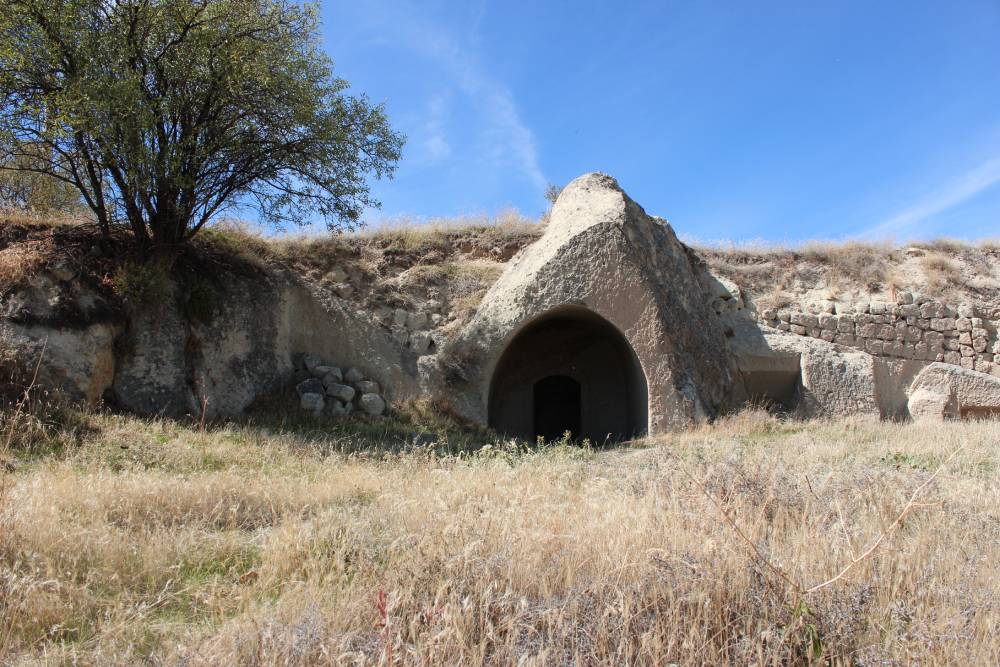
In today’s Kalasha location, which was formerly called “Galasa/Kalasa”, there are rock-carved churches whose original names and dates are unknown. The churches stated to be in this vicinity are: Paraskevi and Panteleiomon, Eustathios, Poterida and St. Haralambos churches. Two of these churches are named “Church I” and “Church II” in S. Pekak’s publication (2009).
Kalasha, Church I:
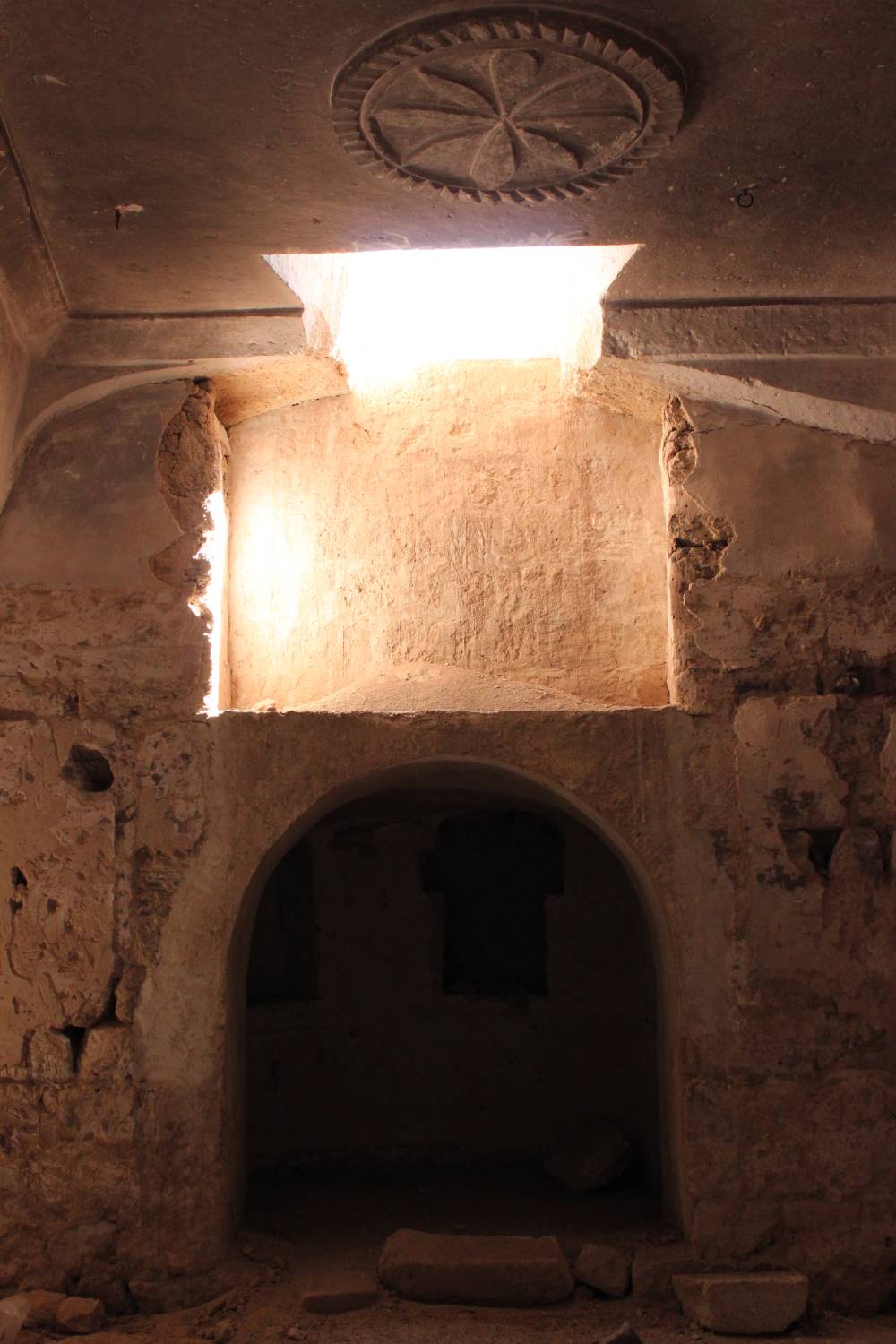
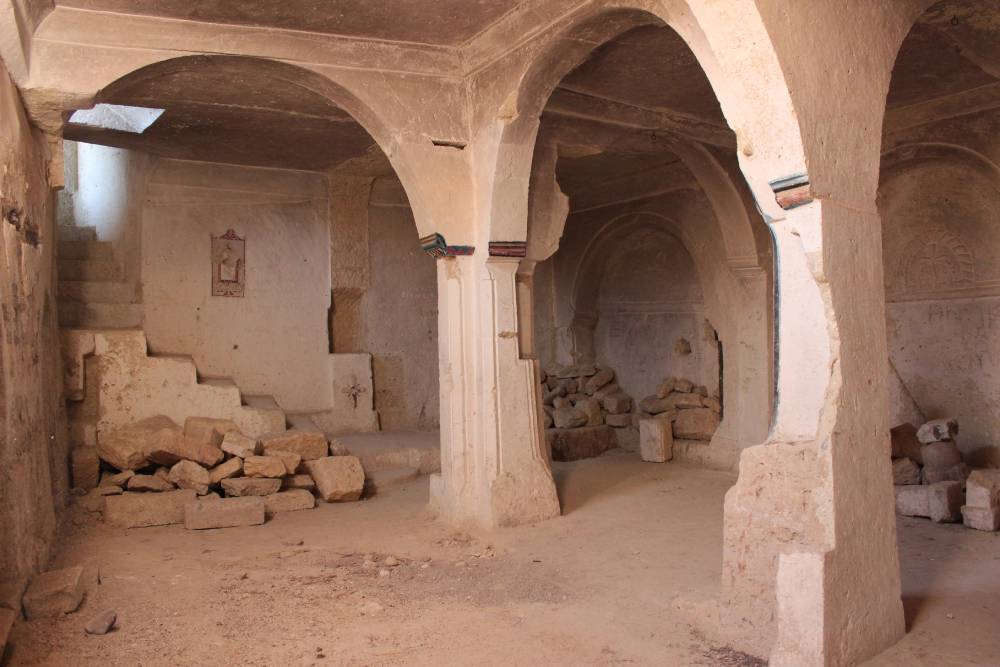
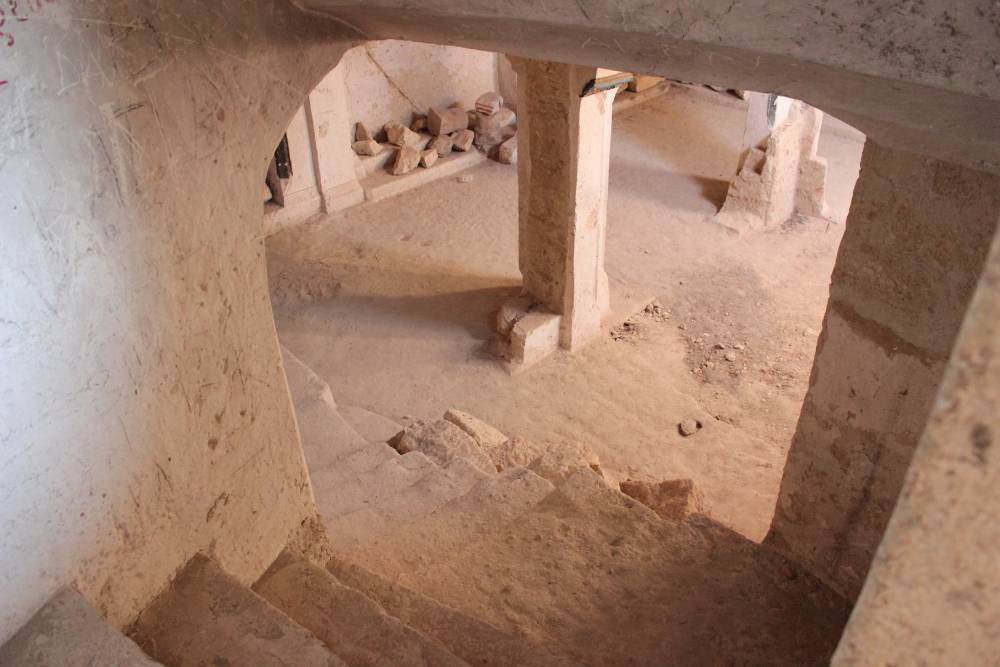
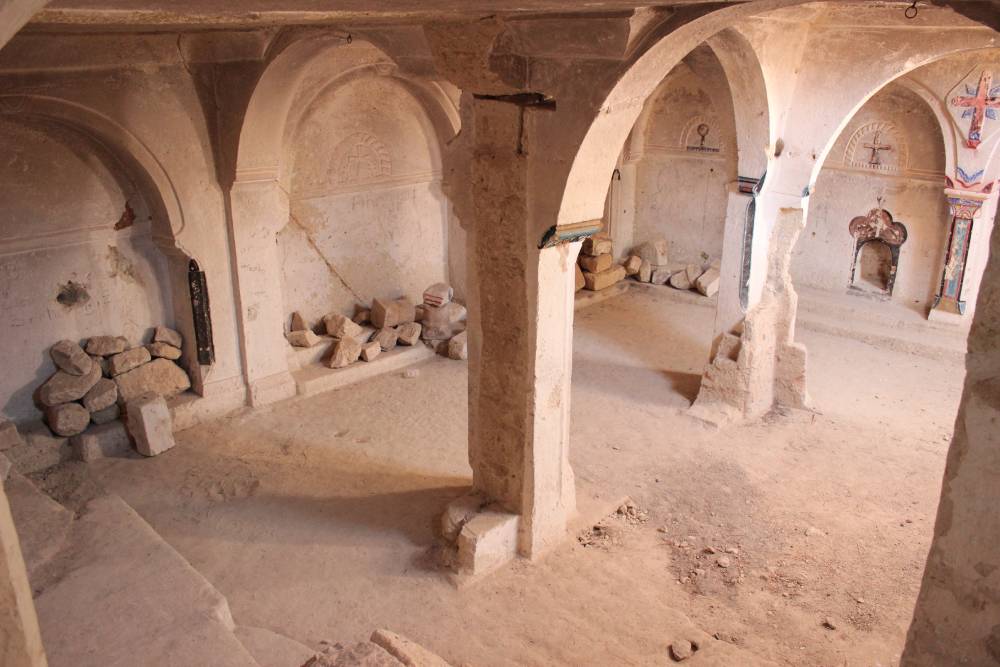
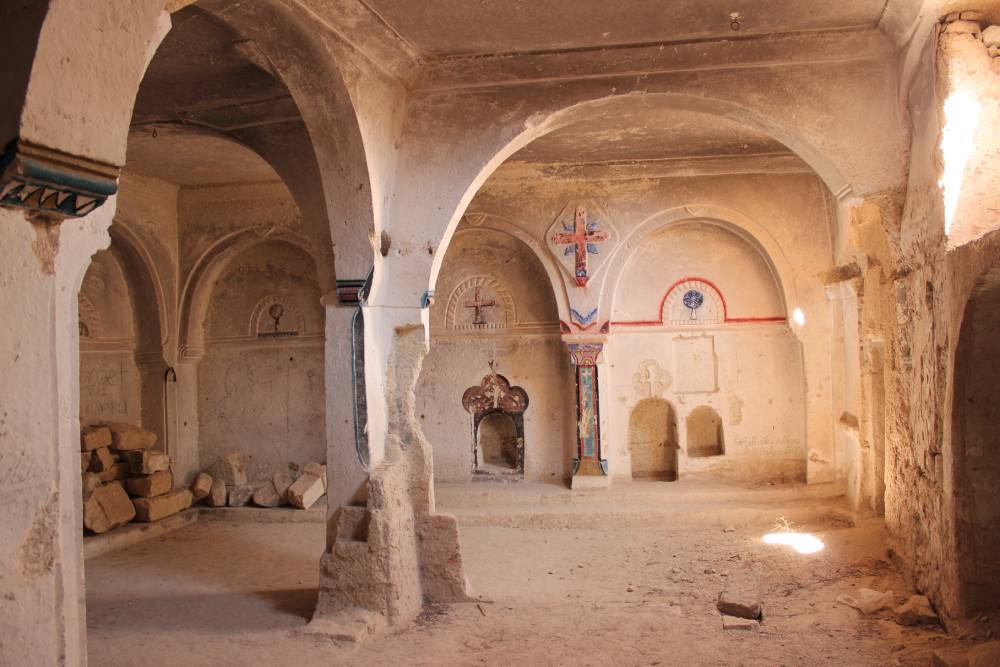
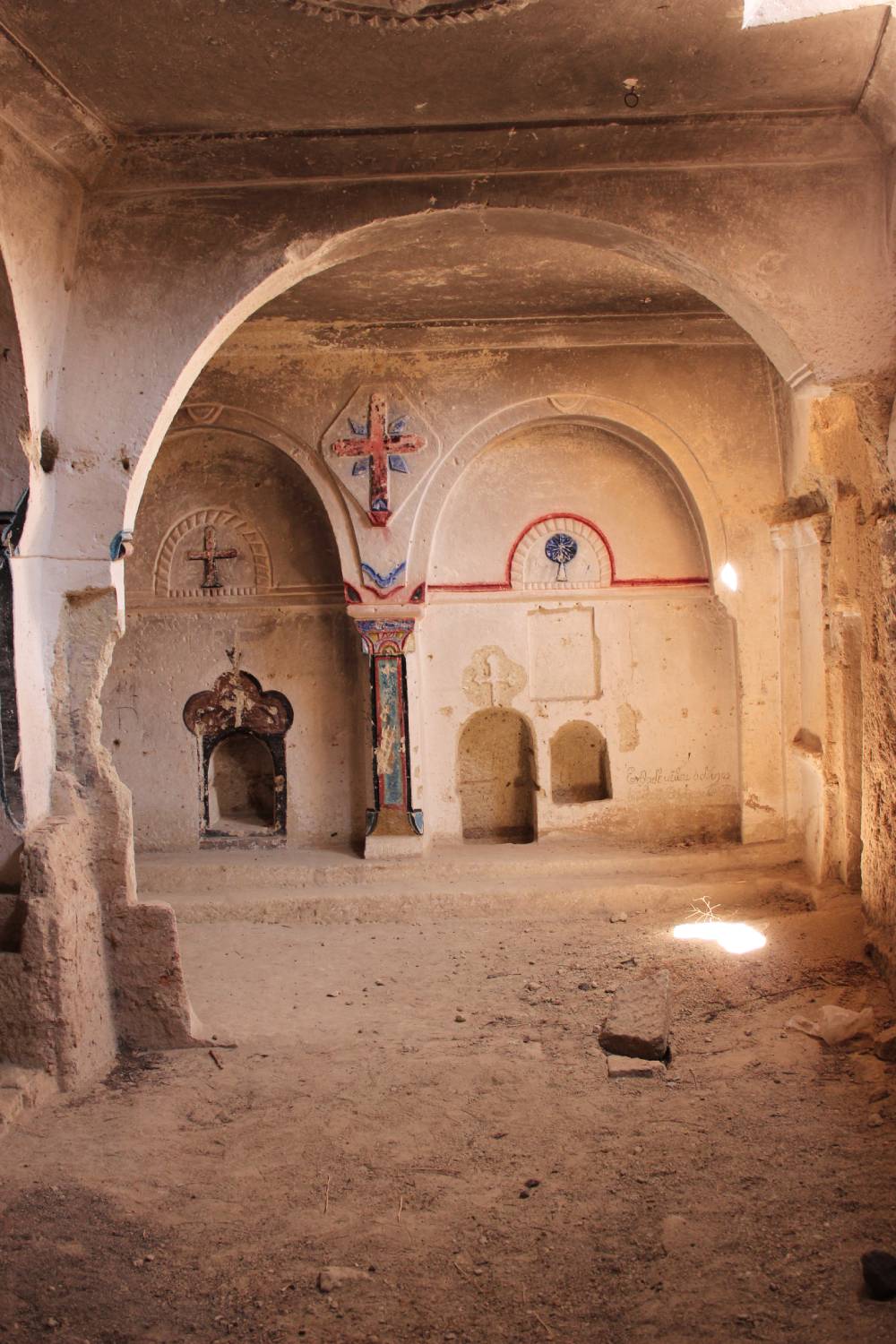
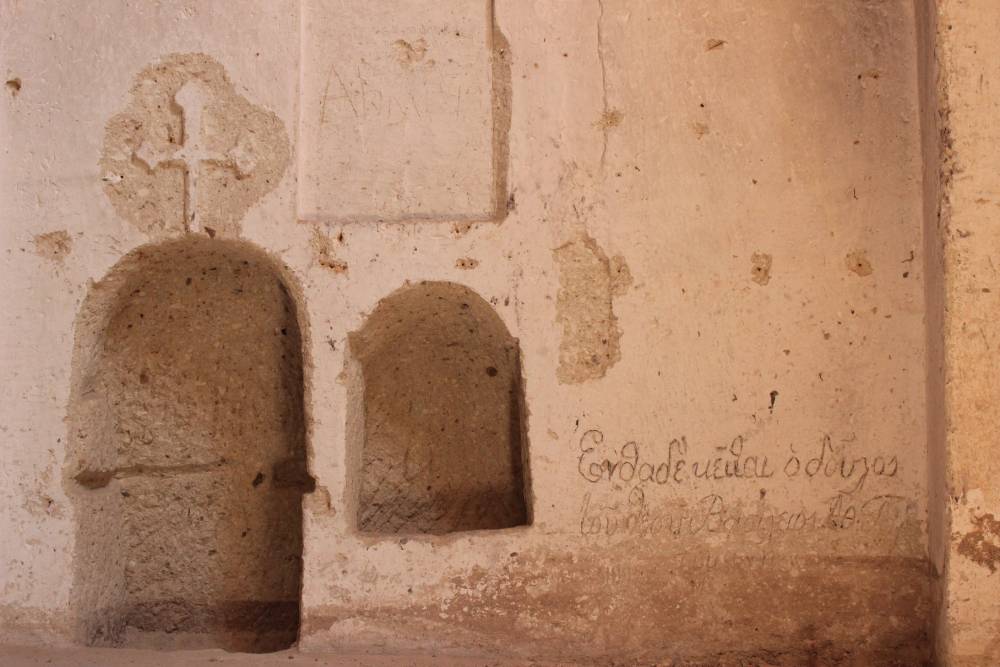
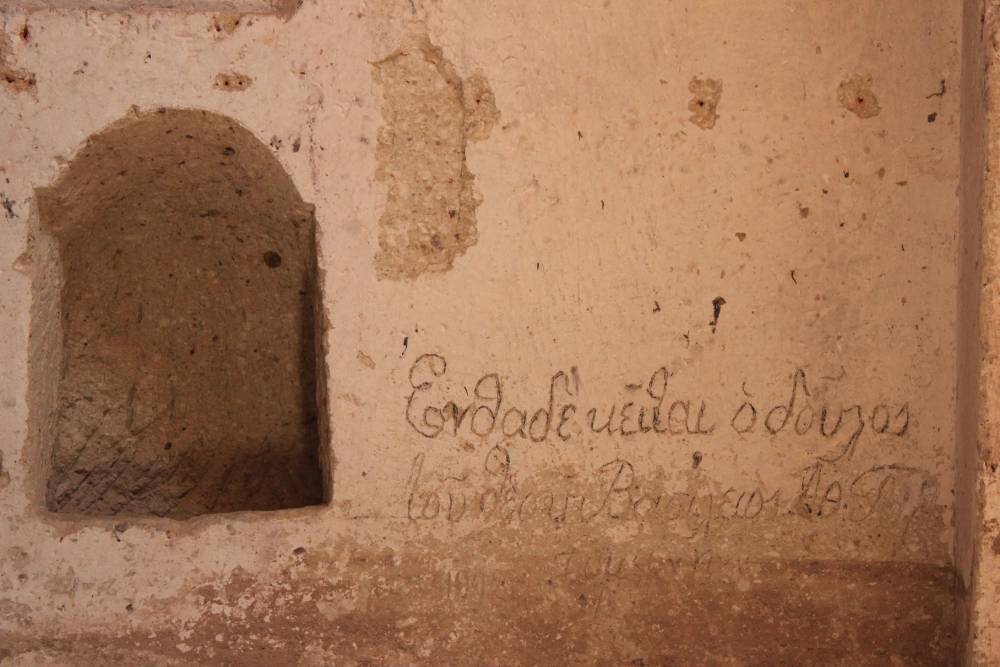
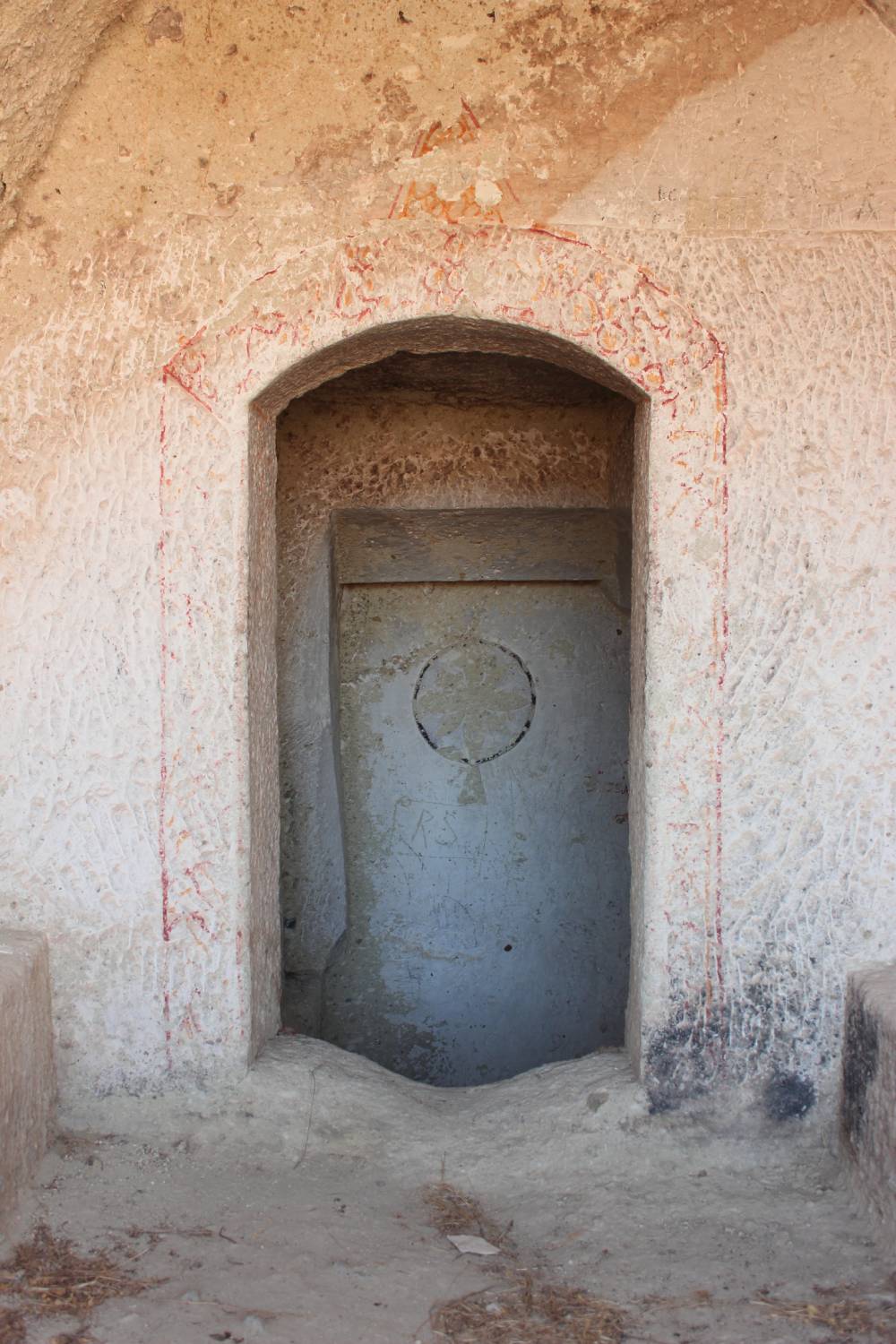
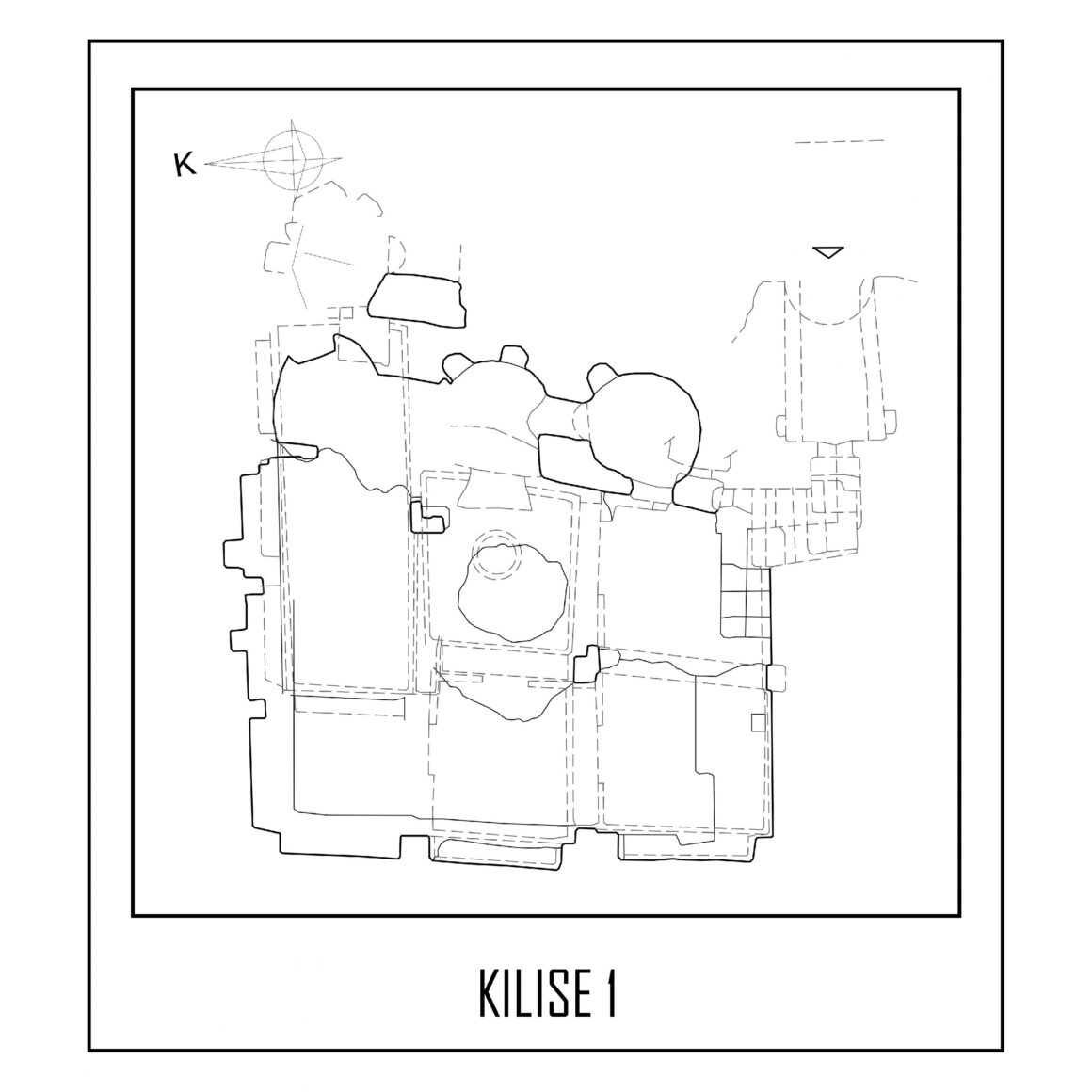
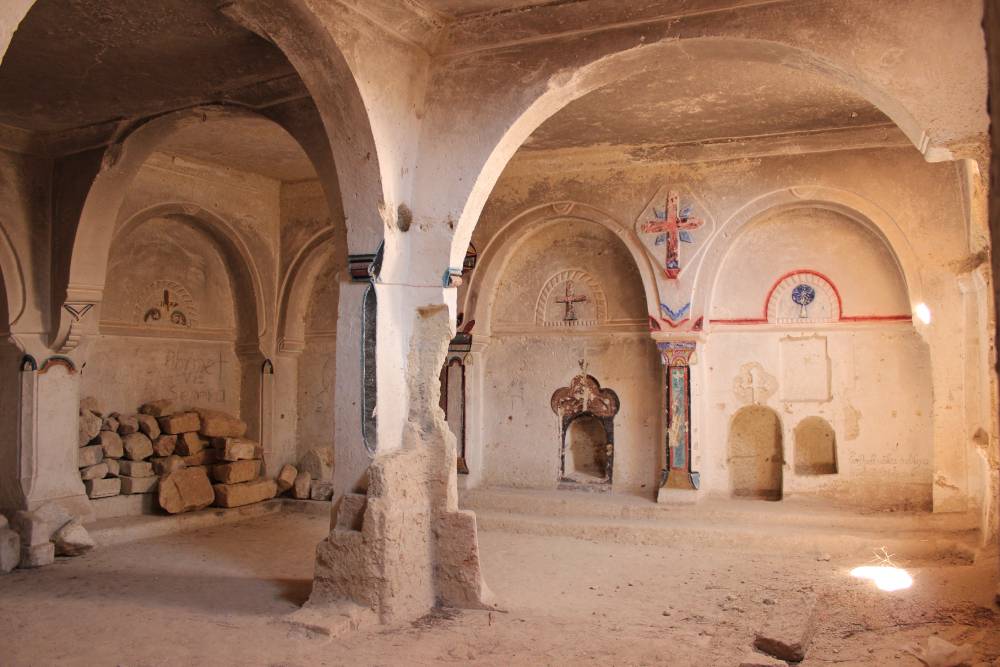
The first of these is the large-sized church identified as Church I. Although it is not known exactly when the church was built, it can be dated to 1905 according to an inscription on the west wall of the staircase leading down to the naos. The entrance to the church is through a round arched door. From here, a barrel-vaulted space is reached, and an ‘L’ shaped staircase leads down to the naos (main worship space) of the church. The church, which has an approximately square-shaped nave, has three apses and three naves. All three naves are covered with a flat ceiling. The painted inscription on the eastern corner of the northern wall of the main worship space is one of the most striking elements in the church. The content of the Greek inscription written in paint indicates that it was a funerary inscription:“Here Is Buried Basil, Beloved Servant of God”.
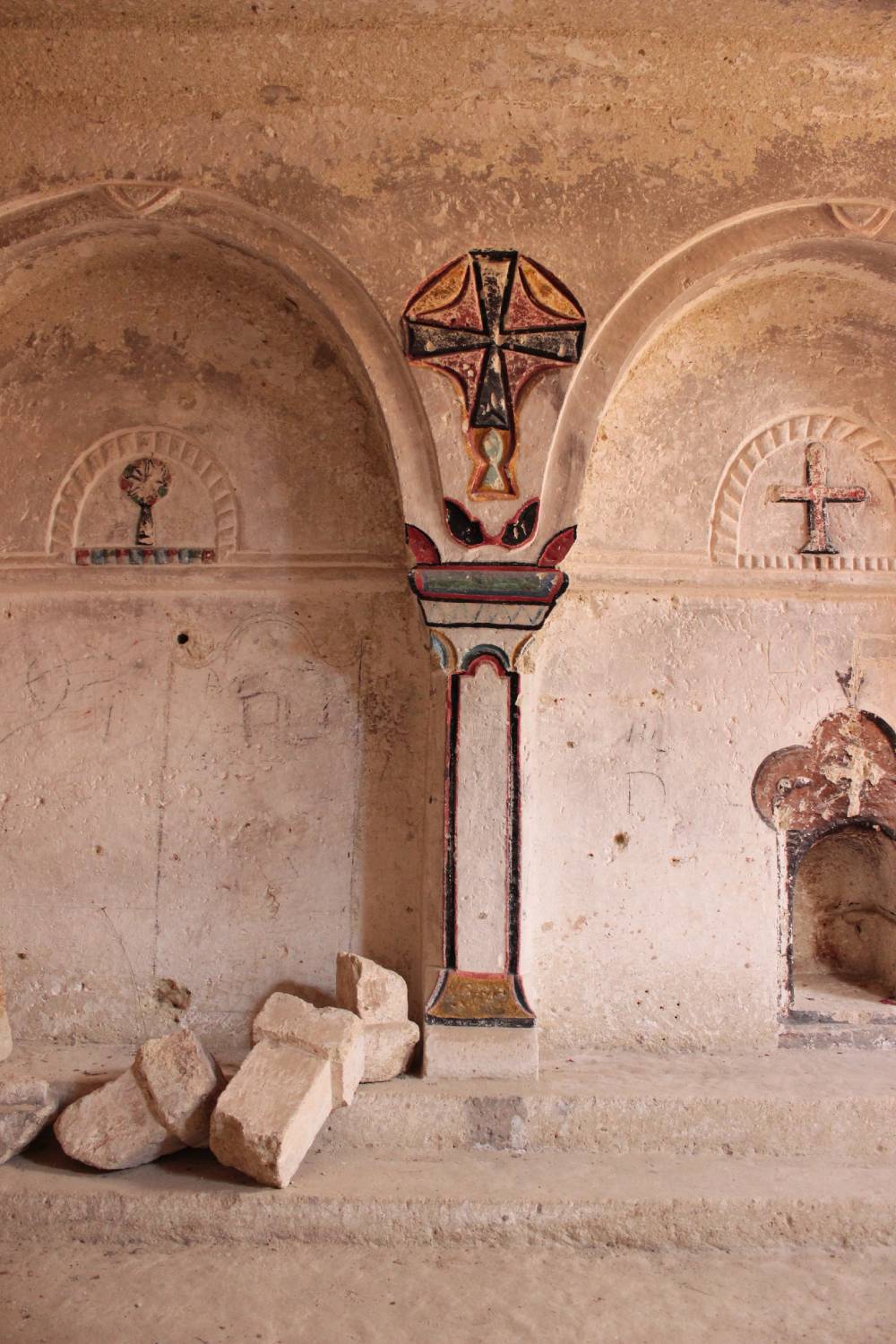
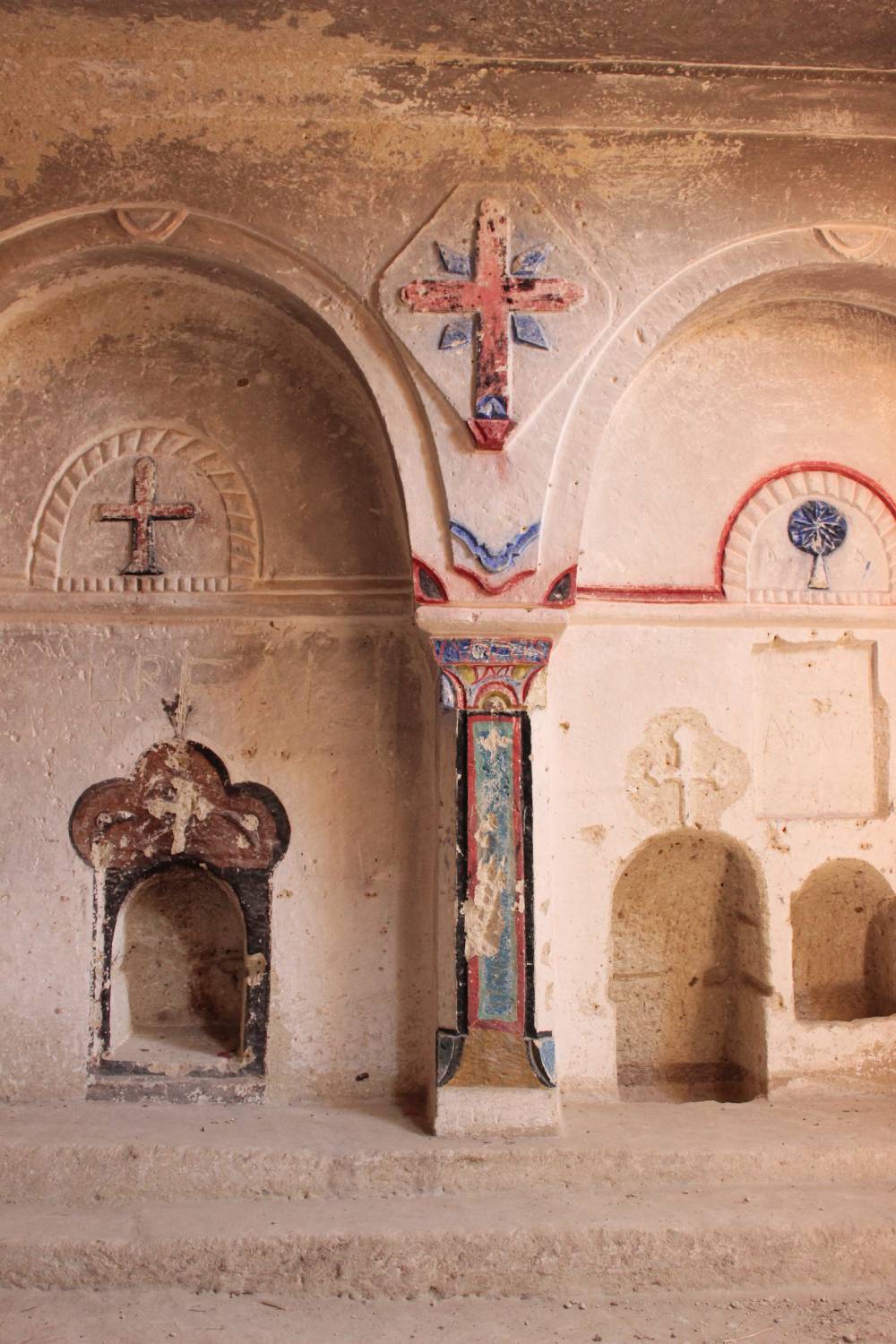
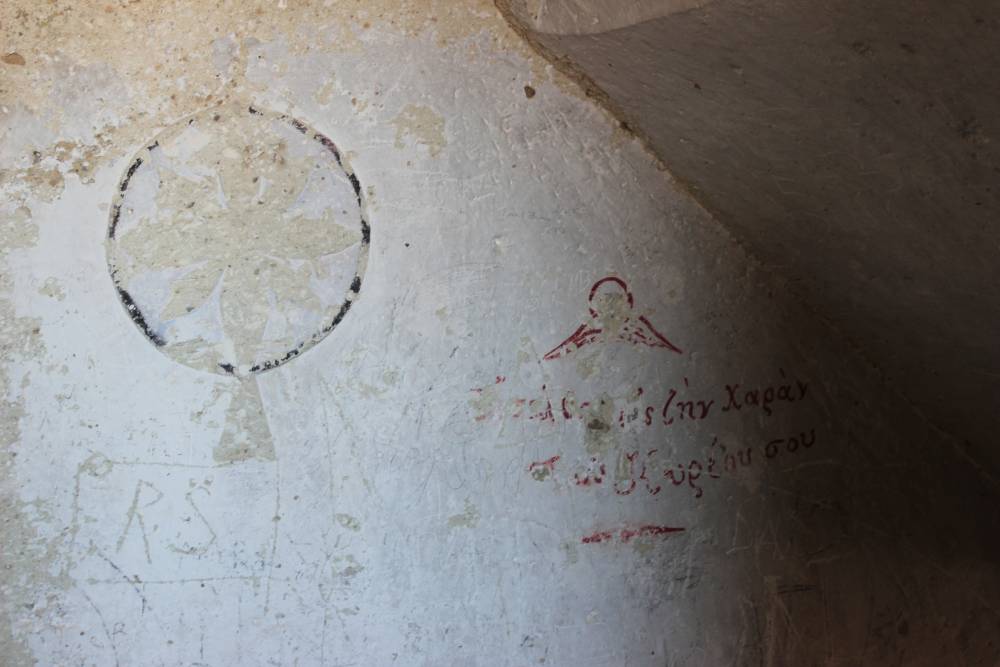
The decorations made in relief technique or with paint directly on the wall are the most artistically striking feature of the church. The decoration program includes depictions such as crosses and the tree of life. The colors are very vibrant and mainly consist of indigo blue, mustard color and red.
Kalasha, Church II/Church of St. Eustathios:
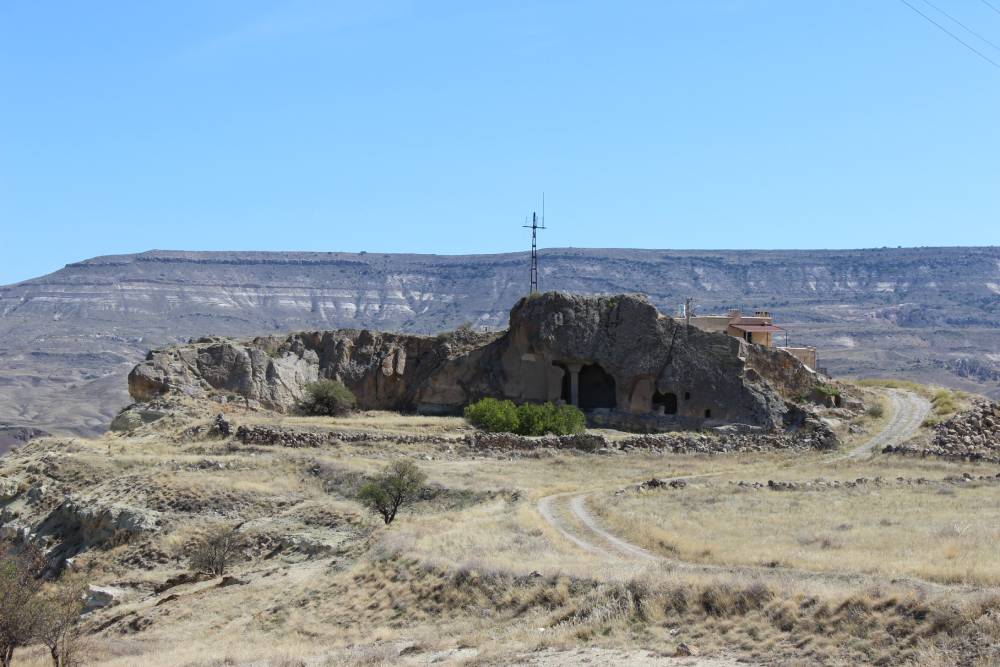
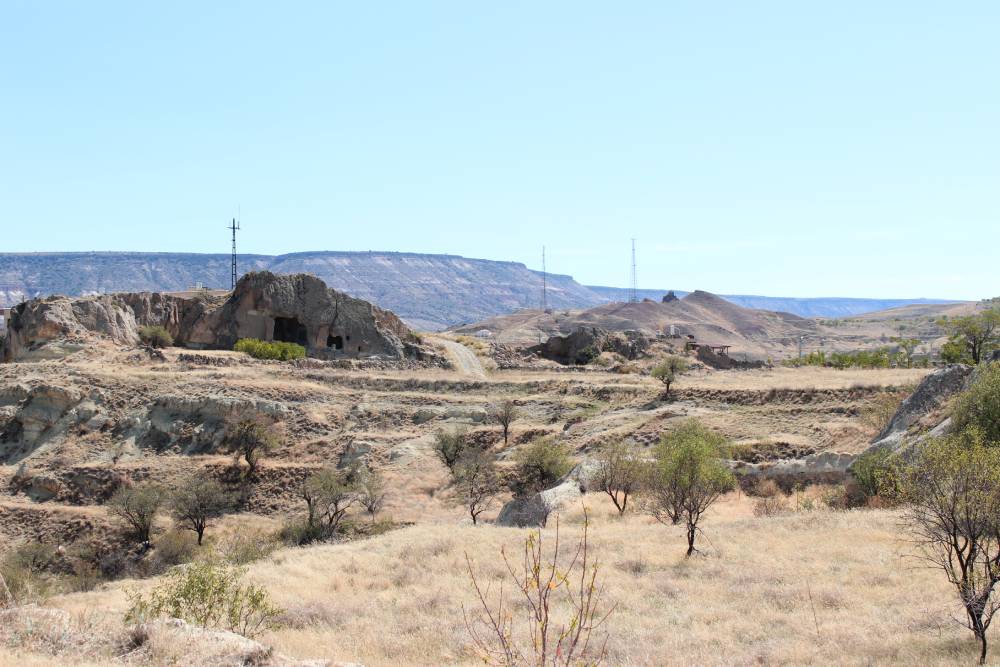
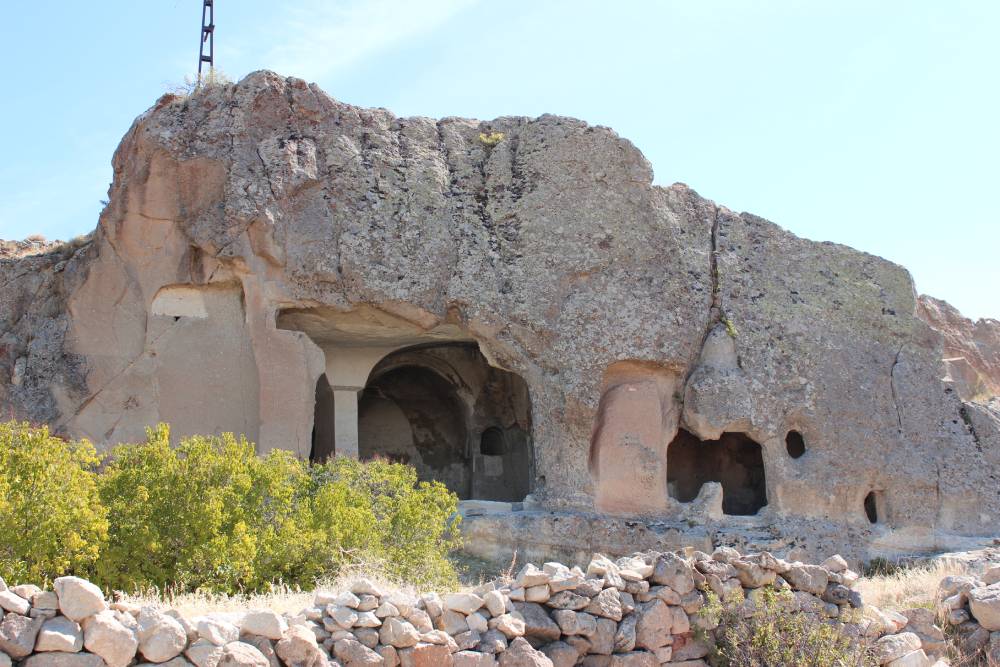
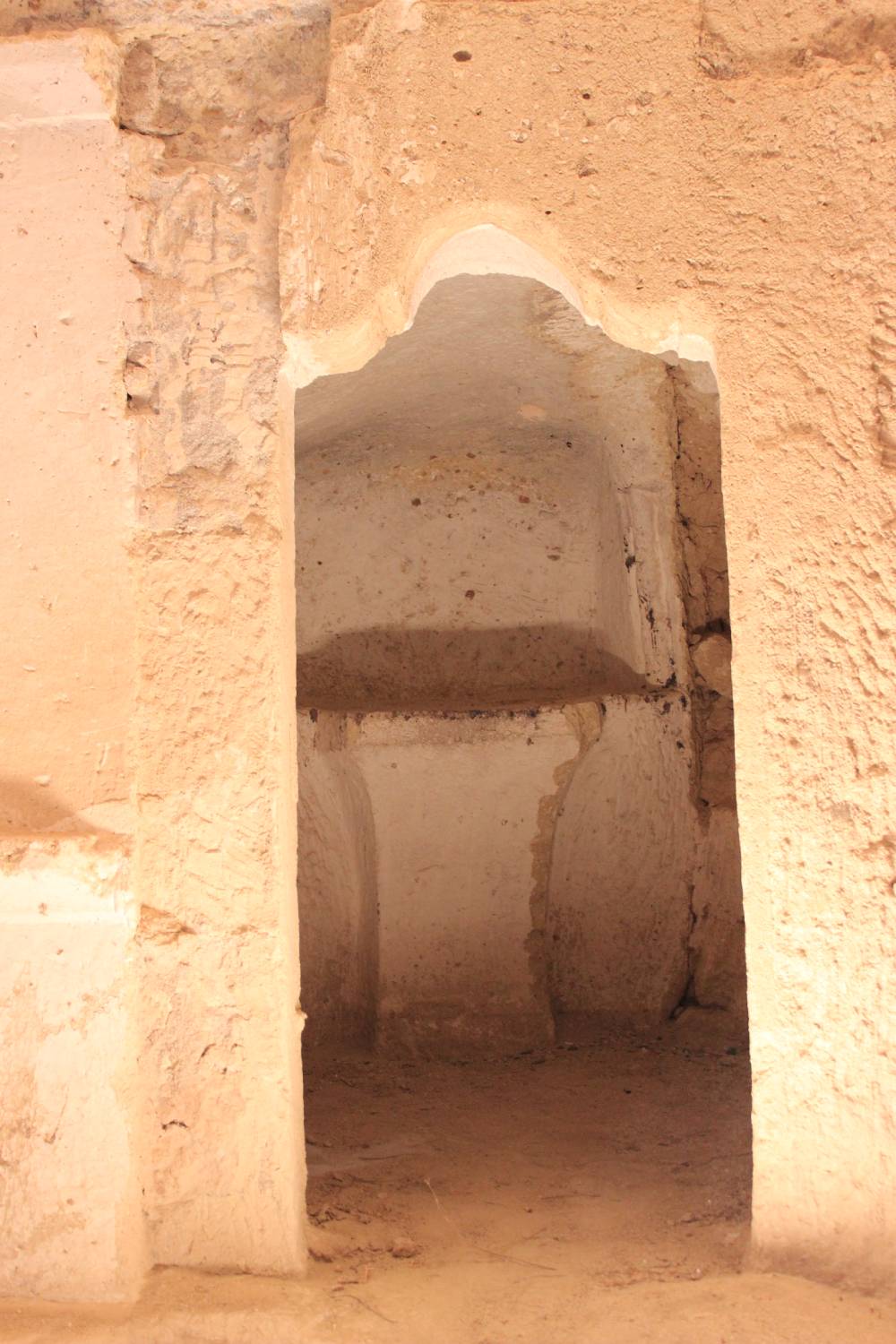
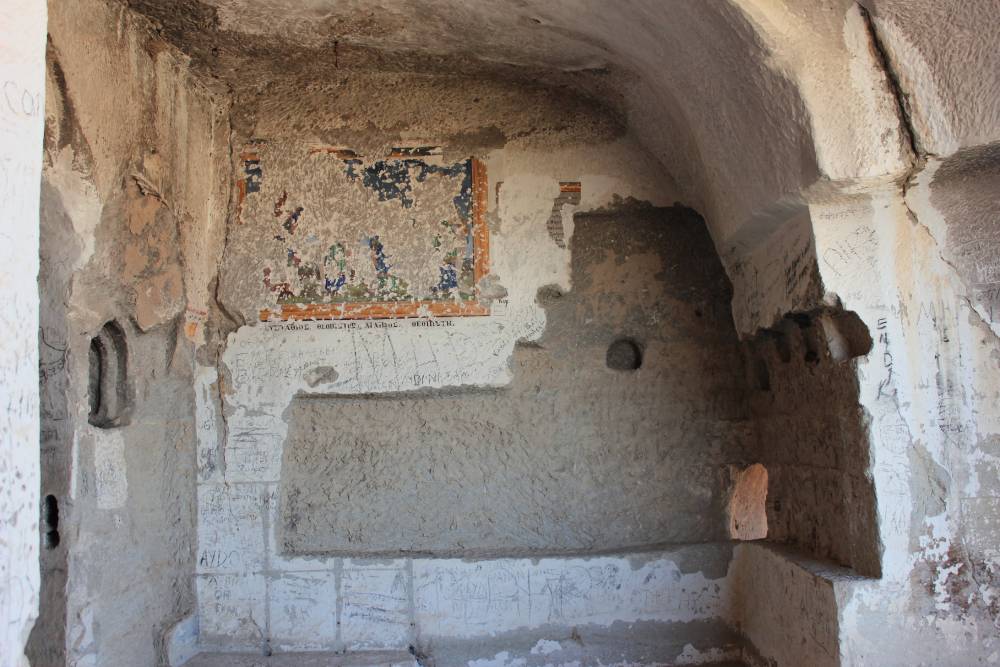
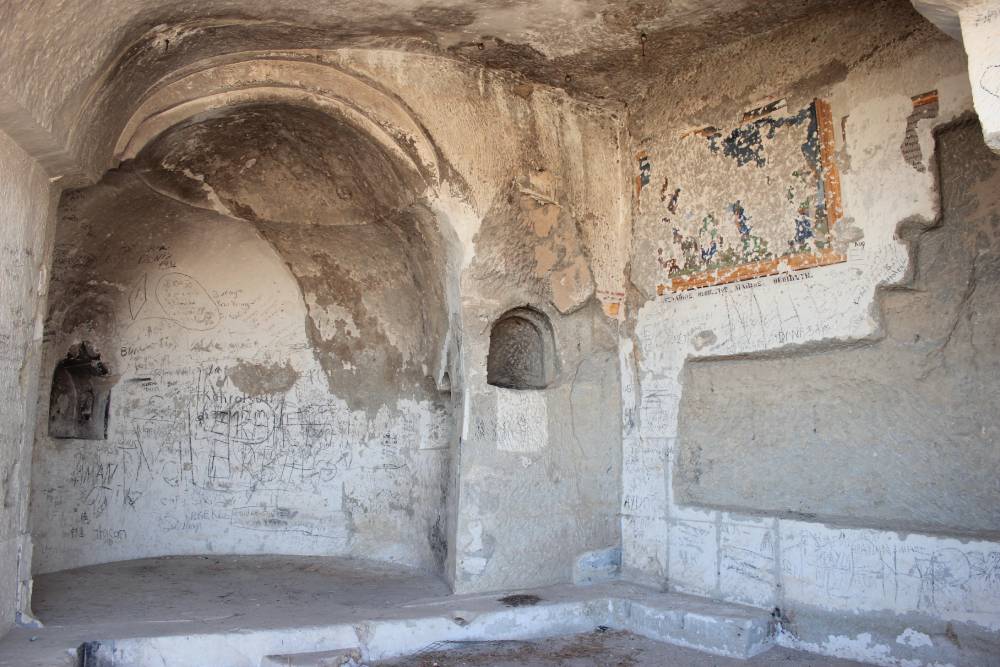
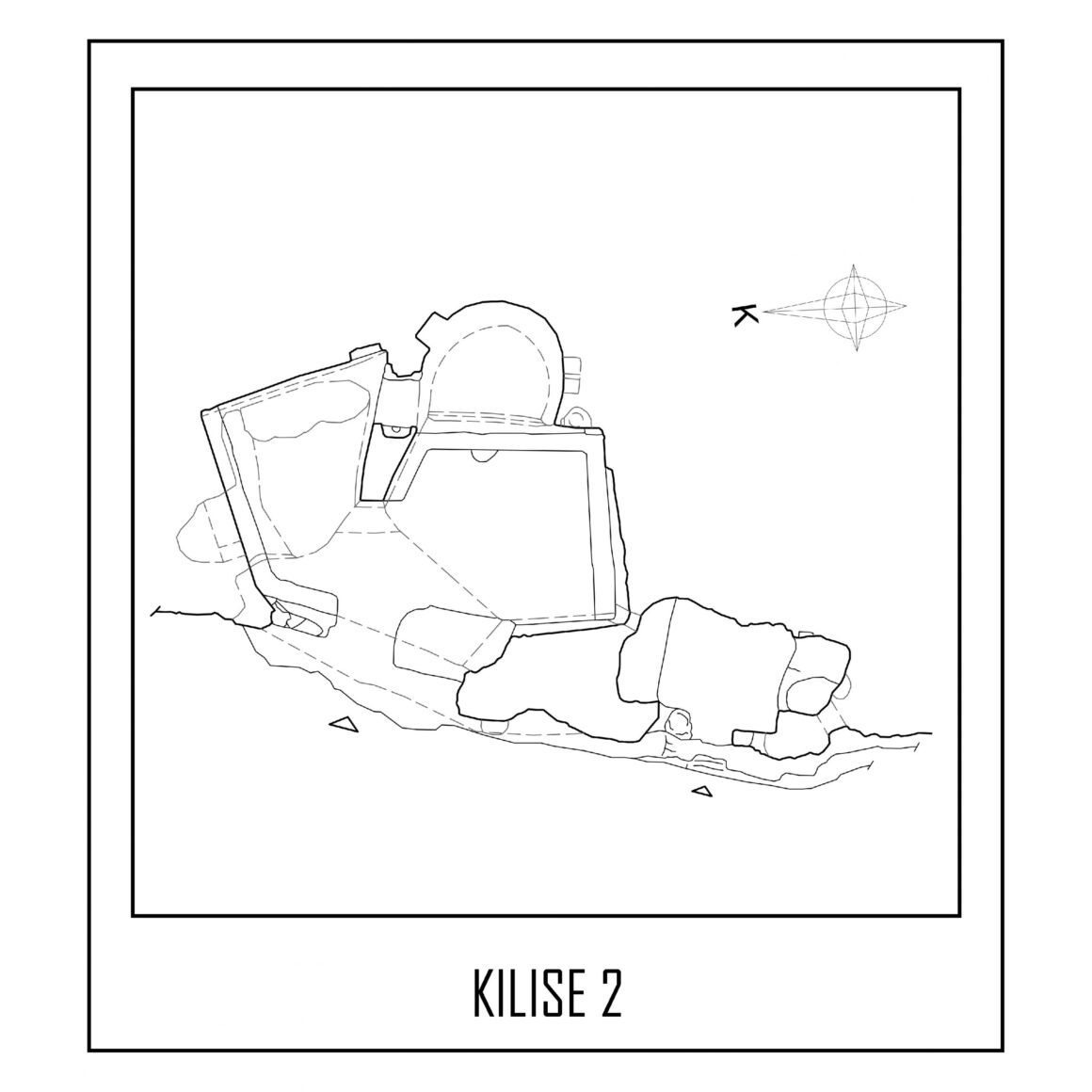
There is another rock-carved church located approximately 500 meters east of Church I. The church, whose northwest part of the main worship space has been completely destroyed, is not in a very good condition today. It is not known exactly when the church was built, but the date 1848 was written on the northern façade of the rock mass into which the building was carved. Looking at this inscription in the grafitti style, which appears to have been written later, it can be thought that the church existed before this date. There is a main worship space with a single apse in the south of the church. In the north, there is a paraklesion space separated from the main place of worship by a pillar. To the south of the church, there is also another place carved into the same rock mass. It is not known for what purpose this place was used.
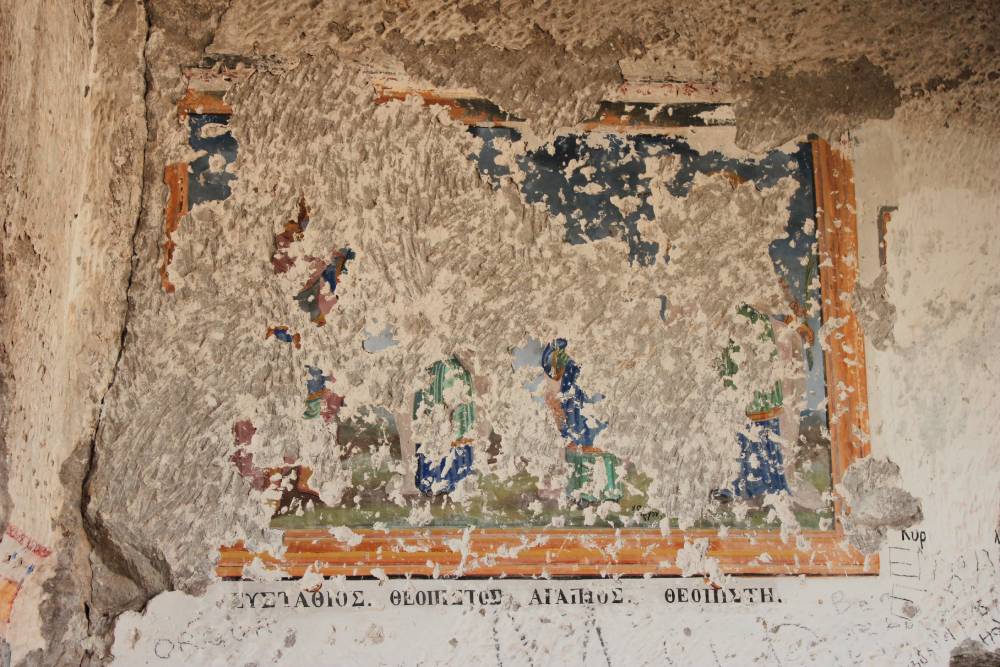
The only example of wall painting that can be identified in the church in its current state is located on the south wall of the naos. This picture is the eastern one of the two framed panels at the upper level of the wall. The depictions on the panel cannot be understood due to extensive damage. When the Greek names on the text strip at the bottom of the picture were read, it was determined that St. Eustathios and his family were once depicted here. It is seen that the prestige of the saint, who was frequently depicted in the churches in Cappadocia during the Byzantine period, continued in the Ottoman period as well. Although there is an inscription on the framed panel just to the west of this panel, the inscription as a whole is not understandable. Based on the family portrait in the church, it can be thought that the church was originally dedicated to St. Eustathios.
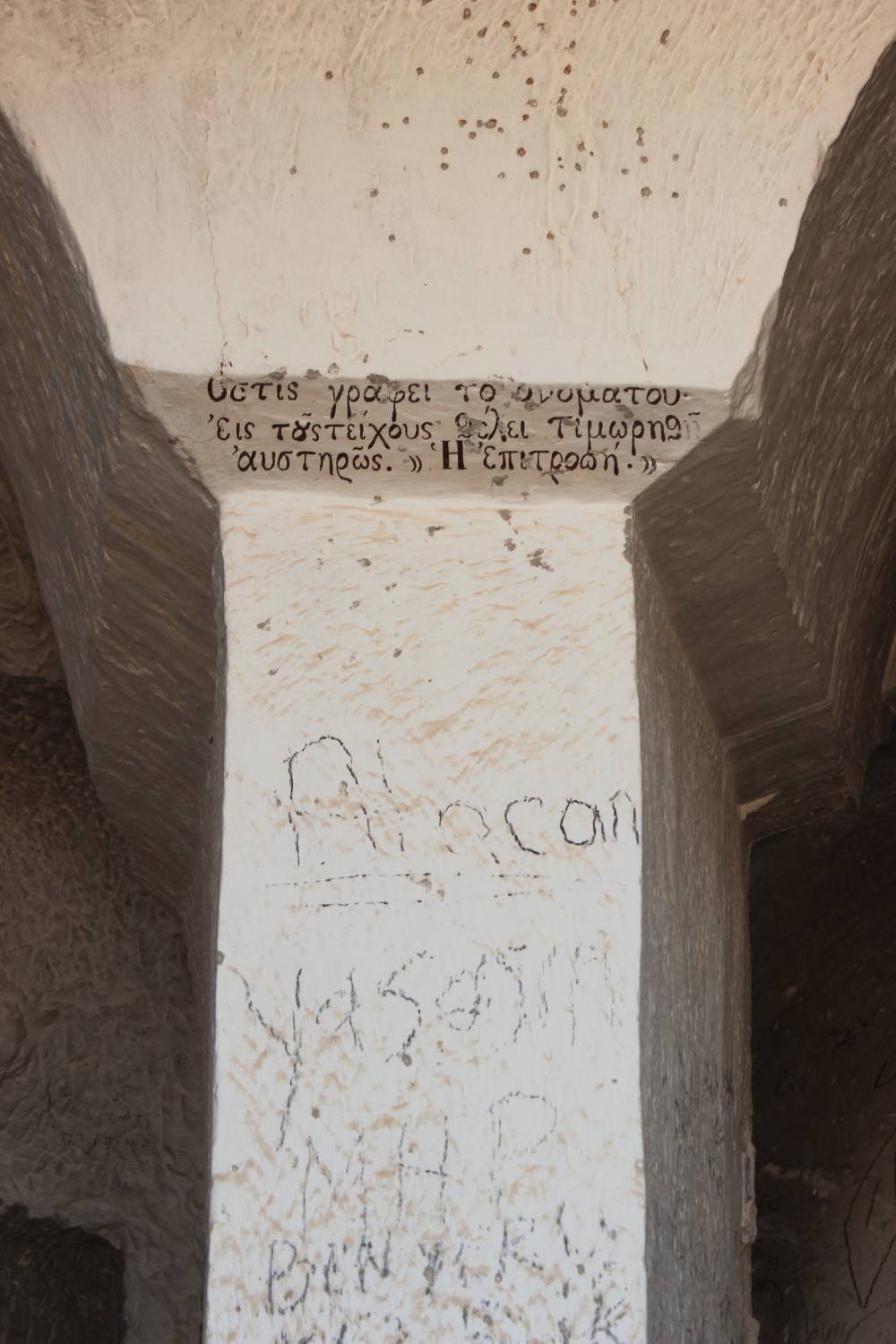
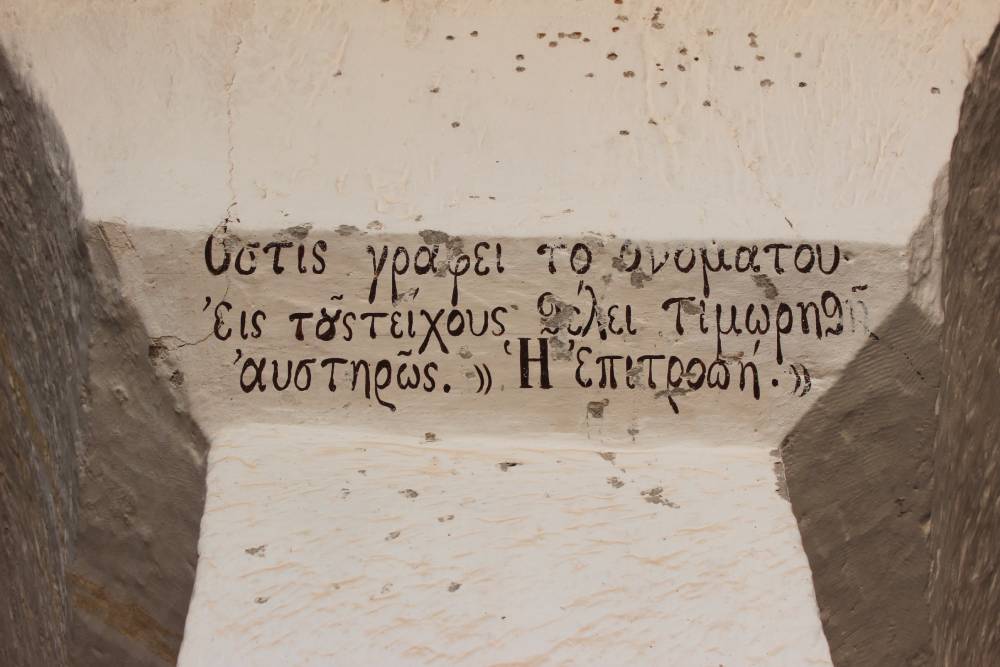
Another inscription in the church is one of the most striking elements in the church. The three-line Greek inscription on the west side of the capital of the pier carved into the rock in the north of the naos reads“Whoever writes a name here will be strictly punished by the Board”.


