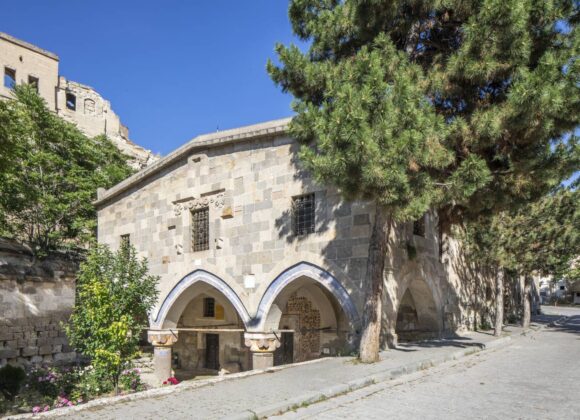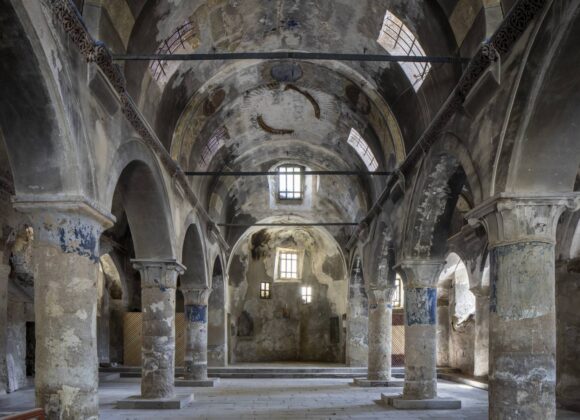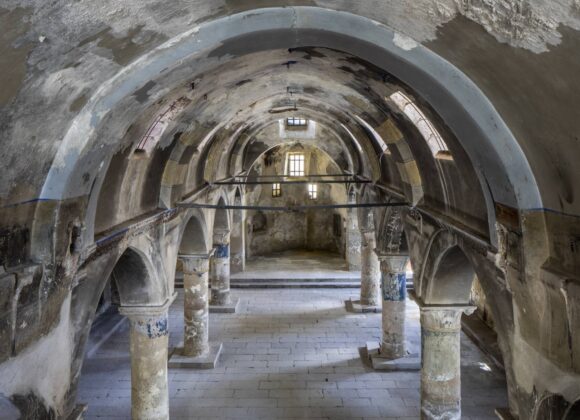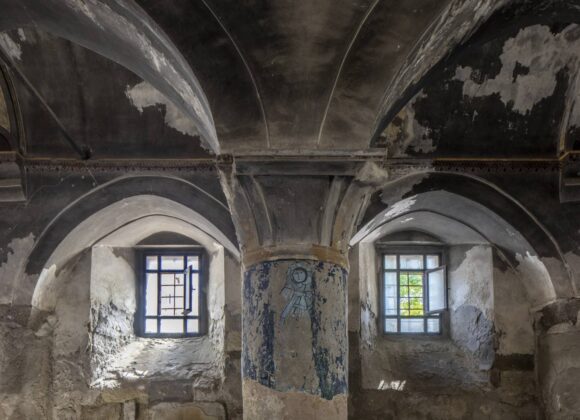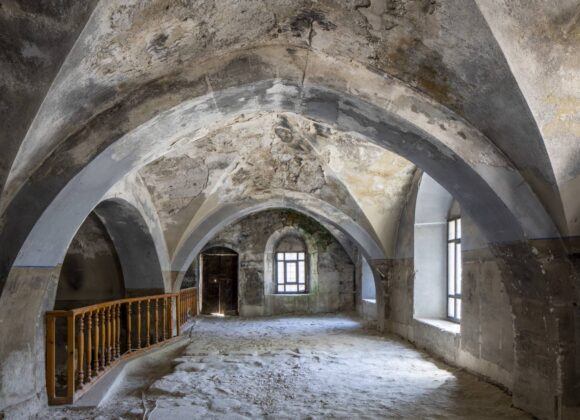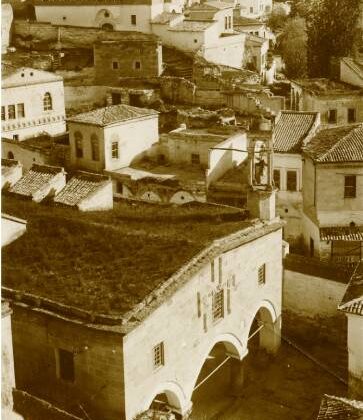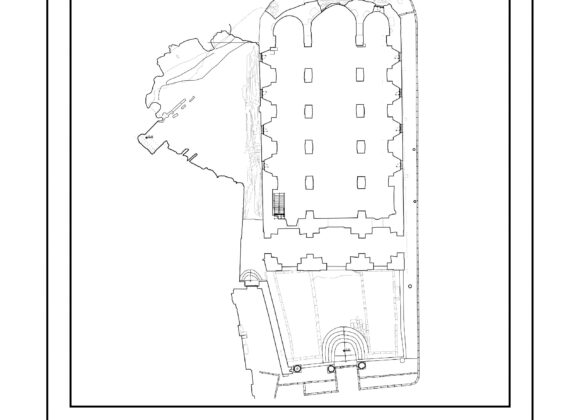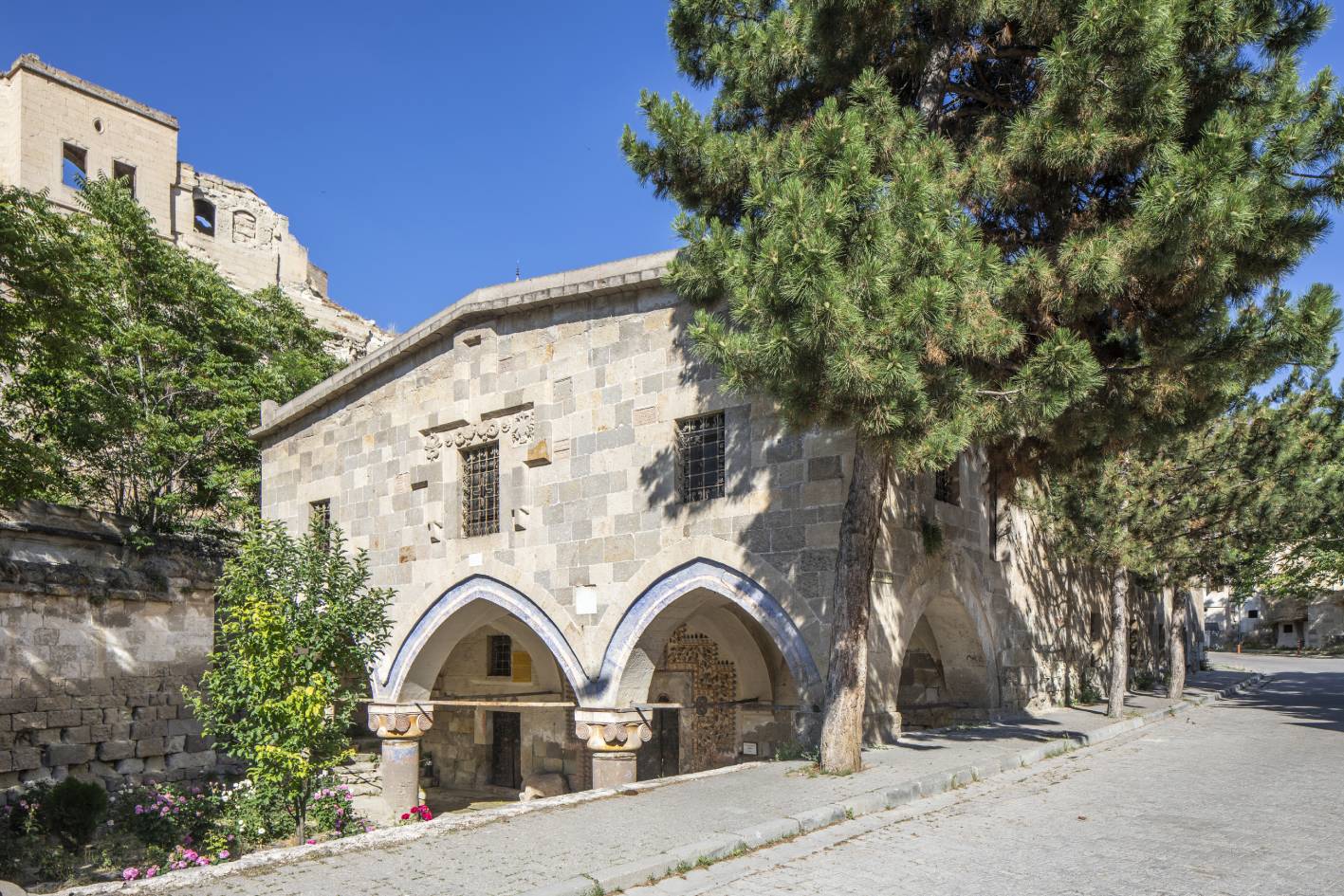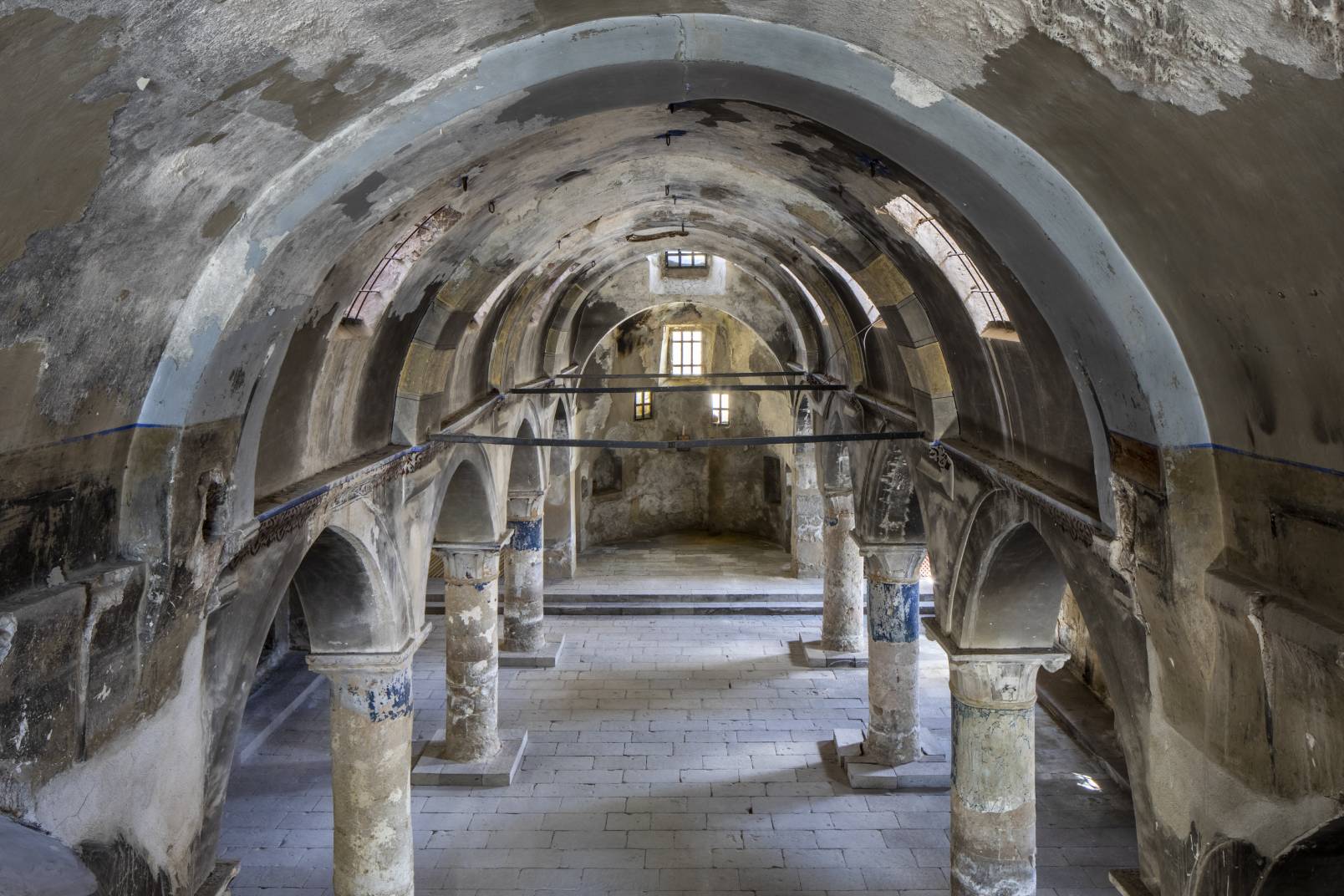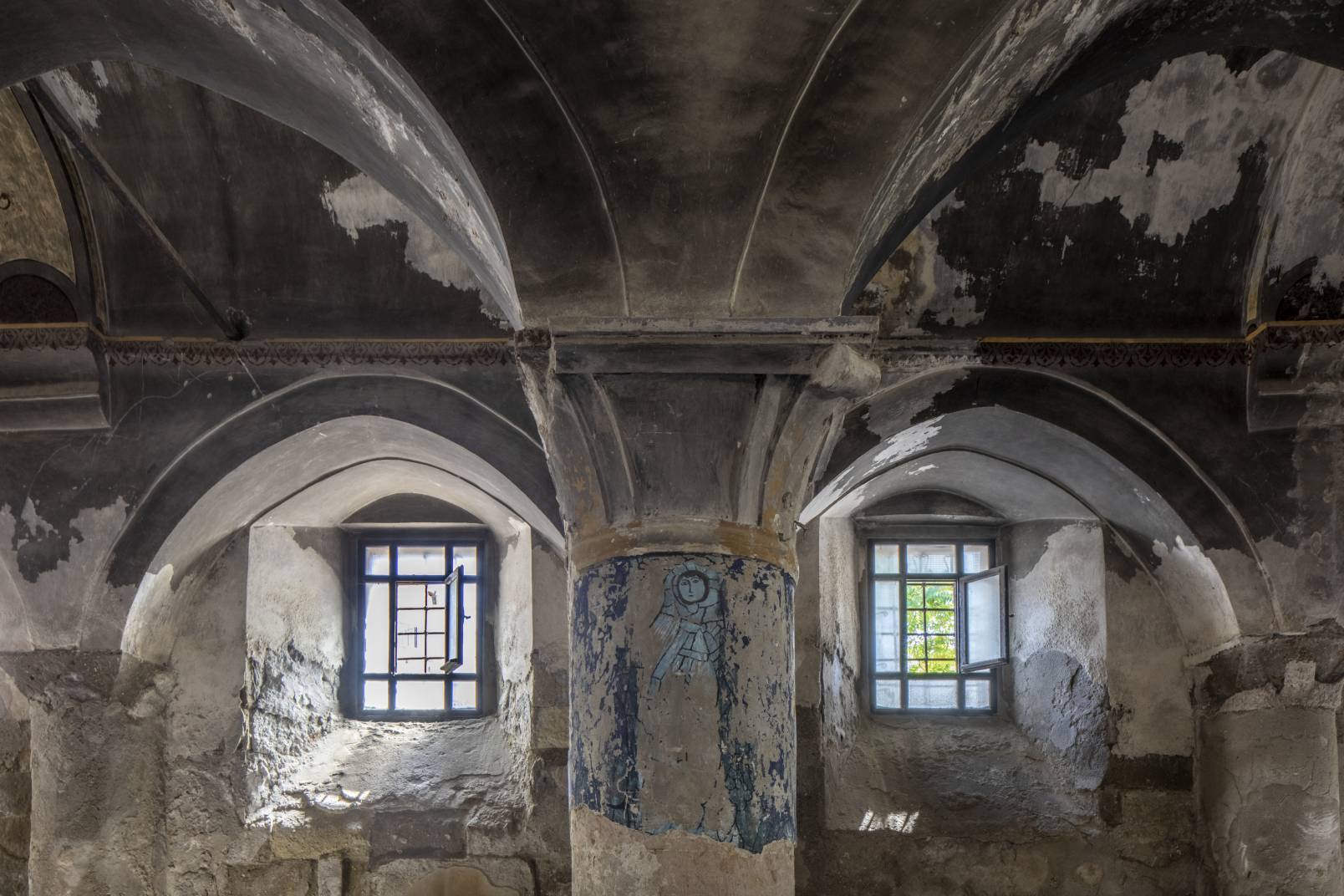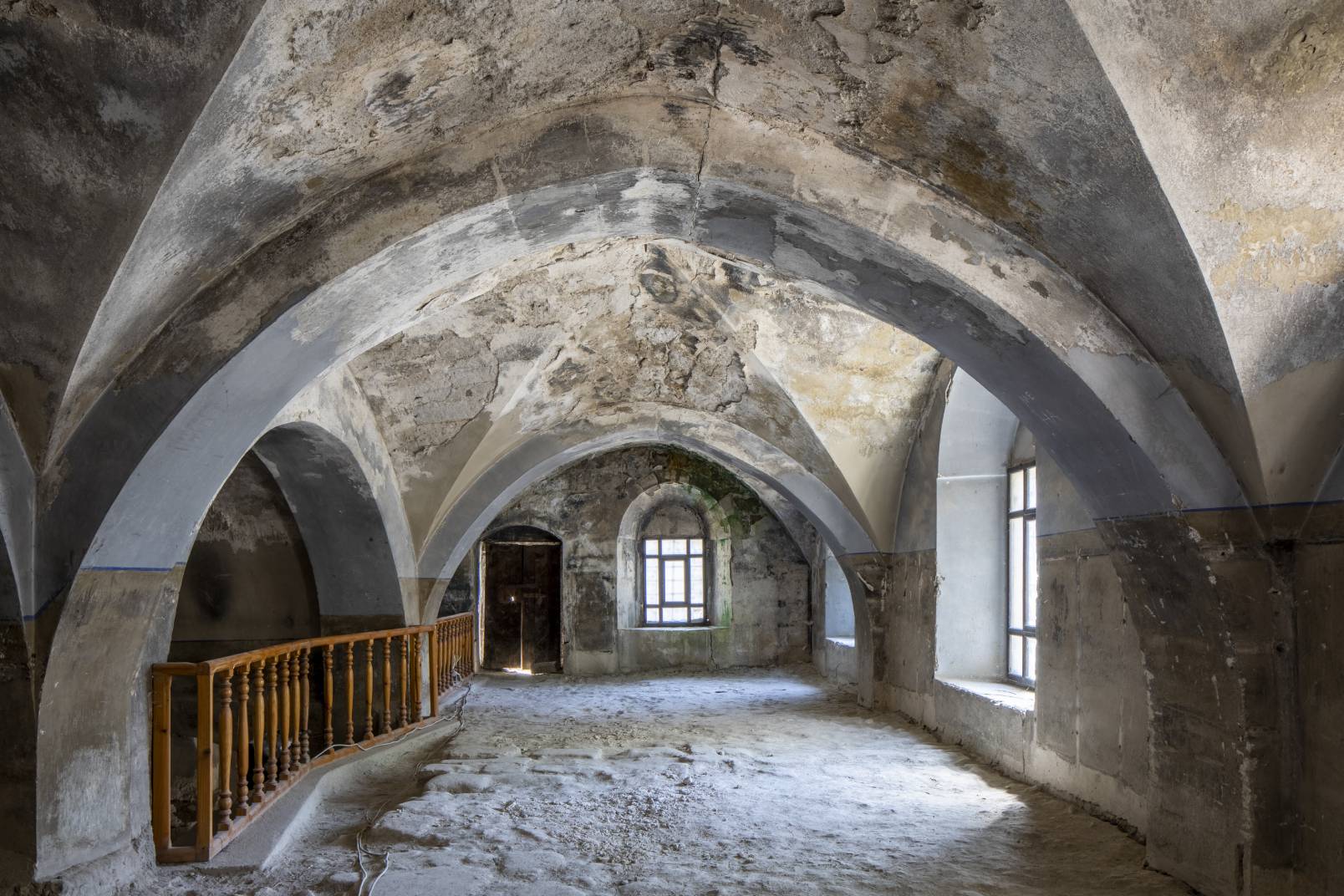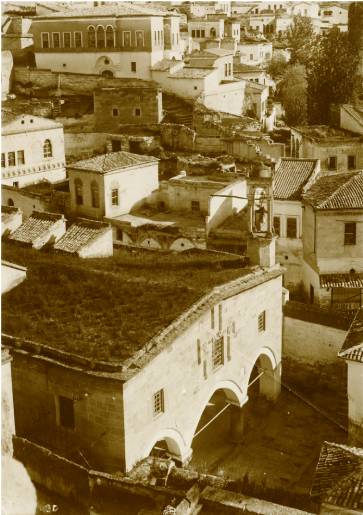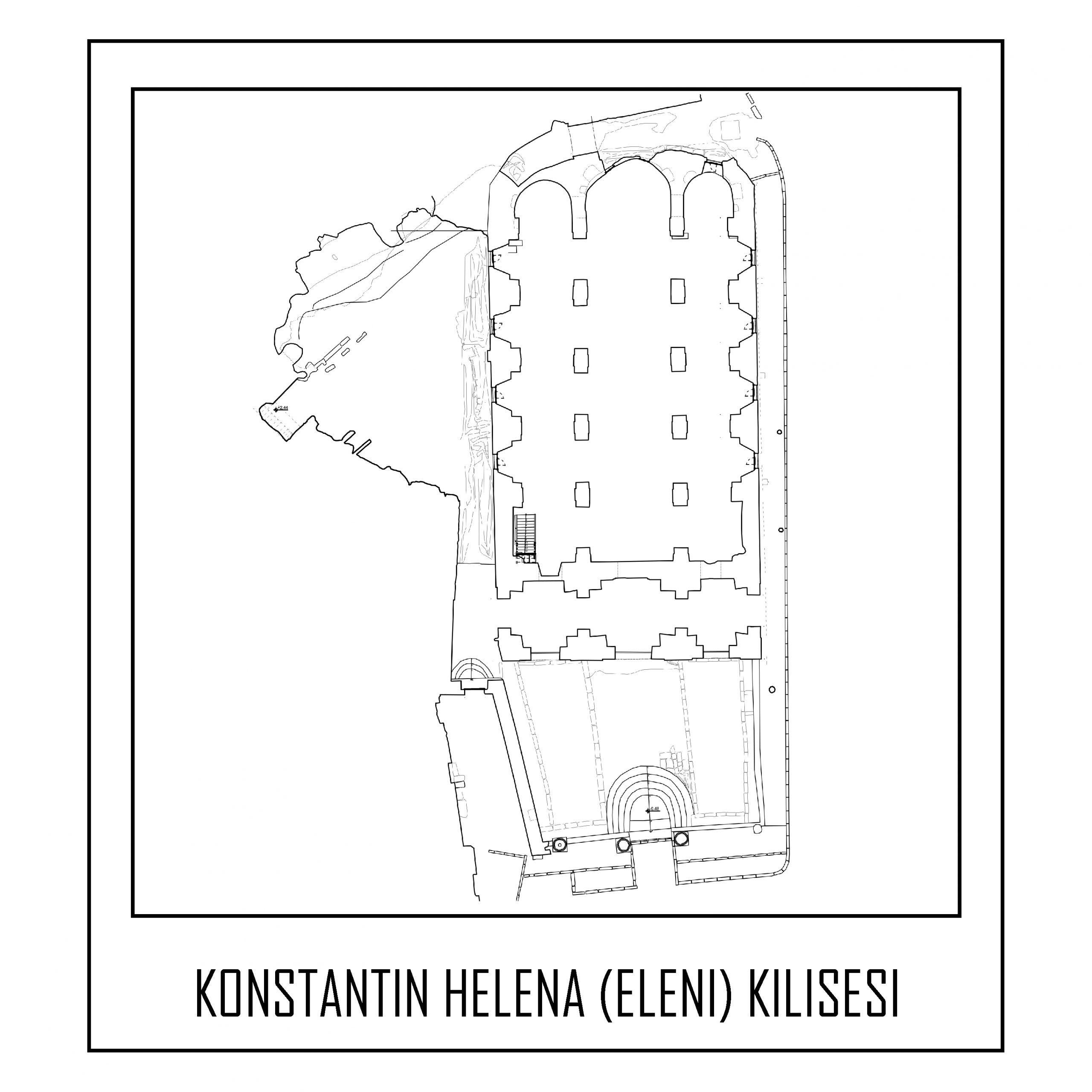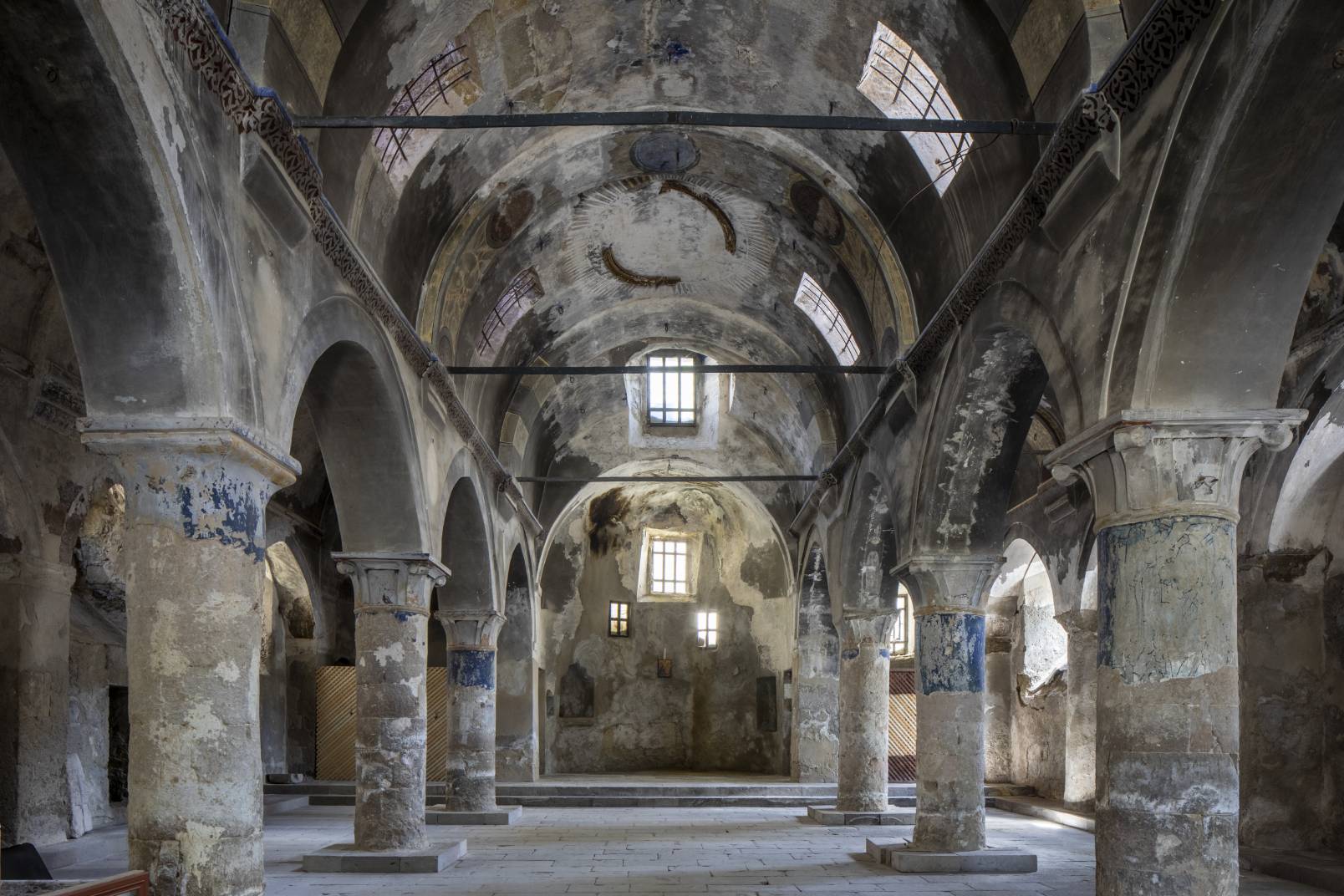
The Church of Constantine and Helena (Eleni), one of the most significant sanctuaries of the Rum community of Sinasos, was built on a site that served as a marketplace prior to the population exchange. This basilical-planned church features a barrel vault, three naves, and three apses, with an open courtyard to the west.
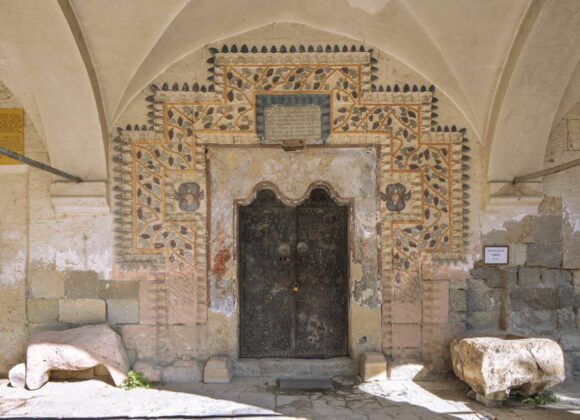
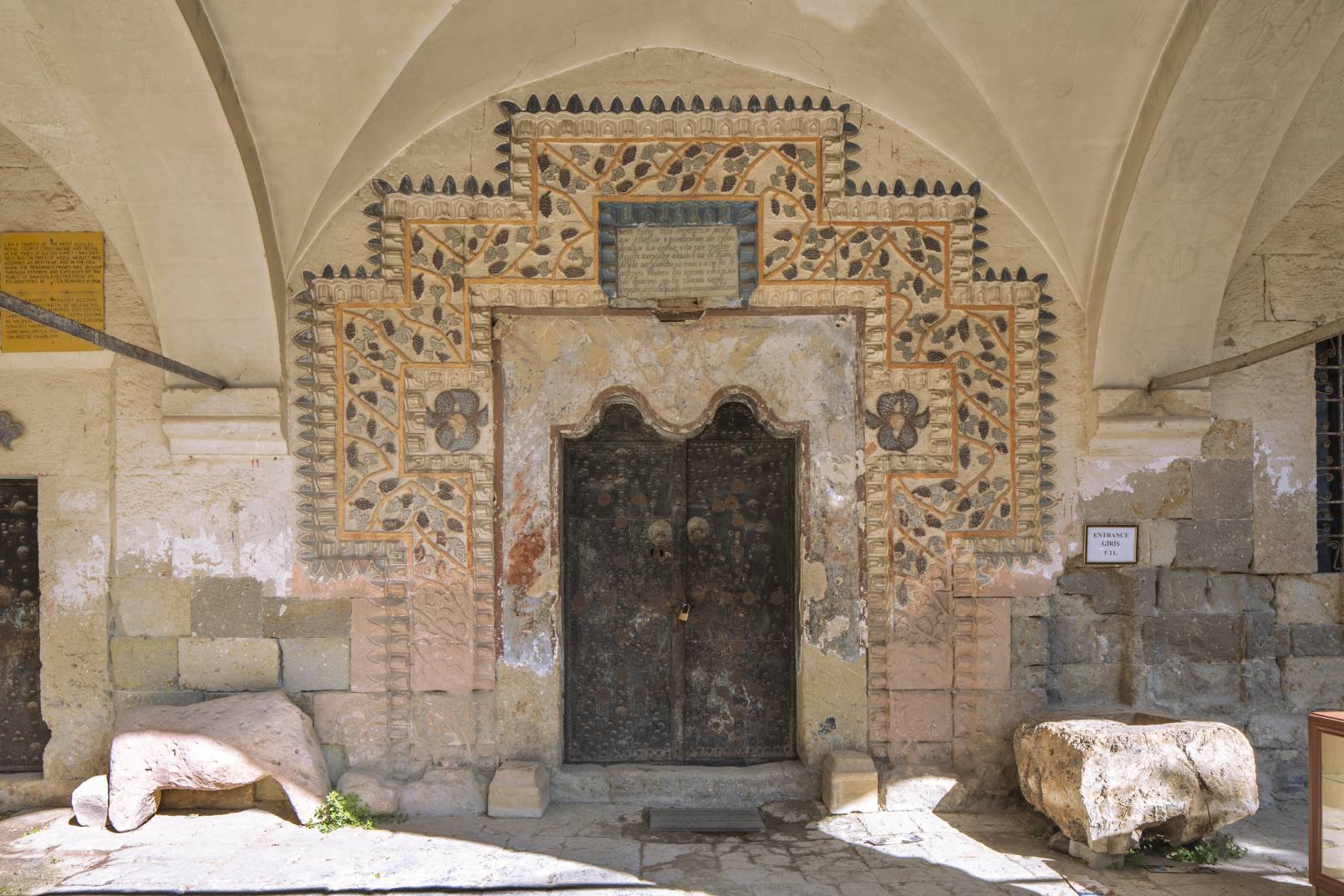
The entrance door on the north-western façade contains a unique eight-line inscription carved into marble using Greek letters. Written from the perspective of the church itself—a rare stylistic choice in the region—the inscription reads:
“Followers of the pagans, most holy kings
I am the temple of the believers Constantine and Eleni.
I was partially built during the reign of Sultan Ahmet
I was properly adorned during the reign of Sultan Abdülmecid.
During the time when the famous Pasios was the abbot
With the struggle of the Sinasos community and
I was built from foundations with expenses In 1729. In 1850, I was repaired.”
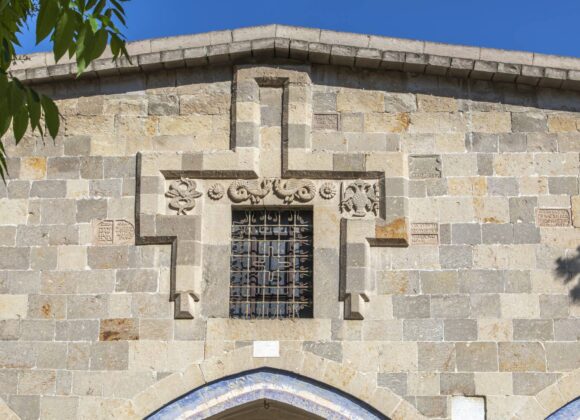
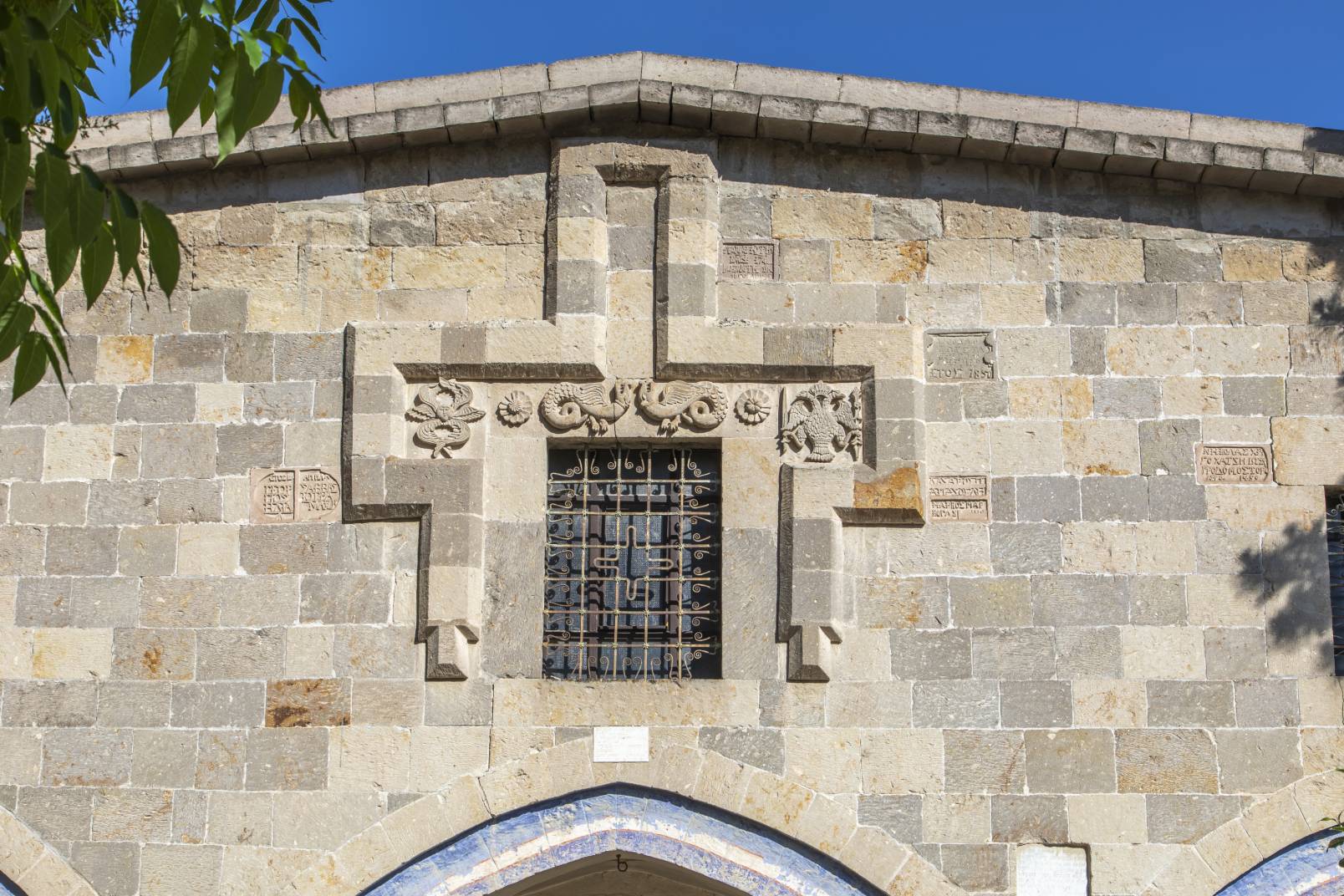
Geometric ornaments, alongside vibrant yellow and dark blue floral and fruit motifs surrounding the inscription, add a remarkable liveliness to the entrance. The upper part of the façade features three windows; the central one is particularly striking due to its intricate reliefs. These include two dragons facing each other with raised heads, the Seraph angel on the left, and an eagle figure on the right. On other facades, the years 1850 and 1851 are visible in relief.
The interior south-east façade opens into a low-ceilinged space carved into the rock. It is believed this area was used as a sanctuary where people spent the night praying for healing. The church was constructed using both masonry and carving techniques; stone was used for the walls, while wood and iron were utilized for the door, ceiling, and window elements. Although faint traces of paint remain on the interior walls, no identifiable figural murals have survived.
Various legends surround the church’s construction. Historically, Christians were restricted from building new churches from the conquest of 1453 until the Tanzimat Edict (1839) granted non-Muslim citizens greater architectural freedoms. Within this context, the story of this church is particularly fascinating. According to an account by Serafim Rizos, a small church previously occupied the site in the 1700s and required renovation. During that era, the Ottoman administration reportedly granted a period of only eighty days for the completion of such projects. Under the leadership of Rizos’ grandfather—known locally as “Black”—the local Rum population mobilized to demolish the old structure and erect the new one. The community supplied all necessary materials and, following an official decree, completed the church within the eighty-day limit. In the 1850s, further repairs were funded by donations collected from the villagers, an account that aligns with the church’s inscription.
In addition to Sunday services and religious holidays, the church served as a venue for school ceremonies, receptions for the bishop’s guests, and prayers for the health of the Sultan or the success of the army. Today, the church is open to visitors and hosts various cultural and artistic events.