
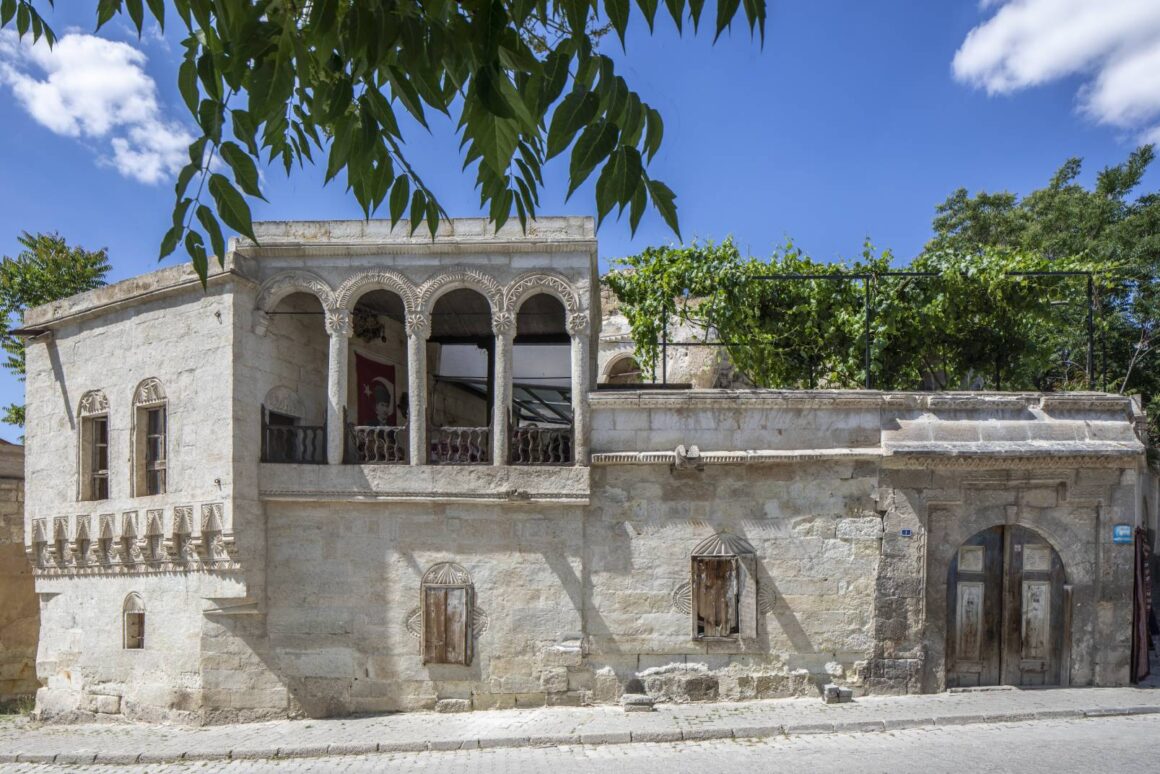
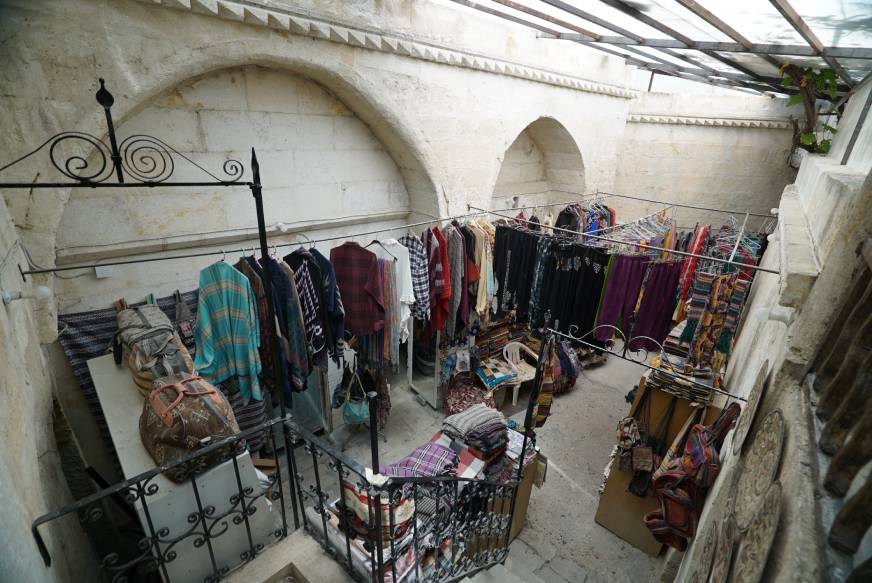
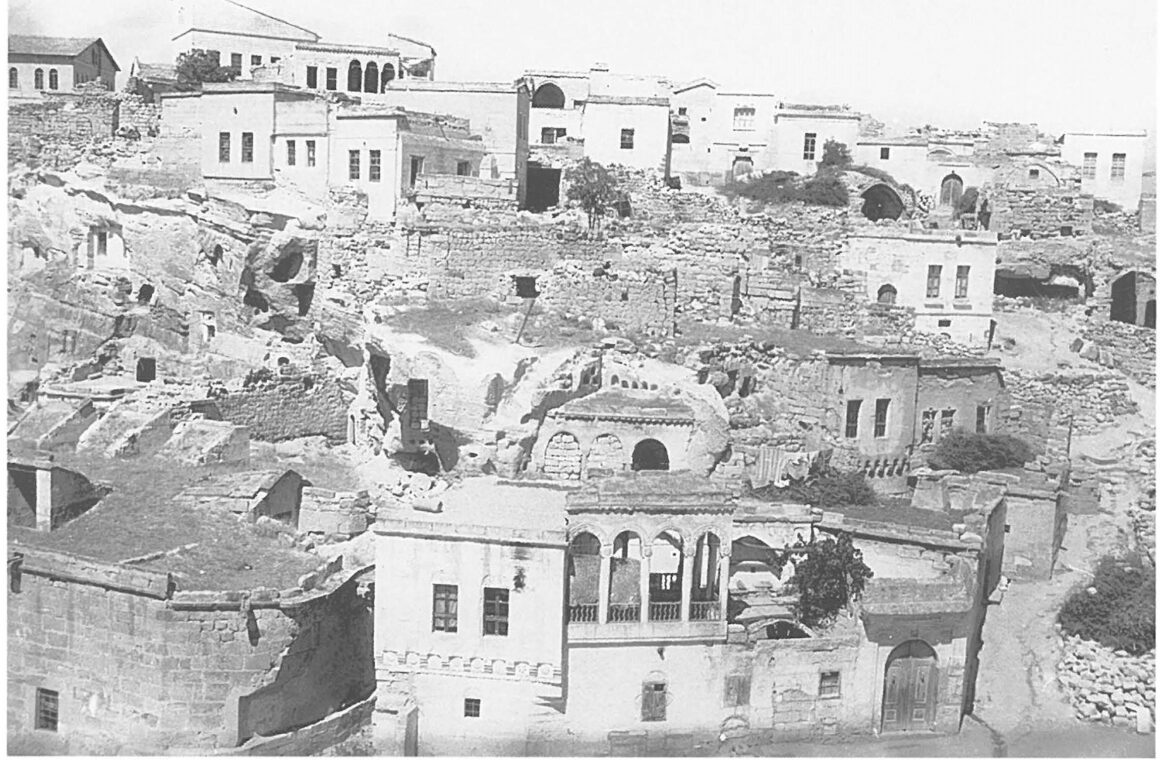
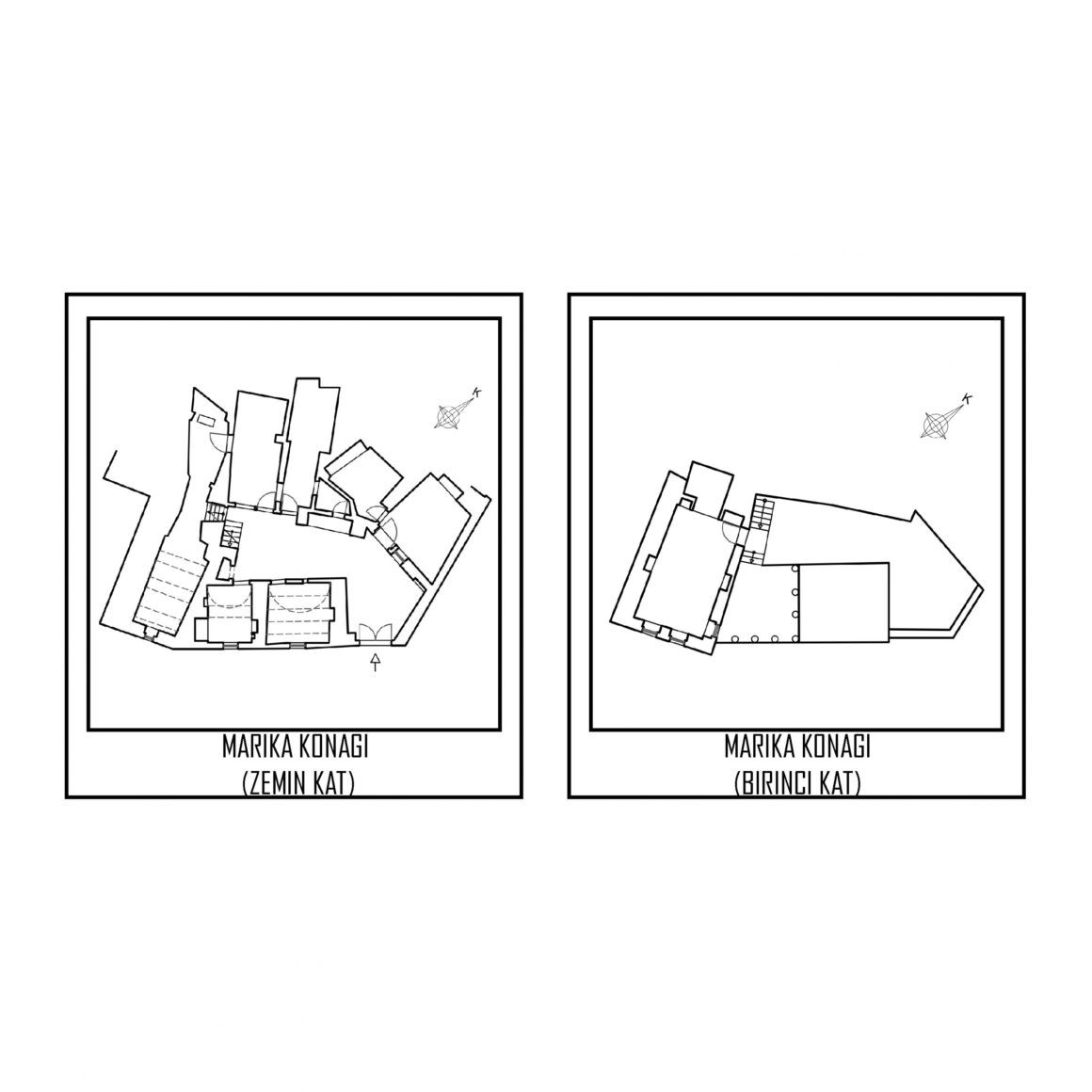
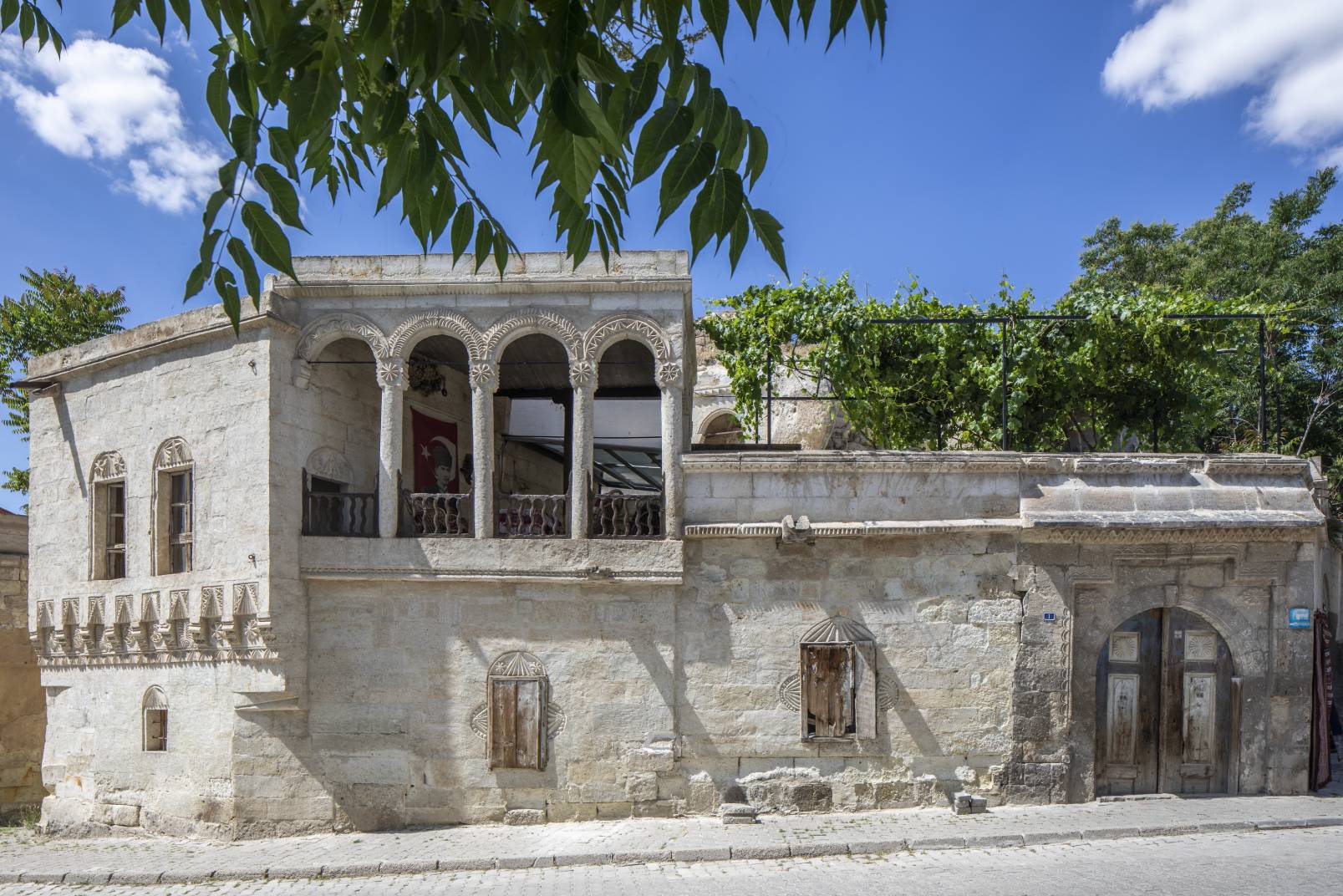
The owner of the mansion, which is estimated to have been built in the second half of the 19th century, before the exchange is known as Hacı Merkuris. The mansion, which was previously used as a house, is now used as a house on the upper floor and as a store on the lower floor. The two-storey mansion has a polygonal plan.
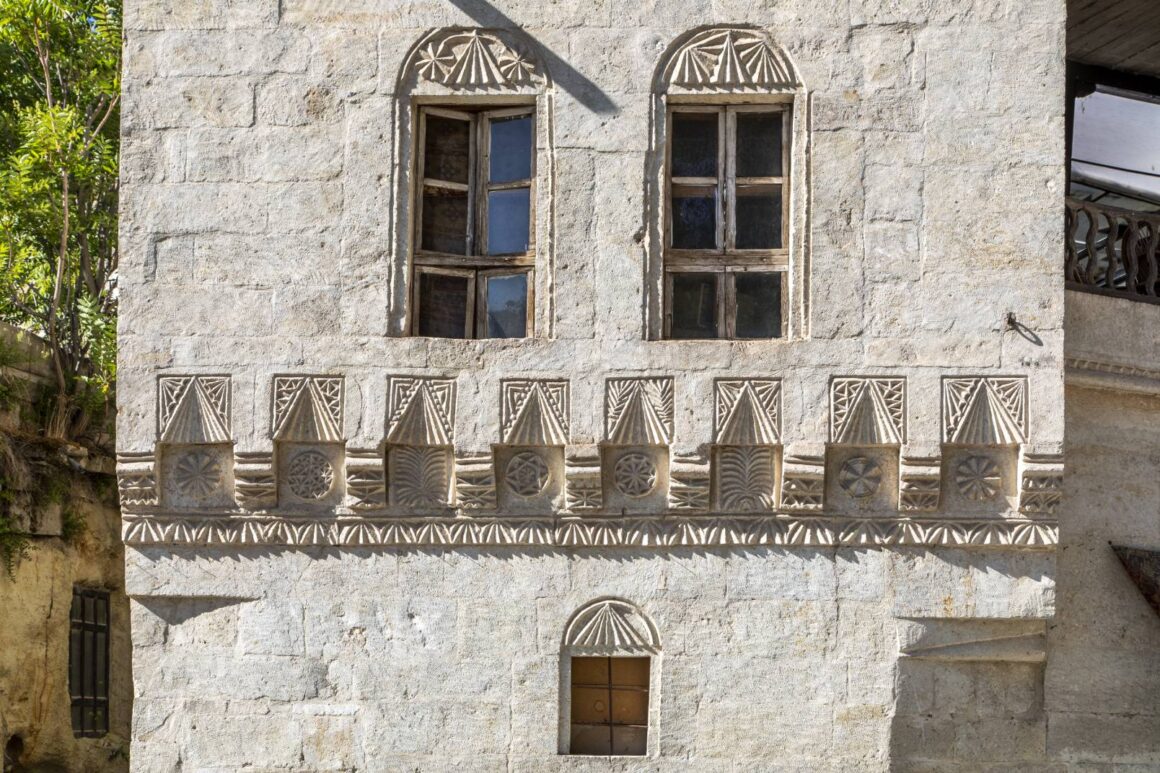
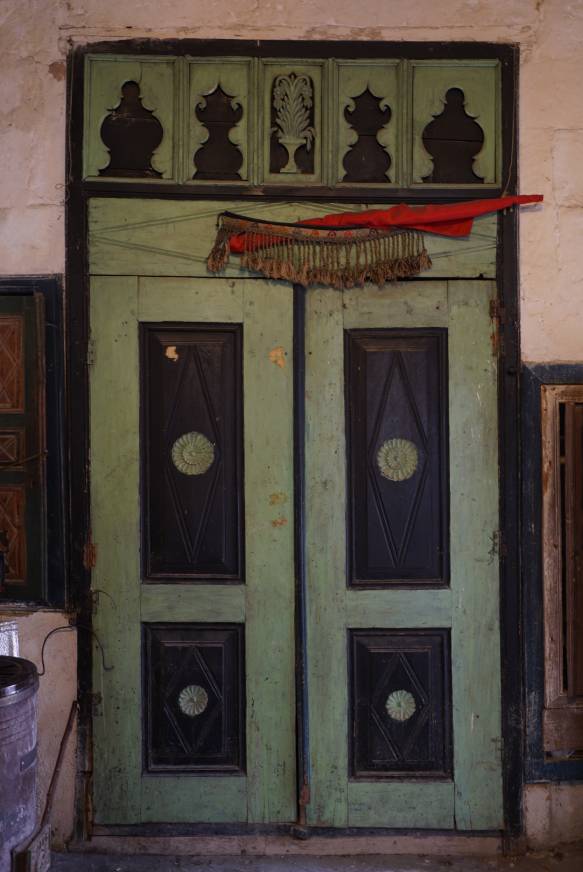
The single entrance door of the L-plan type building with a flat roof is located on the south side, and the courtyard is entered through a double-winged wooden door. The arrangement of the upper floor overlooking the street and surrounded by arches with stone relief decorations, which serve as a “life” function, is one of the elements that adds dynamism to the façade. The walls of the building, made with masonry technique, are made of stone; Wooden materials were used for doors, ceilings and windows.
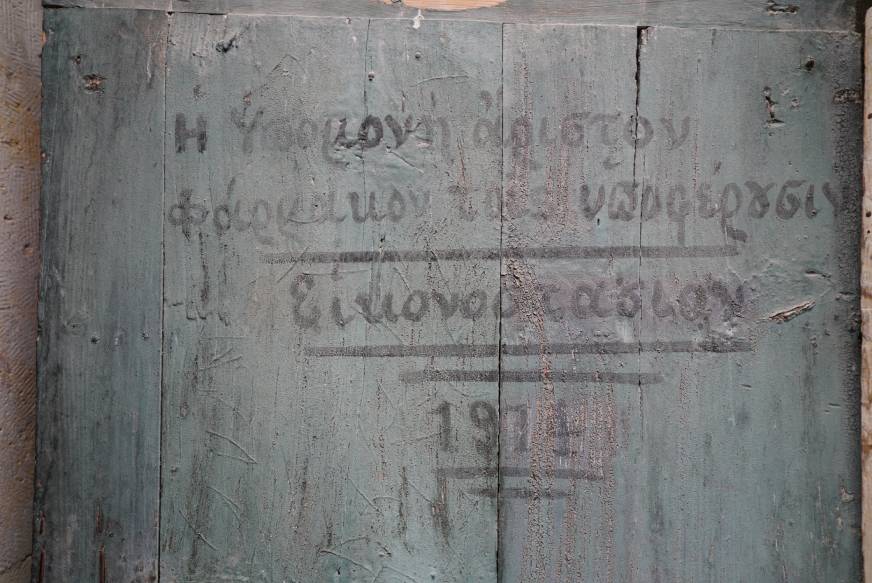
According to the narrative of the village people, six young Christian girls who were supposed to migrate during the population exchange married Muslim Turks in order to stay in the village and thus did not leave the village. A young woman named Marika, who lived in this mansion, married a Muslim Turk and continued to live in the village after the population exchange. For this reason, the mansion is known by his name by the people of the village. There is an inscription written in Greek on a green-painted wooden door inside the mansion: “Patience is a great medicine for those who know how to use it, 1914“.


